
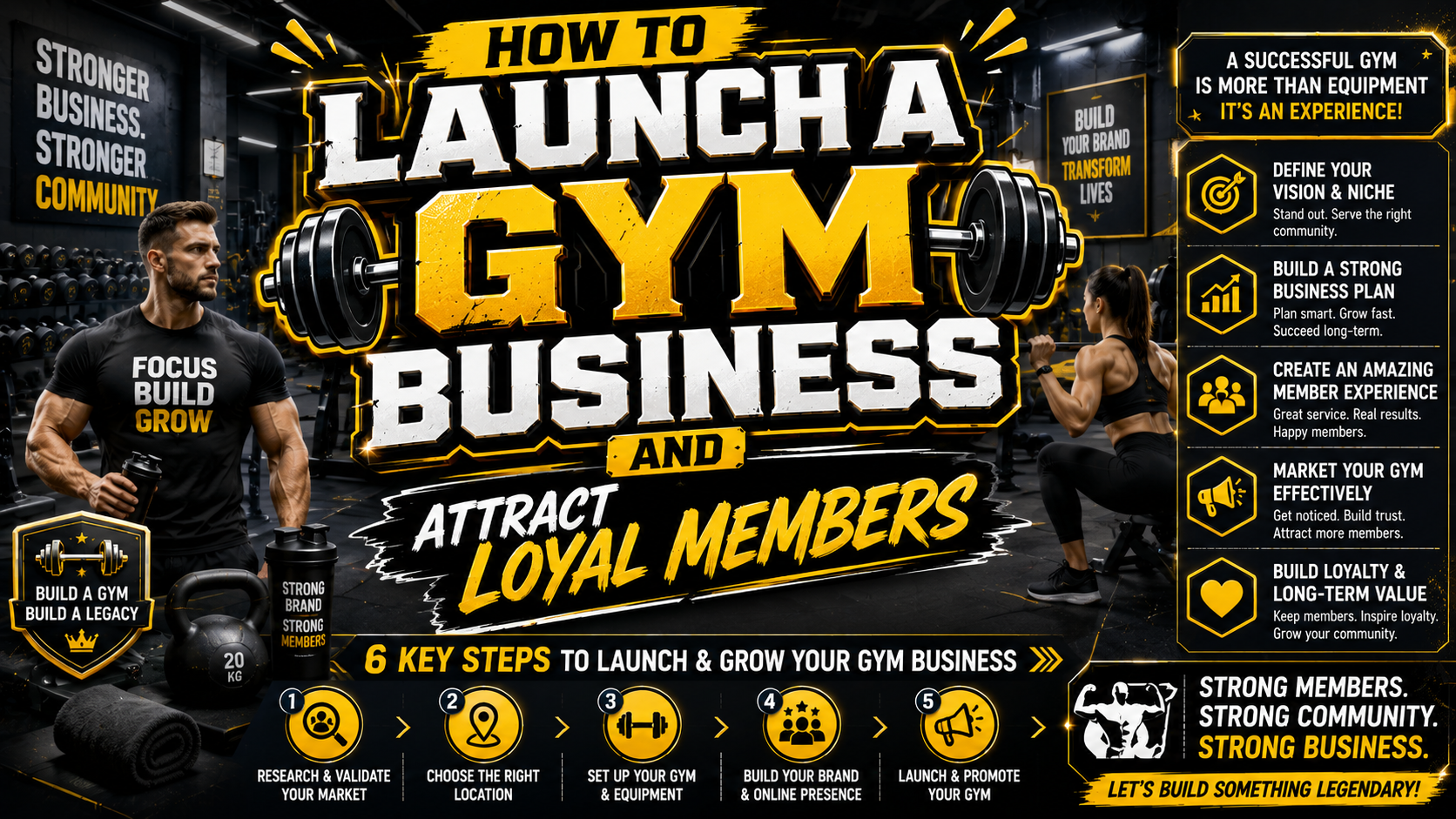
The fitness industry continues to grow as more people prioritize health, wellness, and active lifestyles. From traditional fitness centers and boutique gyms to specialized training studios and hybrid fitness businesses, there are countless opportunities for entrepreneurs who want to build a successful brand in the health and wellness market.
Learning how to start a gym business involves much more than purchasing exercise equipment and renting a building. Successful gym owners must understand market research, business planning, location selection, member experience, branding, operational systems, staffing, and marketing. A modern gym must deliver value, convenience, community, and a memorable customer experience to remain competitive.
Whether you’re planning to open a boutique fitness studio, a full-service gym, a CrossFit facility, or a specialized training center, having a clear strategy can significantly improve your chances of long-term success. This guide will walk you through the essential steps required to build and grow a professional fitness business.
Initial Suggestion
Before investing in equipment or signing a lease, take time to validate your business concept.
Define Your Fitness Niche
Different gym models serve different audiences.
Examples include:
- Traditional fitness gyms
- Boutique fitness studios
- CrossFit facilities
- Personal training centers
- Yoga and Pilates studios
- Boxing gyms
- Functional fitness facilities
Identifying a niche helps differentiate your business and attract a more targeted audience. Industry experts consistently recommend focusing on a specific market rather than trying to serve everyone.
Focus on Community Building
Many successful gyms thrive because of their community, not just their equipment. Creating a welcoming environment encourages member retention and referrals.
Build a Strong Brand Identity
A memorable gym name, logo, website, and visual identity help establish credibility and attract members.
Plan for Long-Term Growth
Think beyond opening day. Consider scalability, member retention, online services, and future expansion opportunities.
Comparison
Popular Gym Business Models
| Business Model | Startup Cost | Equipment Cost | Scalability | Best For |
|---|---|---|---|---|
| Traditional Gym | High | High | High | Broad Audience |
| Boutique Fitness Studio | Medium | Medium | Medium | Specialized Training |
| Personal Training Studio | Medium | Medium | Medium | Individual Coaching |
| Yoga/Pilates Studio | Low-Medium | Low | Medium | Wellness Brands |
| Functional Fitness Gym | Medium-High | High | High | Performance Training |
Step 1: Identify Your Gym Concept
The first step in learning how to start a gym business is defining your vision.
Ask yourself:
- What type of gym do you want to operate?
- Who is your target audience?
- What makes your gym unique?
- What experience will members receive?
Your gym concept influences every future decision, including branding, equipment, location, and marketing.
Step 2: Conduct Market Research
Understanding your local market is critical.
Research:
- Competitor gyms
- Membership pricing
- Population demographics
- Fitness trends
- Customer preferences
Market research helps identify gaps in the market and opportunities for differentiation.
Step 3: Create a Gym Business Plan
A strong business plan should include:
Executive Summary
An overview of your gym concept and goals.
Financial Forecast
Estimate:
- Startup costs
- Equipment expenses
- Rent
- Staffing
- Marketing budgets
Revenue Model
Potential revenue streams include:
- Memberships
- Personal training
- Group classes
- Merchandise
- Nutritional coaching
A business plan serves as a roadmap for growth and can help secure funding from lenders or investors.
Step 4: Secure Funding
Gym startup costs can vary significantly depending on the facility size and business model.
Common funding options include:
- Personal savings
- Business loans
- Investors
- Partnerships
- Equipment financing
Industry resources note that startup costs can range from modest boutique studios to large facilities requiring significant capital investment.
Step 5: Choose the Right Location
Location is one of the most important factors in gym success.
Consider:
- Accessibility
- Parking availability
- Population density
- Local competition
- Visibility
A great location can improve membership acquisition and long-term profitability. Many gym experts consider location one of the most influential decisions in the startup process.
Step 6: Purchase Equipment and Design Your Facility
Your equipment should match your target audience and gym concept.
Examples:
- Cardio equipment
- Strength machines
- Free weights
- Functional training zones
- Recovery areas
The layout should support smooth traffic flow and create a positive member experience.
Step 7: Handle Licenses, Insurance, and Legal Requirements
Gym businesses often require:
- Business registration
- Operating permits
- Liability insurance
- Employee agreements
- Health and safety compliance
Legal preparation helps protect your business and members from unnecessary risks.
Step 8: Build Your Online Presence
A modern gym needs a professional website.
Essential features include:
- Membership information
- Online booking
- Class schedules
- Contact forms
- Testimonials
A strong website improves credibility and supports lead generation. Fitness business experts consistently emphasize the importance of websites and digital marketing for growth.
Step 9: Create a Marketing Strategy
Effective gym marketing channels include:
Social Media
Showcase workouts, transformations, and community events.
Local Partnerships
Collaborate with health-focused businesses.
Referral Programs
Reward members who bring in new customers.
Content Marketing
Publish helpful fitness content to attract organic traffic.
Founding Member Campaigns
Pre-opening promotions can generate revenue before launch and help build an initial member base.
Step 10: Focus on Member Retention
Getting members is important, but keeping them is even more valuable.
Strategies include:
- Personalized onboarding
- Community events
- Progress tracking
- Loyalty rewards
- Excellent customer service
Successful gyms prioritize long-term member engagement rather than focusing solely on new sales.
Common Mistake
One of the biggest mistakes new gym owners make is opening a facility without a clearly defined niche. Many entrepreneurs assume that serving everyone will maximize revenue, but generic gyms often struggle against established competitors. The most successful fitness businesses typically focus on a specific audience or training style, such as functional fitness, strength training, personal coaching, yoga, or boutique wellness experiences. Defining a niche helps create stronger branding, clearer marketing messages, and higher customer loyalty.
Another common mistake is underestimating startup costs and ongoing operational expenses. Rent, equipment maintenance, staffing, insurance, utilities, software systems, and marketing all contribute to monthly expenses. Many gym owners focus heavily on facility design and equipment while neglecting cash flow planning. Understanding financial projections and maintaining adequate reserves can help prevent avoidable business failures during the early stages of growth.
Many entrepreneurs also overlook technology and member experience. Modern gym members expect convenient online booking, automated payments, class scheduling, mobile access, and smooth communication. Investing in efficient systems can improve retention, simplify operations, and create a better overall experience for members.
Conclusion
Learning how to start a gym business requires careful planning, market research, financial management, and a commitment to delivering value to members. While the fitness industry offers exciting opportunities, long-term success depends on creating a unique experience that keeps members engaged and motivated.
By selecting the right niche, choosing a strategic location, investing in quality equipment, building a professional brand, and implementing effective marketing systems, you can establish a gym business that stands out in a competitive market.
As the demand for health and wellness continues to grow, fitness entrepreneurs who combine strong business fundamentals with exceptional member experiences will be well-positioned to build thriving and profitable gym brands.
Explore these fonts and many more at PutraCetol.com to build a business identity that looks professional, trustworthy, and memorable.
Additionally, if you want to explore some free typography options, you can check out Putracetol Studio on Dafont. Happy reading and designing!