
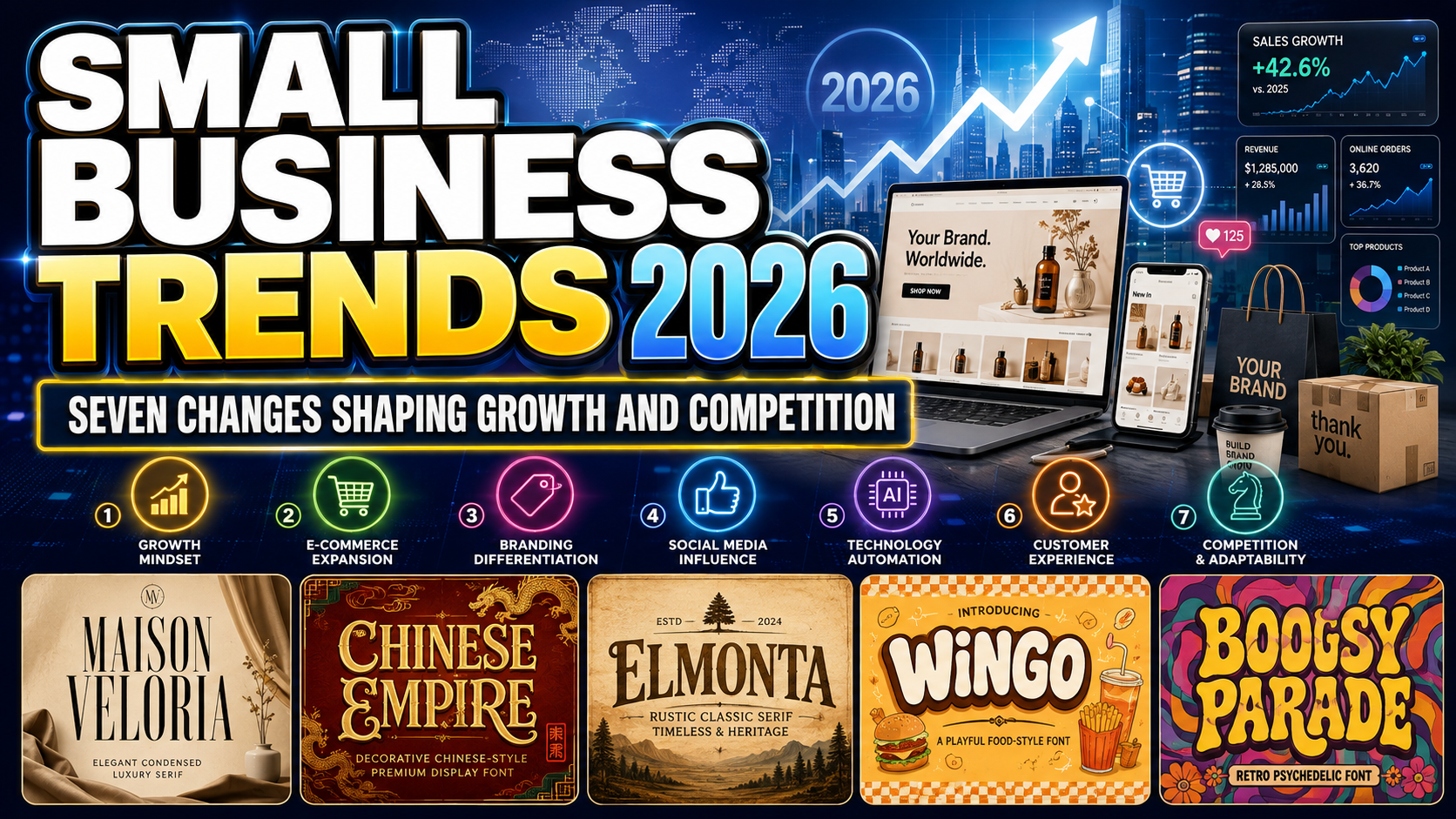
The best response to small business trends 2026 is not adopting every new platform at once. Start by identifying the area creating the most friction, such as customer support, content production, inventory management, lead generation, or administrative work. Then test one practical improvement, define a measurable result, and expand only when the change proves useful.
AI adoption among small businesses has already moved beyond early experimentation. In a 2025 U.S. Chamber of Commerce report, 58% of surveyed small businesses said they used generative AI, compared with 40% in 2024. However, the strongest implementations still tend to begin with focused tasks rather than expensive company-wide transformations.
The Most Important Small Business Trends in 2026
AI Automation Becomes Part of Daily Operations
AI is increasingly used to support routine work such as drafting emails, summarizing documents, organizing schedules, producing initial marketing concepts, and answering basic customer questions. Small companies can also use it to classify leads, identify recurring support issues, prepare reports, and improve product descriptions.
The goal should be task automation rather than uncontrolled decision automation. A small online store, for example, could let AI prepare draft responses to common shipping questions while requiring human approval for refunds, complaints, or unusual orders. Current small-business guidance emphasizes beginning with real operational problems, training employees, and keeping people involved in quality control.
Data Transparency Becomes a Brand Advantage
Customers are paying closer attention to how businesses collect, store, and use their information. A clear privacy notice, understandable cookie choices, secure payment process, and honest explanation of AI-assisted services can strengthen trust.
Small businesses should know what personal data they hold, collect only what they genuinely need, restrict access, remove information that no longer serves a purpose, and prepare for possible security incidents. These principles are especially important when customer information is shared with email platforms, analytics services, advertising tools, or AI vendors.
Transparency also applies to marketing. Businesses should not describe ordinary automation as advanced AI or make performance promises that cannot be verified. Clear communication may appear less dramatic, but it creates a more credible long-term relationship with customers.
Business Models Become More Diversified
Depending on one product, marketplace, client, or source of traffic creates unnecessary risk. One of the most practical small business trends 2026 is the development of several connected revenue streams.
A designer might combine client services with templates, digital assets, workshops, and licensing. A bakery could add catering, subscription boxes, seasonal gift packages, and paid classes. An ecommerce brand might sell directly through its website while also offering wholesale packages to selected retailers.
Diversification should remain connected to the core brand. Adding unrelated products simply to create more income can confuse customers and increase operational complexity. The strongest additional offers reuse existing knowledge, audiences, supplier relationships, or production capabilities.
Micro-Influencers Support More Focused Marketing
Small businesses do not always need celebrity-level reach. Micro-influencers often serve concentrated communities built around a location, profession, hobby, lifestyle, or product category. Their relevance can make them suitable partners for local services, specialist products, independent restaurants, beauty brands, and creative businesses.
Choose creators based on audience compatibility, content quality, communication style, and previous partnerships rather than follower count alone. A useful campaign might involve an honest product demonstration, a behind-the-scenes visit, a tutorial, or a limited collaborative collection.
Provide creative direction without scripting every sentence. Audiences are more likely to respond when the partnership fits the creator’s normal content and feels useful rather than forced. Micro-influencer partnerships are widely recommended for small businesses because they can offer niche relevance and more accessible campaign costs.
Domain Strategy Becomes Part of Brand Infrastructure
A domain is no longer only a website address. It supports branded email, search visibility, customer trust, campaign tracking, and direct traffic.
Choose one memorable primary domain that is easy to spell and closely connected to the business name. Additional domains may protect important variations or support regional expansion, but they should normally redirect to the main website instead of dividing content across several weak sites.
Businesses should also maintain consistent names, contact details, product information, and descriptions across their website, business profiles, marketplaces, and social channels. This gives customers and search systems a clearer understanding of the brand. A well-organized technical structure remains important as AI-assisted search relies on accessible, indexable web content.
Remote Work Evolves Into Flexible Talent Access
Remote work in 2026 is less about forcing every role into one model and more about matching work arrangements to business needs. A small company may keep strategy and customer relationships in-house while using remote specialists for design, bookkeeping, development, advertising, or seasonal support.
This approach can provide access to skills that would be difficult to hire locally. It also allows businesses to expand capacity without immediately building a large permanent team. Upwork’s 2026 small-business analysis identifies flexible workforce models as a major trend and reports strong interest among SMB leaders in increasing freelancer engagement.
Flexibility still requires structure. Clear responsibilities, documentation, secure access, communication expectations, and measurable deliverables are more important than the location from which someone works.
SEO Expands Into AI-Assisted Discovery
Customers are increasingly discovering businesses through AI-generated summaries, conversational search, product recommendations, maps, videos, and traditional search results. This has led to growing interest in LLM SEO, answer engine optimization, and generative engine optimization.
For Google Search specifically, the fundamentals remain familiar. Google recommends creating original, useful content, maintaining a crawlable technical structure, improving the page experience, and keeping product or local-business information accurate. It also states that special files such as llms.txt do not improve visibility in Google’s generative search features.
Small businesses should publish first-hand knowledge that generic AI content cannot easily reproduce. Useful examples include original product comparisons, customer questions, case studies, installation guides, pricing explanations, process documentation, and expert commentary. Accurate Merchant Center feeds, structured business information, and Google Business Profiles can also help products and services appear across search experiences.
Jump to Recommended Fonts
Maison Veloria | Chinese Empire | Elmonta | Wingo | Boogsy Parade
As technology makes business tools more accessible, visual identity becomes an important source of differentiation. A distinctive font can help a small company remain recognizable across websites, packaging, social content, storefronts, and influencer campaigns.
1. Maison Veloria Condensed Font
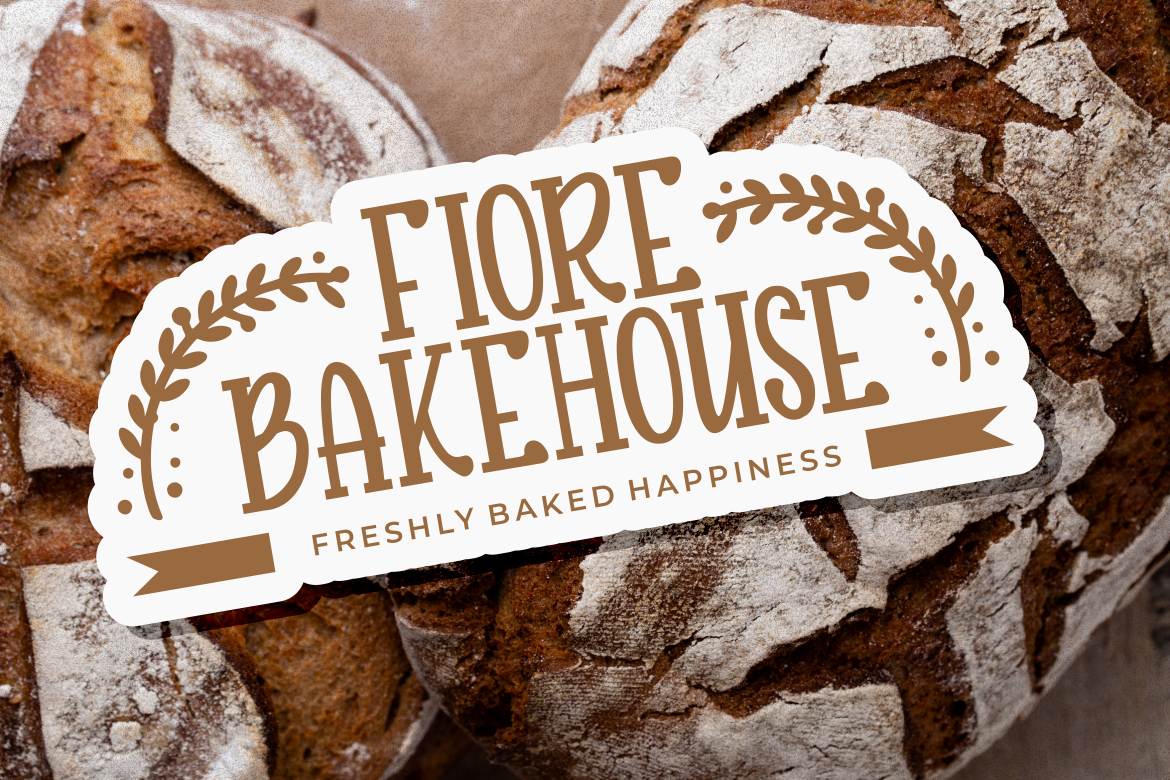
Maison Veloria features tall, narrow letterforms with smooth construction, balanced proportions, and subtle vintage warmth. Its condensed width makes longer brand names easier to place on labels, menus, signs, and mobile layouts without losing elegance. The font can give a growing business a polished identity while remaining warm and approachable.
PROS: Space-efficient, refined, versatile, and visually elegant.
BEST FOR: Artisan businesses, bakeries, cafés, hospitality brands, and boutique retailers.
2. Chinese Empire Chinese Style Font
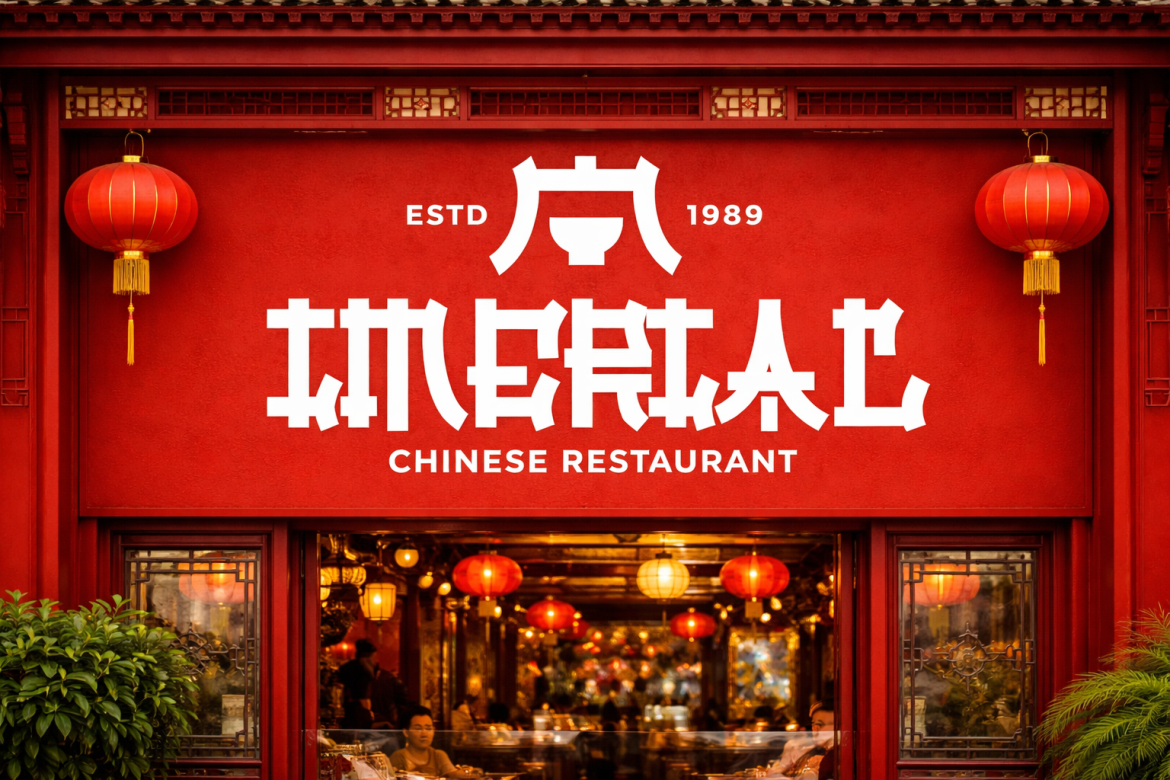
Chinese Empire combines heavy strokes, squared edges, angular corners, and geometric cuts inspired by traditional East Asian display lettering. Its strong silhouette gives short names excellent visibility and helps culturally focused businesses create immediate recognition. Use it for prominent branding text, then pair it with a simple supporting font for detailed information.
PROS: Bold presence, strong cultural character, high visibility, and memorable structure.
BEST FOR: Asian restaurants, tea brands, noodle products, festivals, and cultural promotions.
3. Elmonta Rustic Classic Serif Font
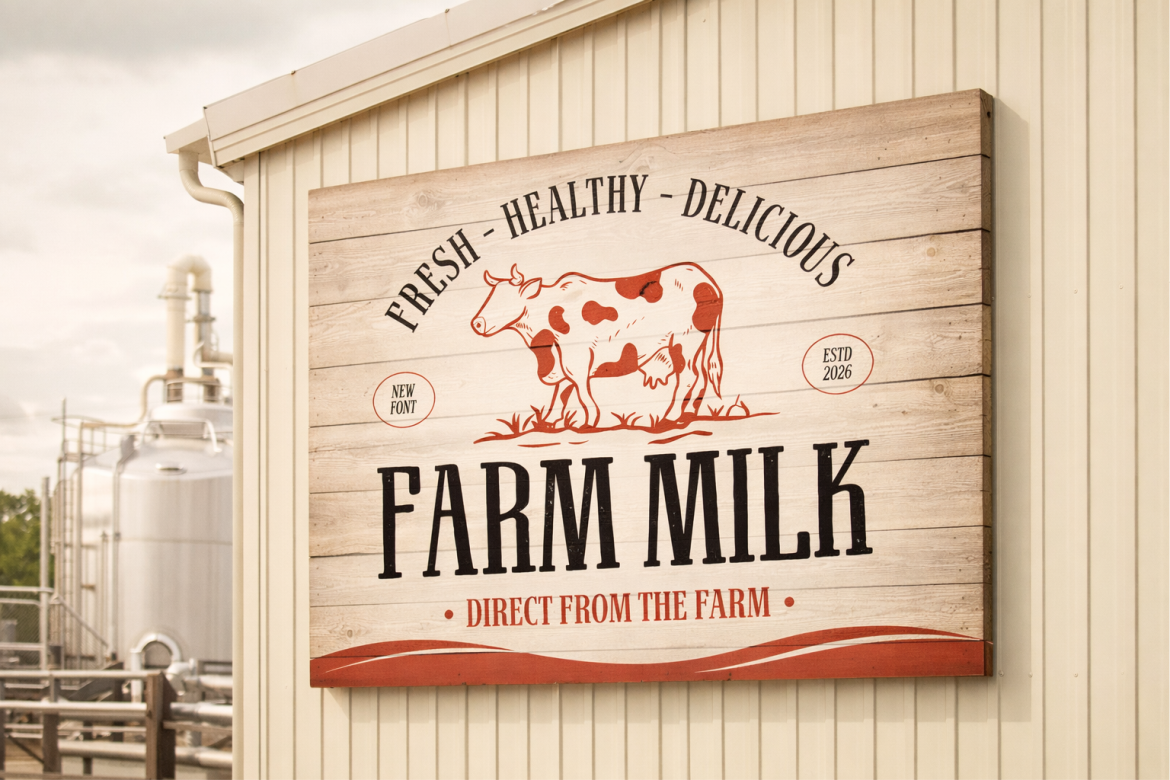
Elmonta brings together classic serif construction and a warm countryside character. Its tall proportions and narrow spacing feel traditional without appearing outdated, making it valuable for brands built around craftsmanship, heritage, natural materials, or local production. It can create a trustworthy identity across logos, packaging, editorial graphics, and signage.
PROS: Timeless personality, rustic warmth, premium character, and strong branding flexibility.
BEST FOR: Boutique hotels, handmade products, coffee brands, heritage businesses, and local services.
4. Wingo Food Font
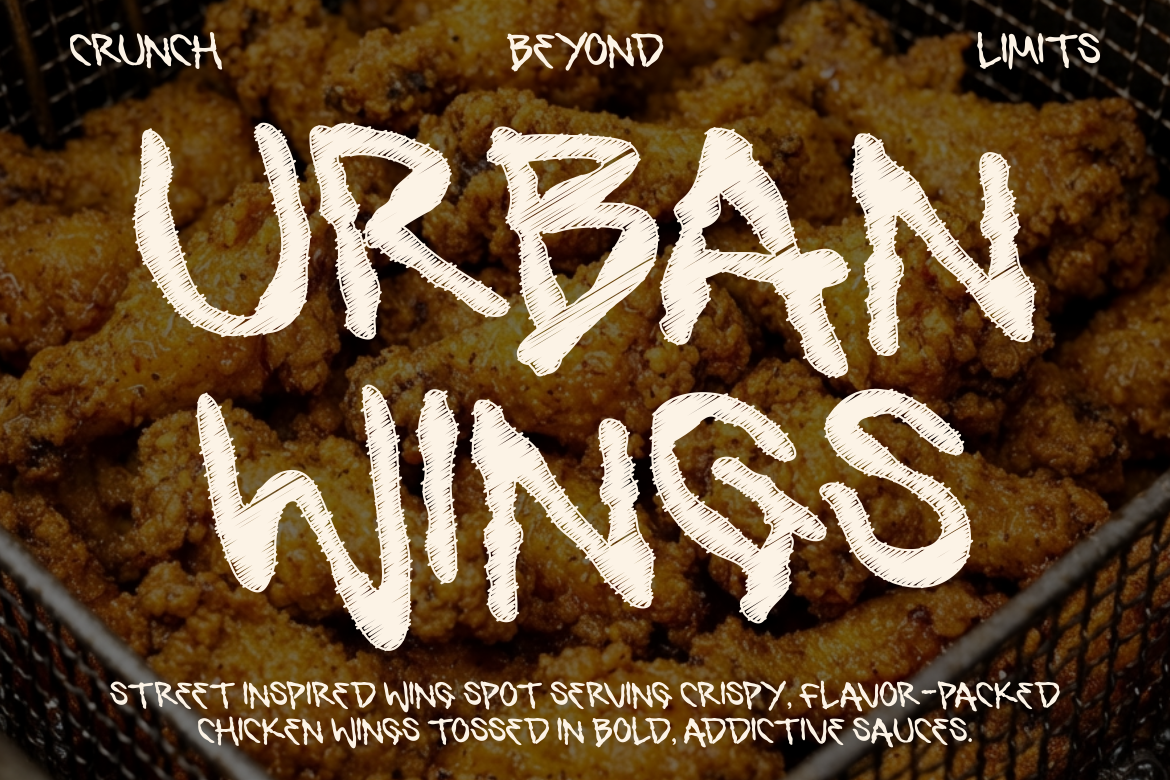
Wingo uses expressive hand-drawn forms and a textured, marker-inspired construction to create an energetic food-market personality. It feels informal and lively while retaining enough visual strength for packaging and storefront use. The font can help independent culinary brands appear more distinctive than businesses using generic rounded typography.
PROS: Energetic style, handcrafted texture, approachable character, and strong food appeal.
BEST FOR: Restaurants, food trucks, snack products, catering businesses, and culinary startups.
5. Boogsy Parade Retro Psychedelic Font
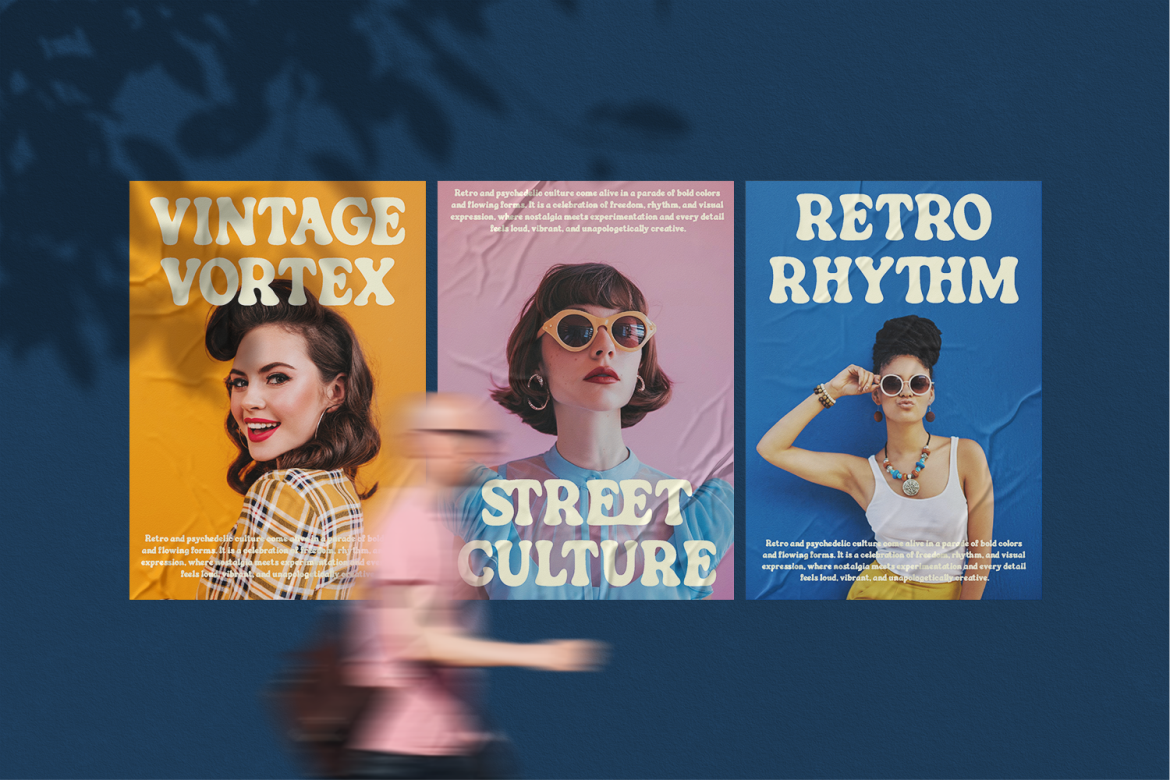
Boogsy Parade features thick rounded strokes, inflated shapes, wide proportions, and uneven flowing contours associated with retro psychedelic graphics. Its expressive construction is designed for attention rather than long reading, making it effective for campaign titles, event identities, merchandise, and social media visuals. It gives creative brands a playful alternative to predictable modern fonts.
PROS: Bold impact, expressive curves, nostalgic personality, and excellent display value.
BEST FOR: Creative studios, music events, fashion campaigns, youth brands, and merchandise.
Comparison
| Font | Visual Personality | Strongest Branding Use | Ideal Small Business |
|---|---|---|---|
| Maison Veloria | Refined and condensed | Logos, menus, and packaging | Boutique and hospitality brands |
| Chinese Empire | Bold and culturally inspired | Signage and promotional headlines | Asian food and cultural businesses |
| Elmonta | Rustic and timeless | Heritage branding and labels | Handmade and local brands |
| Wingo | Energetic and handcrafted | Food packaging and promotions | Restaurants and food startups |
| Boogsy Parade | Retro and psychedelic | Campaigns and merchandise | Creative and entertainment brands |
Common Mistakes When Following Small Business Trends
The first mistake is adopting technology without identifying a measurable business problem. An AI subscription is not automatically useful simply because competitors mention automation. Businesses often add tools that duplicate existing software, create inconsistent information, or require more management than the time they save. Begin with a specific outcome, such as reducing response time, improving inventory accuracy, or producing reports faster. Test the workflow with limited data, keep human review in place, and measure the result before expanding it.
Another mistake is diversifying too quickly. New services, sales channels, domains, creator partnerships, and remote contractors can create growth, but each one adds operational responsibility. A business may appear more active while becoming less profitable and harder to manage. Add one connected revenue stream or marketing channel at a time, document how it works, and confirm that the core product still receives enough attention. Diversification should reduce dependence, not create a collection of unrelated obligations.
The final mistake is separating operational change from branding. A business can adopt modern automation and AI-focused SEO but still appear inconsistent through weak typography, generic visuals, outdated product pages, or different messaging across platforms. Customers experience the complete brand, not the technology behind it. Use a consistent domain, visual system, tone of voice, and customer promise so every new tool strengthens the same identity.
Conclusion
The most influential small business trends 2026 are connected by one central idea: small companies can now operate with capabilities that once required much larger teams, but sustainable growth still depends on focus and trust.
AI can reduce repetitive work, transparent data practices can strengthen customer confidence, diversified offers can improve resilience, and micro-influencers can connect brands with relevant communities. Flexible talent models expand access to specialist skills, while strong domains and AI-ready SEO help businesses remain discoverable.
Technology may make it easier to enter a market, but a recognizable identity helps a company remain memorable. Fonts from PutraCetol Studio can support that identity across logos, packaging, websites, promotions, and social campaigns, giving each small business a visual voice that reflects its audience and ambitions.
Explore these fonts and many more at PutraCetol.com to build a business identity that looks professional, trustworthy, and memorable.
Additionally, if you want to explore some free typography options, you can check out Putracetol Studio on Dafont. Happy reading and designing!