
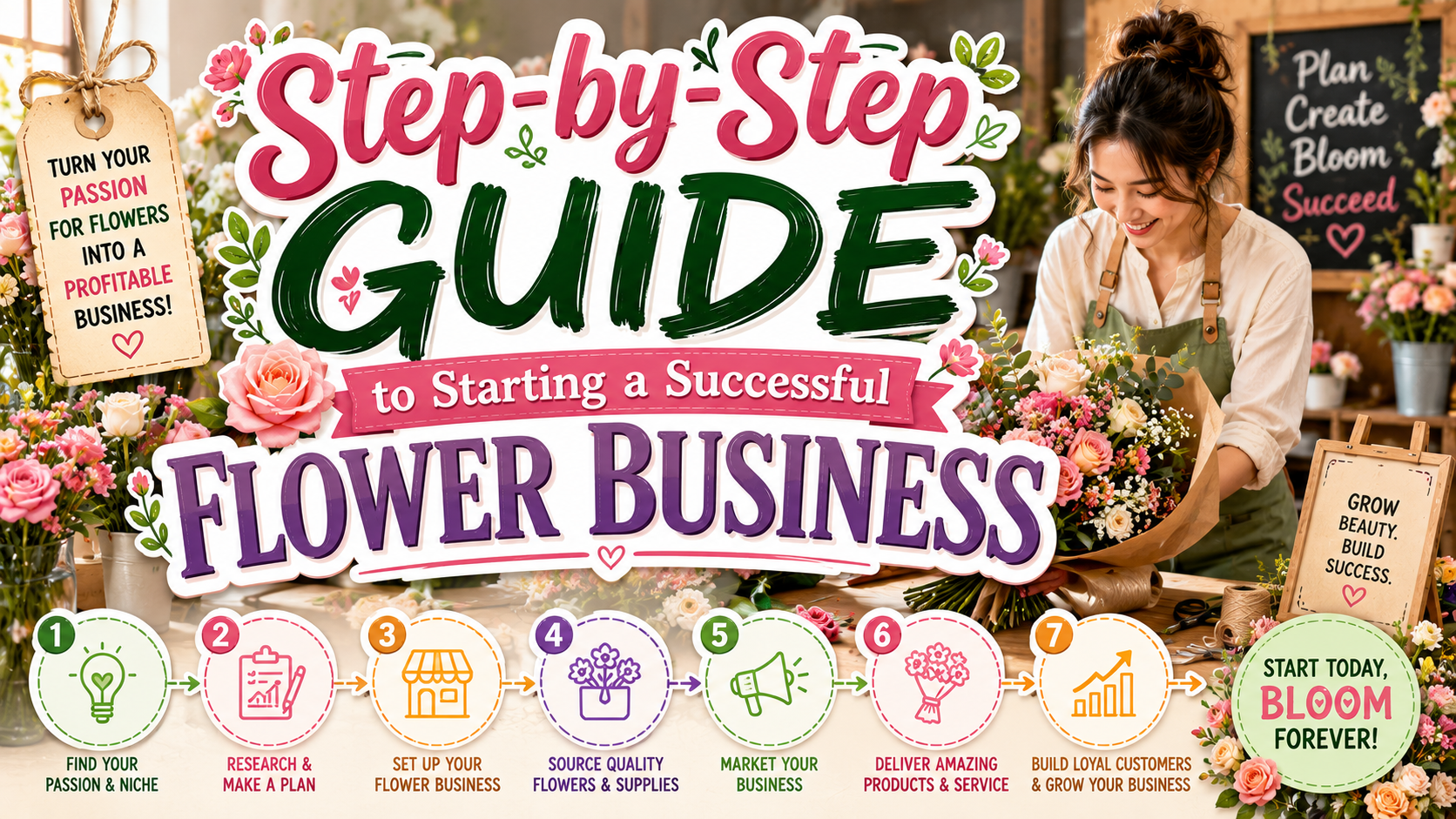
The floral industry remains one of the most creative and rewarding business sectors for entrepreneurs. From wedding arrangements and corporate events to daily bouquet deliveries and seasonal celebrations, flowers continue to play an important role in people’s lives. As consumer demand for personalized floral designs and online flower delivery services grows, opportunities for new florist businesses continue to expand. The flower gifting industry alone represents a multi-billion-dollar market with steady long-term demand.
Learning how to start a flower business involves much more than arranging beautiful bouquets. Successful florist brands combine market research, inventory management, supplier relationships, branding, customer service, and effective marketing strategies. Whether you want to operate a local flower shop, an online floral business, a wedding florist service, or a home-based flower brand, building a strong foundation is essential.
Today’s florist entrepreneurs have more opportunities than ever. Social media, eCommerce platforms, local SEO, and online ordering systems make it easier to reach customers and build a recognizable flower brand without requiring a large retail storefront.
Initial Suggestion
Before purchasing flowers or renting a retail location, take time to define your business direction.
Choose a Specific Floral Niche
Popular florist niches include:
- Wedding flowers
- Event floral design
- Everyday bouquets
- Luxury flower arrangements
- Corporate floral services
- Sympathy flowers
- Subscription flower delivery
- Dried flower arrangements
A clear niche helps differentiate your brand and makes marketing more effective.
Start Small and Scale Strategically
Many successful florists begin from home before investing in larger facilities. This approach allows entrepreneurs to test demand while minimizing startup costs. Industry professionals frequently recommend growing organically and investing in infrastructure only when demand justifies expansion.
Build Your Brand Early
Customers often choose florists based on:
- Visual style
- Portfolio quality
- Packaging
- Brand identity
- Customer reviews
Professional branding can significantly increase customer trust and perceived value.
Learn Inventory Management
Flowers are perishable products. Understanding storage, inventory turnover, supplier relationships, and seasonal availability is critical for profitability.
Comparison
Popular Flower Business Models
| Business Model | Startup Cost | Flexibility | Scalability | Best For |
|---|---|---|---|---|
| Home-Based Florist | Low | High | Medium | Beginners |
| Retail Flower Shop | High | Medium | High | Local Markets |
| Online Flower Delivery | Medium | High | Very High | Digital Entrepreneurs |
| Wedding Florist | Medium | High | High | Event Specialists |
| Subscription Flower Service | Medium | High | Very High | Recurring Revenue |
Step 1: Define Your Business Model
Decide how you want to operate.
Common options include:
- Home-based florist
- Online flower store
- Retail flower shop
- Wedding specialist
- Event florist
Choosing the right model will influence your startup costs, marketing strategy, and operational structure.
Step 2: Conduct Market Research
Research helps identify:
- Local competitors
- Customer preferences
- Pricing expectations
- Popular flower categories
- Seasonal demand
Understanding your market before launching can help reduce risk and uncover opportunities.
Step 3: Create a Business Plan
A strong business plan should include:
- Target audience
- Financial projections
- Pricing strategy
- Marketing plan
- Operational workflow
- Growth objectives
This document serves as your roadmap during the early stages of growth.
Step 4: Register Your Business
Depending on your location, you may need:
- Business registration
- Sales tax permits
- Reseller certificates
- Floral licenses
- Insurance coverage
Always verify local legal requirements before accepting customers.
Step 5: Find Reliable Suppliers
Your supplier network is one of your most important business assets.
Potential sources include:
- Local flower farms
- Flower wholesalers
- Distributors
- Imported flower suppliers
Many successful florists combine multiple suppliers to reduce inventory risks and improve flower selection.
Step 6: Build a Portfolio
Customers buy flowers with their eyes first.
A professional portfolio should showcase:
- Wedding arrangements
- Bouquets
- Event decorations
- Seasonal designs
- Signature creations
Strong visuals help establish credibility and attract new clients.
Step 7: Create an Online Presence
Your online presence should include:
- Website
- Google Business Profile
A professional website allows customers to browse products, place orders, and learn about your brand.
Step 8: Develop a Marketing Strategy
Popular florist marketing channels include:
- Local SEO
- Instagram marketing
- Wedding partnerships
- Email marketing
- Content marketing
Visual content performs exceptionally well for floral businesses because customers want to see examples of your work.
Step 9: Optimize Pricing and Profitability
Successful florists carefully calculate:
- Flower costs
- Labor
- Packaging
- Delivery expenses
- Overhead costs
Industry professionals frequently stress that accurate pricing is essential for long-term sustainability.
Common Mistake
One of the biggest mistakes new florist entrepreneurs make is underpricing their work. Many business owners focus only on flower costs while ignoring labor, delivery, supplies, packaging, taxes, and operational expenses. Experienced florists consistently emphasize that understanding profit margins and pricing structures is critical for survival. Without proper pricing, even businesses with strong sales can struggle financially.
Another common mistake is poor inventory management. Flowers are highly perishable products, and excess inventory can quickly turn into lost profit. New business owners often over-purchase flowers without accurately forecasting demand. Successful florists learn how to balance inventory levels, build relationships with multiple suppliers, and adjust purchasing decisions based on seasonal trends and customer behavior.
Many entrepreneurs also underestimate the importance of branding and digital marketing. Beautiful floral arrangements alone are rarely enough to generate consistent growth. Customers often discover florists through websites, social media, online reviews, and local search results. Businesses that invest in professional branding, photography, and online visibility typically have a stronger competitive advantage than those relying solely on word-of-mouth referrals.
Conclusion
Learning how to start a flower business requires a combination of creativity, business planning, inventory management, and marketing expertise. While floral design skills are important, long-term success often depends on strong supplier relationships, effective branding, smart pricing, and a professional online presence.
Whether you choose a home-based florist model, an online flower delivery service, a retail flower shop, or a wedding-focused business, the key is creating a memorable customer experience while maintaining operational efficiency.
As the floral industry continues to grow, entrepreneurs who combine beautiful designs with strategic business practices will be best positioned to build successful and profitable flower brands.
Explore these fonts and more at PutraCetol.com to build a logo that strengthens your brand and supports long-term business growth. Additionally, if you want to explore some free typography options, you can check out Putracetol Studio on Dafont. Happy reading and designing!