
As businesses expand, maintaining strong security becomes increasingly important without making customers feel restricted or uncomfortable. The National Retail Federation reported an 18% rise in average shoplifting incidents during 2024 compared with the previous year. This increase highlights the growing security challenges faced by businesses serving regular customer traffic.
However, effective security should protect people and property without creating unnecessary friction during everyday interactions. Businesses can combine discreet surveillance, efficient entry screening, controlled access, and employee training to strengthen protection. The goal is to create safer environments while keeping customers comfortable, informed, and confident throughout their experience.
Thoughtful security planning allows growing businesses to address emerging risks without compromising convenience or creating an intimidating atmosphere.
Make Entry Screening Quick and Easy to Navigate
Design entrances so customers can move smoothly through security checks without creating unnecessary queues during busy periods. Clear signs should explain where visitors need to go and what to expect during screening.
Keep procedures consistent, even when customer traffic increases, so the process remains predictable and efficient. For venues requiring screening, walk-through metal detectors can provide a practical option without requiring individual searches for every visitor.
GXC Inc. explains that advanced walk-through metal detectors use electromagnetic technology for precise threat detection. These systems can allow items such as keys and jewelry to pass without triggering unnecessary alarms.
Position screening equipment strategically near entrances, leaving enough space for customers to move comfortably. A well-planned setup can strengthen security while keeping the entrance welcoming rather than intimidating.
Use Technology to Monitor the Property Discreetly
Security technology can help businesses identify vulnerabilities without making customers feel constantly watched. The UK Home Office found that 26% of business premises experienced crime during 2023. The figure rose to 41% among wholesale and retail premises, where customer-facing operations create additional exposure.
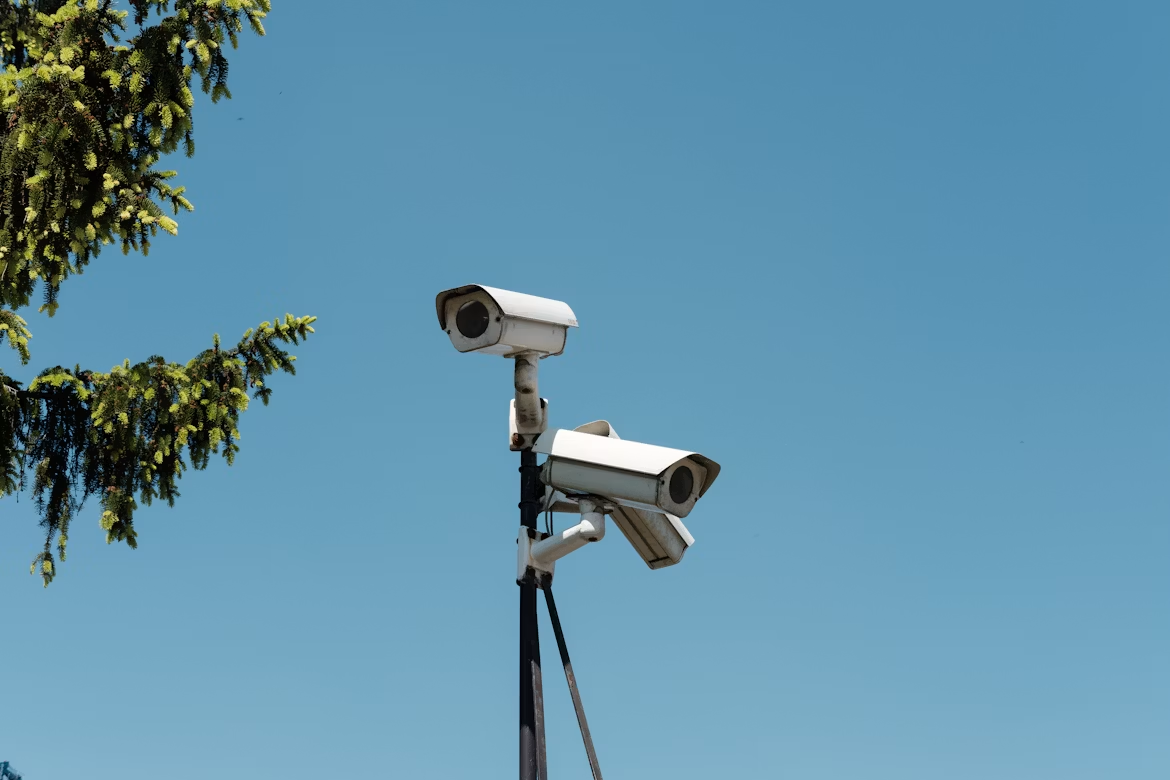
Businesses can use strategically positioned cameras to monitor entrances, exits, storage areas, and other vulnerable points without overwhelming public spaces. Access control systems can restrict sensitive areas while allowing customers to move freely through permitted spaces.
Motion detection and automated alerts can also draw attention to unusual activity without requiring employees to monitor every camera continuously. The goal is to make technology work quietly in the background, strengthening protection without changing the customer experience.
Separate Customer and Employee Access
Create clearly defined access points for employees, customers, visitors, and deliveries where the property layout allows. Employee entrances can use keycards, mobile credentials, or coded access to prevent unauthorized movement into restricted areas.
Keep offices, stockrooms, equipment spaces, and other sensitive areas away from normal customer pathways whenever possible. Delivery personnel should have designated routes that limit access to customer-facing areas and reduce unnecessary movement throughout the premises.
Review access permissions regularly, especially when employees change roles or leave the organization. Clear separation helps businesses control who can enter specific areas while allowing customers to move freely through public spaces without encountering unnecessary security checks.
Improve Visibility Across Customer Areas
Clear sightlines help employees monitor customer areas while keeping the environment open, comfortable, and easy to navigate.
A 2025 ScienceDirect study examined Crime Prevention Through Environmental Design (CPTED) using 15 factors related to physical space, security devices, and social activity. The research found that stronger CPTED scores were associated with lower crime rates and greater perceptions of safety. It also identified natural surveillance, lighting, and effective security devices as important considerations for safer environments.
Businesses can apply these principles by keeping aisles unobstructed and avoiding excessively tall displays that restrict visibility. Improving lighting around entrances and less visible areas can further support natural surveillance. Strategically positioned cameras can provide additional coverage without making customers feel constantly monitored.
Train Employees to Support Security Naturally
Employees can strengthen security simply by knowing what to notice, when to respond, and whom to involve. Kevin O’Brien, EVP Business Development at The Integritus Group & SEMM Holdings, says regular training helps retail teams recognize warning signs and build consistent security habits. Train staff to identify unusual behavior without encouraging unnecessary confrontation or making customers feel scrutinized.
Clear reporting procedures should explain when employees should alert managers, security personnel, or emergency services. Short refreshers and realistic scenarios can help employees remain confident during busy periods or unexpected situations. Managers should also reinforce calm communication, respectful customer interactions, and appropriate escalation.
When security becomes part of normal employee responsibilities, businesses can strengthen protection while maintaining a welcoming and professional customer experience.
Review Security Measures as Your Business Grows
Security needs can change as businesses expand, add employees, serve more customers, or open additional locations. Review existing measures regularly to identify new vulnerabilities created by changes in operations or physical spaces. Check whether access controls, surveillance, screening procedures, and employee training still provide appropriate protection.
Remove outdated processes that create unnecessary inconvenience without offering meaningful security benefits. Consider customer feedback when evaluating whether security procedures feel confusing, intrusive, or difficult to navigate. Businesses should also review security after incidents, major operational changes, or significant increases in customer traffic.
Regular assessments help ensure security remains practical, proportionate, and aligned with the business’s current needs without unnecessarily affecting the customer experience.
Frequently Asked Questions
How can businesses reduce security queues during peak hours?
Businesses can reduce security queues by creating clearly marked entry lanes, positioning screening equipment efficiently, and preparing staff for busy periods. Consistent procedures, visible instructions, and additional screening capacity during peak hours can also help customers move through entrances quickly and smoothly.
How should businesses handle customers who refuse screening?
Businesses should communicate screening requirements clearly and respectfully before customers reach the entrance. Staff should avoid confrontation, explain the reason for screening, and follow established policies consistently. If someone refuses, provide alternatives where possible or politely explain that entry may not be permitted.
Should businesses use visible or discreet security measures?
A balanced approach usually works best. Visible measures can deter unwanted behavior, while discreet systems avoid making customers feel uncomfortable. Businesses should choose based on their risks, layout, and customer expectations, combining noticeable deterrents with less intrusive technologies where appropriate.
Key Security Considerations for Growing Businesses
| Average shoplifting incidents in 2024 | Increased by 18% |
| Business premises experiencing crime | 26% |
| Wholesale and retail premises experiencing crime | 41% |
| Entry screening | Use clear signage, consistent procedures, and efficient equipment |
| Customer and employee access | Keep public and restricted areas clearly separated |
| Customer-area visibility | Maintain clear sightlines, adequate lighting, and unobstructed aisles |
Build Security Into the Customer Experience
Growing businesses do not have to choose between stronger security and a welcoming customer experience. The most effective approach combines thoughtful planning, discreet technology, efficient screening, and well-trained employees. Clear layouts, controlled access, and practical procedures can reduce risks without making customers feel watched or inconvenienced.
Security should also evolve as the business grows, with regular reviews helping identify new vulnerabilities and remove unnecessary friction. By treating security as part of the overall customer experience rather than an obstacle, businesses can create safer environments. Employees feel protected while customers remain comfortable, confident, and welcome.