
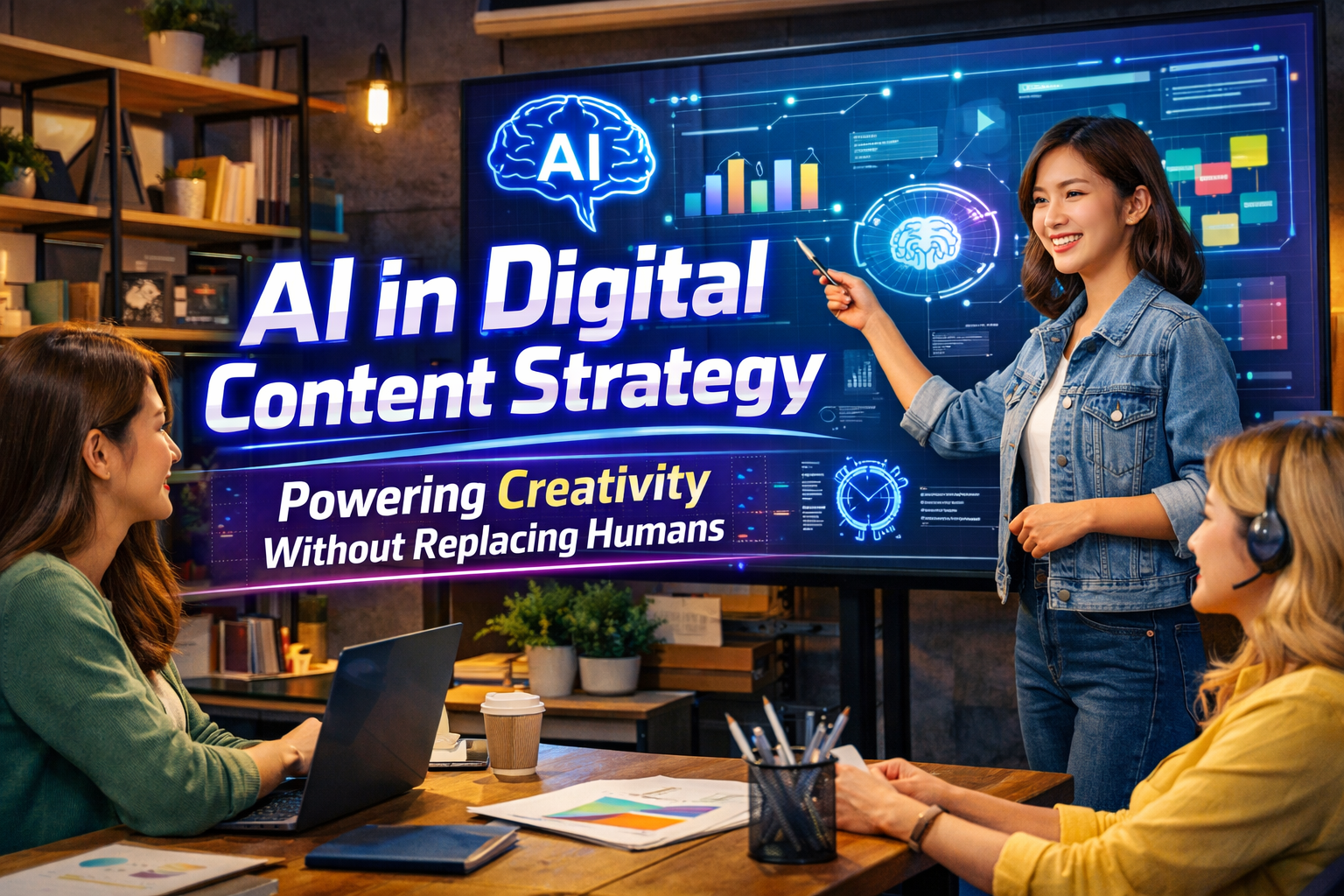
AI in Digital Content Strategy: Creativity Accelerated, Not Replaced
Digital content has become the backbone of modern communication. Blogs, social media posts, videos, newsletters, and campaigns shape how brands are discovered and remembered. As content demand increases, creators and businesses face growing pressure to produce more, faster, and across multiple platforms.
According to insights shared by Putracetol Design Studio, artificial intelligence has become a vital part of digital content strategies. AI now supports nearly every stage of content creation, from idea generation and drafting to SEO optimization and multimedia production. However, this evolution does not mean creativity has been automated. Instead, it signals a shift toward collaboration, where AI accelerates execution while humans guide meaning and direction.
This article explores how AI fits into modern digital content strategies, its strengths and limitations, and why human input remains essential for authentic, engaging content.
Why AI Matters in Modern Content Strategies
The digital landscape moves quickly. Algorithms change, trends evolve, and audiences expect fresh content continuously. AI tools help creators keep pace without sacrificing structure or clarity.
AI in digital content strategy matters because it:
- Reduces production time
- Supports consistent publishing
- Helps scale content across platforms
- Improves discoverability through SEO
For businesses and individual creators alike, AI provides a foundation that makes content workflows more efficient and sustainable.
AI as an Idea Generator
One of the most valuable roles of AI is idea generation. Facing a blank page can slow even experienced creators. AI tools help break that barrier.
AI can assist with:
- Blog topic suggestions
- Headline and title variations
- Content angles for specific audiences
- Campaign theme brainstorming
By analyzing trends, keywords, and audience behavior, AI provides ideas that are relevant and timely. Creators then refine these ideas with context and intent.
AI for Drafting Written Content
AI excels at drafting. It can quickly generate:
- Blog article outlines
- First drafts of long-form content
- Social media captions
- Video scripts and email copy
This does not replace writers. Instead, it shifts their role. Writers move from typing every word to shaping tone, improving flow, and adding insight.
Drafting with AI:
- Speeds up production
- Reduces repetitive writing tasks
- Allows creators to focus on quality
The draft becomes a starting point, not a finished product.
Automatic SEO Optimization
Search visibility is critical for digital success. Many AI tools now include built-in SEO support, making optimization more accessible.
AI assists with:
- Keyword research and placement
- Meta title and description creation
- Content structure suggestions
- Readability improvements
This ensures content is discoverable while remaining user-focused. When combined with human judgment, SEO becomes strategic rather than mechanical.
Visuals and Multimedia Creation with AI
Modern content is rarely text-only. Visuals play a major role in engagement and retention.
AI supports visual creation by generating:
- Illustrations and artwork
- Infographics for data storytelling
- Thumbnails and banners
- Short-form videos and animations
These tools help creators enhance content quickly, especially for social media and digital campaigns. However, brand consistency still depends on human oversight.
Editing and Proofreading Assistance
AI also functions as an editorial assistant. It helps improve:
- Grammar and spelling
- Sentence clarity
- Tone consistency
- Structural flow
For non-native writers or busy teams, this support is invaluable. AI catches errors, but humans ensure the message feels natural and aligned with brand voice.
The Limitations of AI in Content Creation
Despite its strengths, AI has clear limitations. Understanding these boundaries is essential for effective collaboration.
Lack of Cultural Context
AI does not fully understand cultural nuance. It may miss local references, sensitivities, or social context that shape meaning.
Limited Emotional Depth
AI can simulate tone but does not experience emotion. Content that aims to inspire, comfort, or persuade still requires human empathy.
Weak Storytelling Instincts
Strong storytelling relies on lived experience, perspective, and intuition. AI structures narratives, but humans bring authenticity.
Recognizing these limits helps creators use AI responsibly.
Why Human Input Remains Essential
Human creators provide elements AI cannot replicate.
They bring:
- Cultural awareness
- Emotional intelligence
- Strategic thinking
- Ethical judgment
In digital content strategy, humans define purpose. AI supports execution, but meaning comes from people.
Benefits of AI for Creators and Businesses
When used correctly, AI offers measurable advantages.
Time Efficiency
Content that once took days can be produced in hours. This frees time for planning and creativity.
Scalability
AI supports high-volume content production across blogs, social media, and campaigns without burnout.
Quality Assurance
With AI handling drafts and checks, creators can focus on refinement and originality.
The result is a workflow that is both fast and thoughtful.
AI in Content Strategy for Businesses
For businesses, AI reduces dependency on large teams while maintaining output quality.
AI helps businesses:
- Maintain consistent publishing schedules
- Align content with SEO goals
- Support omnichannel marketing
- Adapt quickly to trends
This is especially valuable for SMEs and startups with limited resources.
AI and Individual Content Creators
For individual creators, AI acts as a multiplier.
It helps:
- Overcome creative blocks
- Maintain consistency
- Improve technical quality
Creators who learn to work with AI gain a competitive advantage rather than losing relevance.
The Role of Typography and Visual Identity
While AI can generate content and visuals, typography and design consistency remain human-driven decisions.
Strong content strategy requires:
- Consistent font usage
- Clear visual hierarchy
- Brand-aligned design choices
Curated font collections and design systems, such as those offered by Putracetol Design Studio, support long-term brand recognition that AI alone cannot ensure.
Collaboration as the Future Standard
The future of digital content is collaborative.
In this model:
- AI handles speed, structure, and scale
- Humans guide creativity, strategy, and emotion
This balance ensures content remains efficient without becoming generic.
Ethical and Strategic Considerations
As AI becomes more embedded in content creation, responsibility increases.
Creators and businesses should:
- Be transparent about AI usage when necessary
- Avoid over-automation
- Protect originality and brand integrity
AI is a tool, not a substitute for accountability.
Preparing for the Future of Content Creation
To stay relevant, content professionals should:
- Learn how AI tools work
- Integrate AI into existing workflows
- Strengthen storytelling and strategic skills
The most valuable creators will be those who combine technical efficiency with human insight.
Conclusion
AI in digital content strategy has become a practical necessity, not a passing trend. AI helps generate ideas, draft content, optimize SEO, create visuals, and refine writing. It accelerates production and supports scalability for both businesses and individuals.
However, as emphasized by Putracetol Design Studio, AI does not replace human creativity. Cultural context, emotional depth, and authentic storytelling still come from people. The future of digital content lies in collaboration, where AI empowers creators and humans shape meaning.
Content is not just about speed. It is about connection. AI helps us get there faster, but humans decide where to go.
Thank you for taking the time to read this article. If you are looking for more great articles, feel free to visit Putracetol Blog
Additionally, if you want to explore some free typography options, you can check out Putracetol Studio on Dafont. Happy reading and designing!