
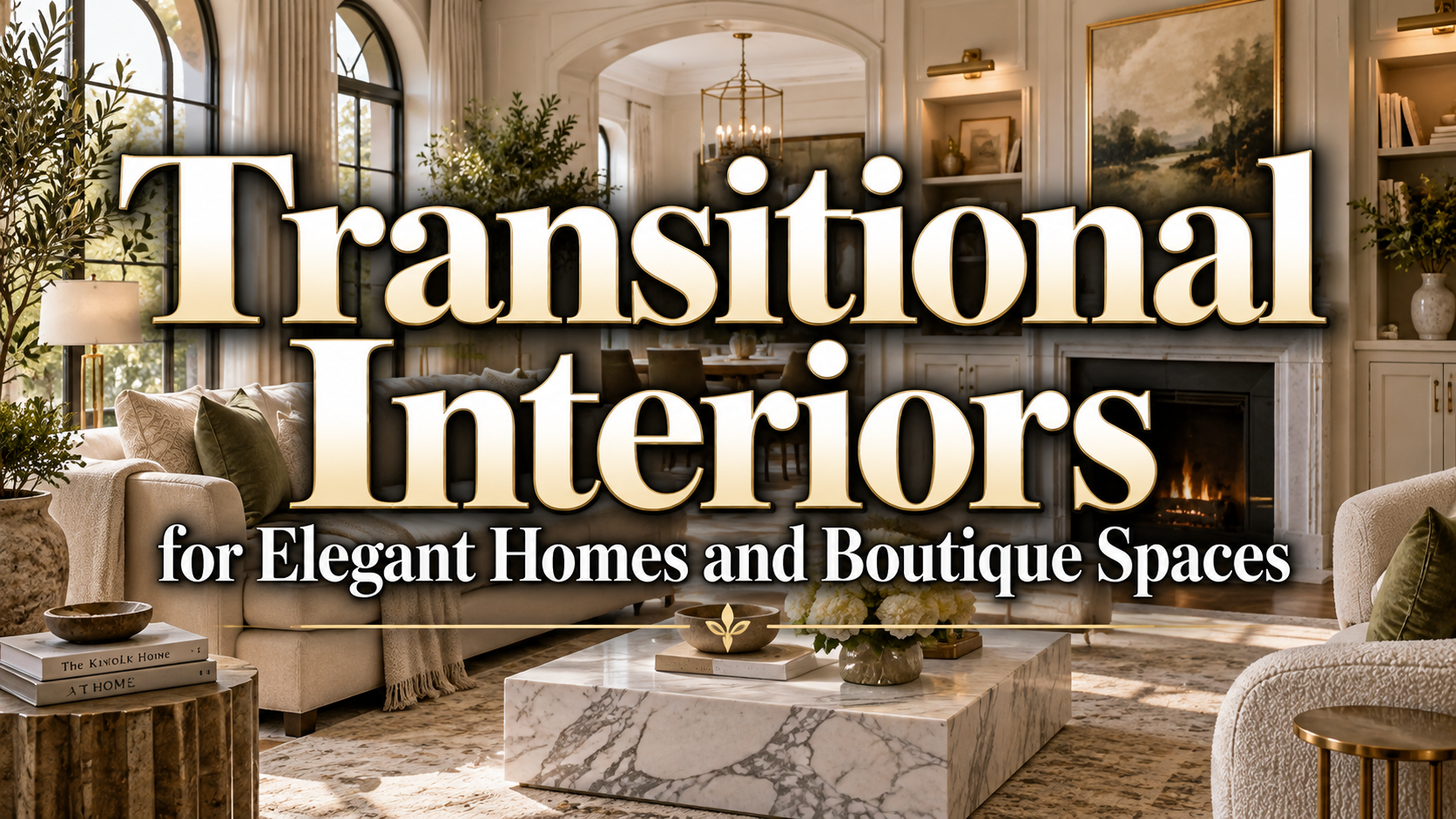
Transitional Style Interior Design 2026: Classic Character, Modern Comfort
Start With What the Space Already Offers
Transitional design combines traditional and modern elements, often pairing comfortable, simplified furniture with selected decorative details. It does not require a precise 50/50 split or a completely neutral room.
Before shopping, examine the architecture, existing furniture, daylight, and everyday activities. Keep meaningful pieces that work, then identify where simpler forms or better functionality would improve the space.
Start with an inherited cabinet beside a contemporary sofa. Aim for a considered relationship, not two competing styles.
What Makes Transitional Design Relevant in 2026?
Houzz’s 2026 U.S. Kitchen Trends Study identifies transitional as the most common renovated-kitchen style, at 25%. The survey covered 1,780 U.S. Houzz users planning, undertaking, or recently completing renovations, with responses collected in July 2025. These findings describe that audience, not every market worldwide.
Use the style to combine lasting character with current needs, not as a shopping checklist.
Build a Balanced Transitional Interior
Mix Eras Through Proportion
Livingetc’s 2026 designer interviews emphasize confidently combining different periods rather than buying matching sets or diluting everything into a safe middle ground.
Choose one anchor, such as a traditional dining table, then test contemporary upholstered chairs around it. Compare seat heights, visual weight, and usable space before deciding.
Repeat a curve, wood tone, or metal finish to connect the pieces. Avoid making every object a statement.
Use Warmth Without Losing Contrast
The Houzz study reports that wood became the most popular cabinet-color choice in its renovated-kitchen sample, narrowly overtaking white.
For a transitional scheme, try warm ivory walls, oak furniture, and muted blue upholstery. Add a darker frame or lamp base to give the composition definition.
Test samples beside existing floors and fabrics in daylight and evening light. Do not approve a palette from a screen alone.
Layer Materials Deliberately
Combine a few contrasting surfaces: woven upholstery, a smooth table, textured ceramics, and restrained metal accents. Give each material enough space to register.
Ask suppliers about maintenance and suitability before choosing stone, fabrics, or finishes. For a busy family room or hotel lounge, prioritize cleaning requirements and replaceable components over an immaculate showroom appearance.
Preserve useful furniture where possible. Reupholstering an existing chair may suit the concept better than replacing every piece.
Make Function Part of the Style
Houzz’s 2026 findings also highlight practical upgrades such as pantry storage, pullout shelving, and task-specific kitchen zones. Transitional styling does not require old-fashioned functionality.
Plan circulation, storage, and comfortable seating before decorative purchases. Combine general lighting with focused reading or task lights, and test glare from normal seated positions.
For a kitchen, consider classic framed cabinetry with modern internal organization. For a living room, conceal cables thoughtfully while keeping frequently used controls accessible.
A Room Concept to Try
For a hypothetical apartment living room, retain the existing ceiling molding and introduce a straight-lined sofa, an oval wooden coffee table, and a vintage armchair.
Connect the pieces through cream, warm brown, and muted olive. Add one contemporary artwork instead of filling every wall. Before ordering, tape furniture footprints onto the floor and walk through the arrangement.
Extend the Style Into Commercial Branding
A boutique hotel or furniture studio can carry the same classic-modern balance into menus, presentation decks, and website headings.
PutraCetol Studio offers serif, sans serif, and display typography for brand exploration. Try an expressive title font with straightforward supporting text, keeping directional signs readable. Let the graphics complement the interior rather than compete with it.
Comparison
Use these pairings as design experiments, not mandatory combinations.
| Space | Traditional Anchor | Contemporary Counterpart |
|---|---|---|
| Living room | Detailed fireplace | Simple sofa and abstract artwork |
| Dining room | Wooden dining table | Clean-lined upholstered chairs |
| Bedroom | Paneled walls | Unfussy bedside lighting |
| Boutique lobby | Vintage cabinet | Contemporary seating and clear signage |
Common Mistakes
The first mistake is confusing transitional with generic beige decoration. Introduce personal artwork, meaningful objects, or a controlled accent color. Create coherence through proportion and repeated details rather than removing every trace of personality.
Another mistake is mixing eras without checking function. A beautiful chair may not fit the table, and an oversized sofa can obstruct circulation. Measure thoroughly, test materials, and reserve budget for lighting, installation, and everyday practicality. Treat “timeless” as a design ambition, not a guarantee that nothing will need maintenance or change.
Conclusion
Transitional style interior design 2026 works best when traditional character and contemporary comfort support the same everyday experience.
Start with the architecture, preserve useful pieces, and choose additions deliberately. For commercial spaces, extend that balance through thoughtful PutraCetol Studio typography. Aim for a room that feels personal, functional, and capable of evolving.
Explore these fonts and many more at PutraCetol.com to build a business identity that looks professional, trustworthy, and memorable.
Additionally, if you want to explore some free typography options, you can check out Putracetol Studio on Dafont. Happy reading and designing!