
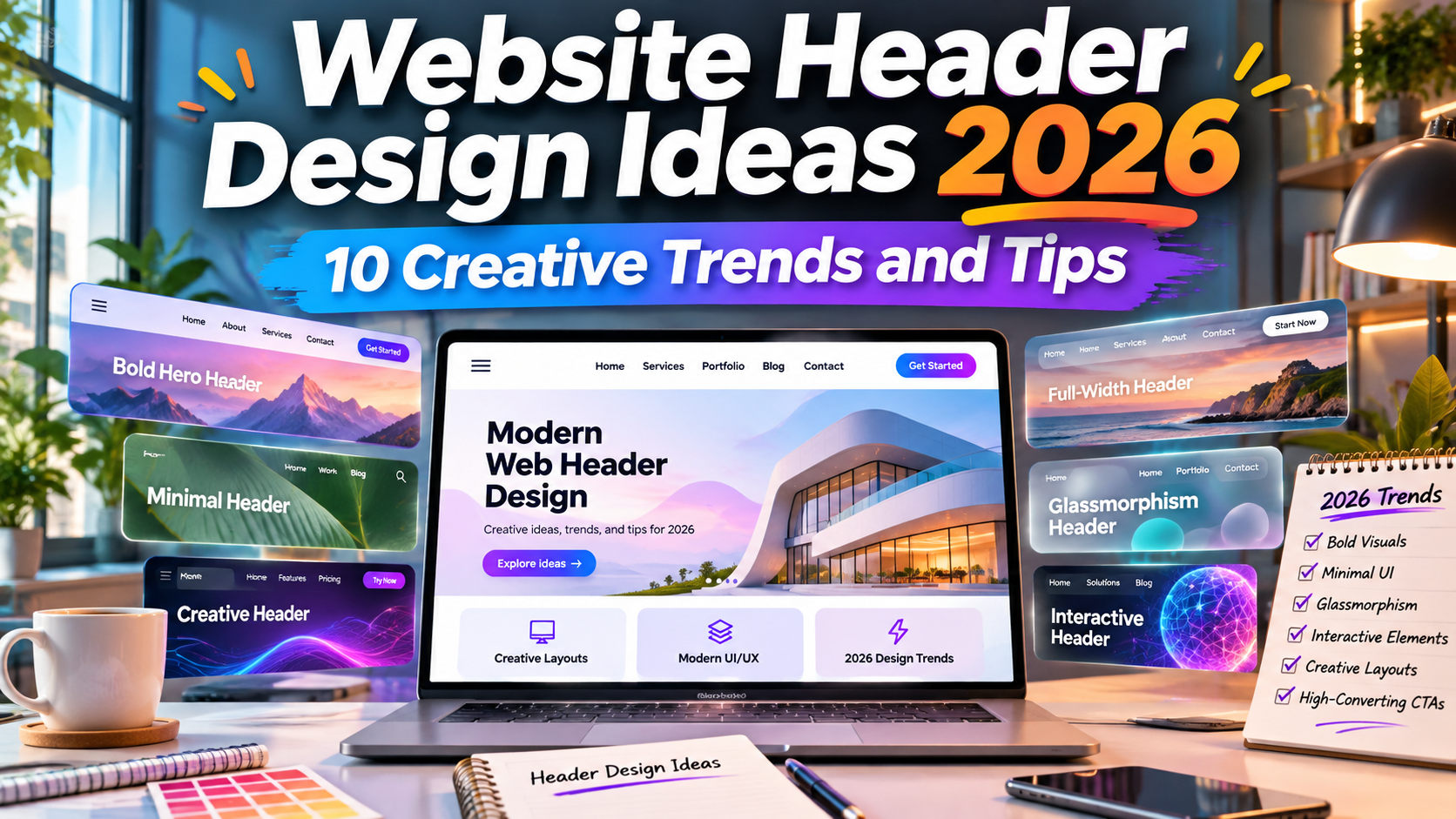
Website Header Design Ideas 2026: 10 Creative Ways to Make a Strong First Impression
A website’s header is more than a decorative section. It’s the first visual introduction to your brand, helping visitors understand your message, explore your content, and decide what to do next.
The best website header design ideas 2026 combine attractive visuals, intuitive navigation, expressive typography, and carefully positioned calls to action. Whether you’re designing a corporate website, creative portfolio, online store, or startup landing page, the right header can transform an ordinary browsing experience into something memorable.
Modern website design isn’t simply about looking impressive. It’s about balancing creativity, usability, and performance to encourage meaningful interactions.
Design Your Header With Purpose
Before choosing colors, images, or animations, establish the primary goal of your website header.
An e-commerce website might prioritize product discovery, while a creative agency may benefit from an impressive hero section that communicates its personality.
Every effective header should answer three essential questions: What does this website offer? Why should visitors care? What should they do next?
Begin with a clear visual hierarchy, recognizable branding, and navigation that feels effortless. Then add creative elements that support your message rather than compete for attention.
10 Best Website Header Design Ideas for 2026
1. Minimalist Headers With Bold Typography
Minimalist headers remain an effective choice for brands that value clarity and sophistication.
Combine generous white space, carefully selected typography, and a short headline to create immediate visual impact.
A premium consulting website, for example, could feature an oversized serif headline against a neutral background with one prominent consultation button.
The typography becomes the central design element without requiring complicated graphics.
2. Full-Screen Hero Image Headers
Large photographic headers help businesses establish an emotional connection with visitors.
High-quality images can communicate atmosphere, product quality, or professional expertise before users read the supporting text.
Travel companies, architectural studios, and lifestyle brands can use immersive photography paired with concise messaging.
Choose images that complement the headline and maintain sufficient contrast for readability.
3. Split-Screen Header Layouts
Split-screen headers divide the hero area into two complementary sections, typically combining text and imagery.
One side introduces the brand’s value proposition, while the other displays product photography, illustrations, or interface previews.
This structure works especially well for SaaS platforms, digital agencies, and startup websites because it presents information clearly without sacrificing creativity.
4. Interactive and Animated Headers
Subtle motion can make website headers feel more engaging and dynamic.
Consider lightweight hover effects, animated illustrations, or gentle transitions that respond to user interaction.
An animation studio might showcase a short character animation, while a technology company could use restrained motion graphics to explain its product.
Animations should remain purposeful, accessible, and optimized for performance.
5. Creative Typography-Focused Headers
Typography-driven headers turn lettering into a recognizable visual identity.
Experimental display fonts, expressive serifs, and contemporary sans-serif typefaces can establish completely different brand personalities.
Creative studios might choose unconventional letterforms, while professional service companies often benefit from structured, highly legible typography.
Explore distinctive typefaces at PutraCetol Studio to create memorable website headlines and strengthen visual branding.
6. Sticky Navigation Headers
Sticky headers keep important navigation elements accessible as visitors scroll through a website.
This approach is particularly useful for long landing pages, online stores, and content-rich platforms.
A compact sticky navigation bar can maintain access to menus, search functions, and important action buttons.
Avoid oversized sticky elements that consume valuable screen space, particularly on mobile devices.
7. Gradient and Abstract Background Headers
Color gradients and abstract shapes can introduce personality without relying on photography.
Soft gradients create an approachable appearance, while contrasting color combinations can communicate energy and innovation.
Technology startups, creative agencies, and digital product companies can combine abstract backgrounds with clean typography to establish a distinctive contemporary aesthetic.
8. Video Background Headers
Short background videos can demonstrate a product, environment, or service experience.
For example, a hospitality brand might showcase its facilities, while a design agency could feature selected portfolio projects.
Keep videos compressed, muted, and visually relevant. Provide a static fallback image and respect reduced-motion preferences to maintain accessibility and performance.
9. Asymmetrical and Editorial Headers
Asymmetrical layouts introduce visual interest through unconventional spacing, overlapping elements, and varied typography sizes.
These designs work well for fashion brands, photographers, creative portfolios, and editorial websites.
The key is maintaining a logical reading order and consistent alignment, even when the composition appears intentionally unconventional.
10. Conversion-Focused Headers With Clear CTAs
An attractive header should also guide visitors toward meaningful actions.
Conversion-focused headers combine a concise benefit-driven headline, supporting explanation, and highly visible call-to-action button.
A service business might use “Book a Free Consultation,” while a software company could feature “Start Your Free Trial.”
Keep the primary action easy to recognize and avoid competing buttons with equal visual emphasis.
Comparison: Which Website Header Style Works Best?
Different header approaches serve different branding and business objectives.
| Header Style | Main Advantage | Best For |
|---|---|---|
| Minimalist | Clarity and elegance | Corporate, luxury |
| Full-screen image | Emotional storytelling | Travel, lifestyle |
| Split-screen | Balanced information | SaaS, startups |
| Animated | Interactive engagement | Creative, technology |
| Typography-focused | Strong brand personality | Agencies, portfolios |
| Conversion-focused | Clear next action | Services, e-commerce |
How to Choose the Right Header
Start by understanding your audience, brand positioning, and website objectives.
Creative brands can experiment with expressive visual compositions, while professional service websites should prioritize clarity and credibility.
Regardless of style, responsive layouts, readable typography, accessible navigation, and fast loading should remain essential design priorities.
Common Mistakes in Website Header Design
One common mistake is overcrowding the header with too many elements. Excessive navigation links, competing buttons, decorative graphics, and lengthy headlines can overwhelm visitors. A website header should communicate its primary message quickly while establishing a clear visual hierarchy. Designers should carefully prioritize essential information and remove anything that distracts from the intended user journey.
Another frequent problem is choosing visual effects over usability. Oversized images, heavy animations, low-contrast text, and complicated menus can create frustrating experiences, particularly on mobile devices. Effective headers should remain responsive across screen sizes, support keyboard navigation, and maintain readable text. Performance also matters because slow-loading hero images and web fonts may delay the appearance of important content.
Finally, some designers overlook branding consistency. A visually impressive header may still feel disconnected when its typography, color palette, or imagery conflicts with the rest of the website. Establishing consistent design guidelines helps maintain recognition across landing pages, navigation elements, and supporting content. Regular usability testing can reveal which design decisions genuinely improve engagement and conversions.
Conclusion
The best website header design ideas for 2026 combine creative expression with functionality to deliver memorable first impressions.
From minimalist typography and immersive photography to interactive animations and conversion-focused layouts, each approach offers opportunities to strengthen brand identity and improve user experience.
Choose a header design that reflects your audience, communicates your value, and makes navigation effortless.
For designers looking to create distinctive website headlines, explore the creative font collections at PutraCetol Studio and discover typography that brings personality to modern digital experiences.
Explore these fonts and many more at PutraCetol.com to build a business identity that looks professional, trustworthy, and memorable.
Additionally, if you want to explore some free typography options, you can check out Putracetol Studio on Dafont. Happy reading and designing!