
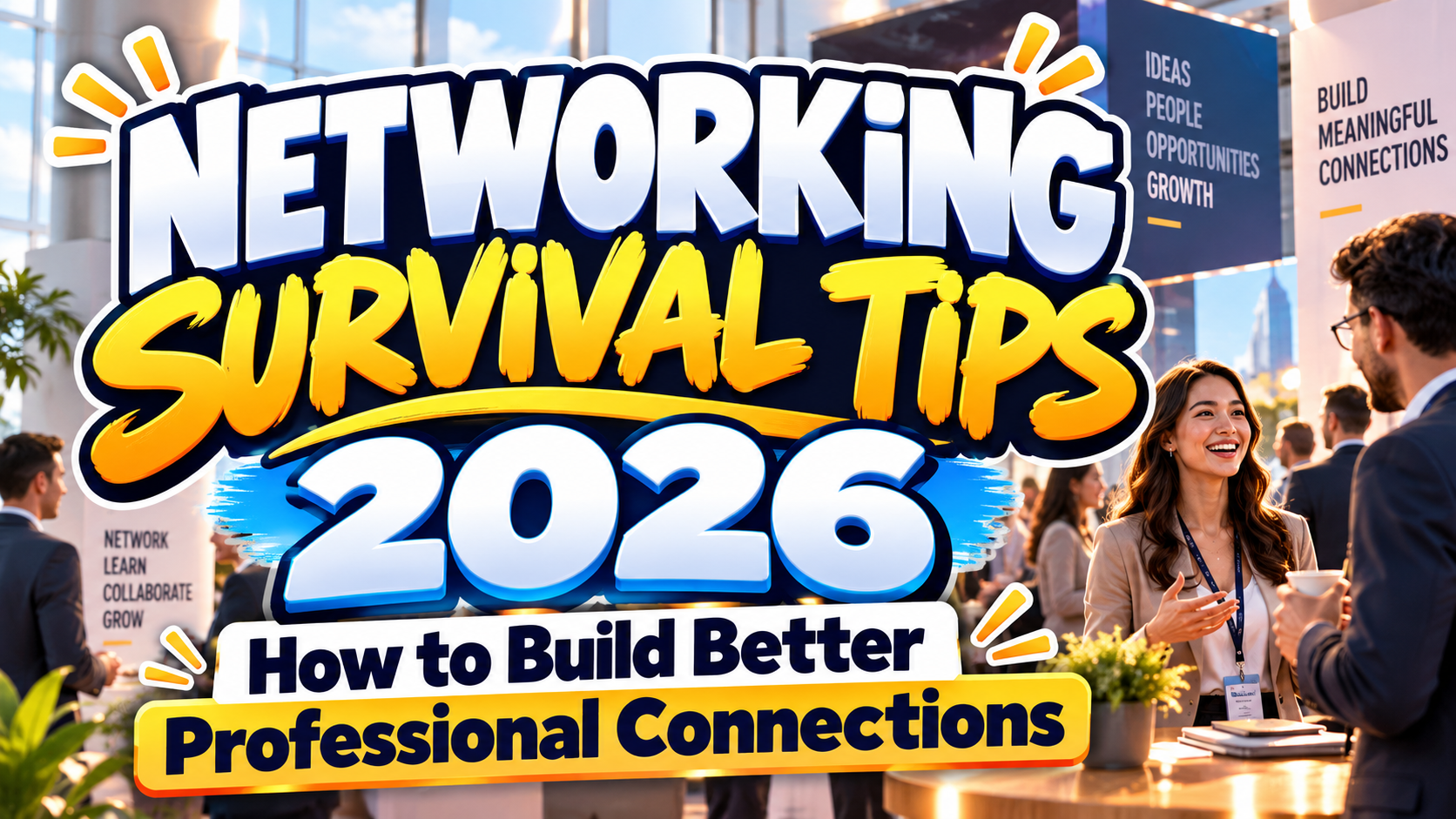
Networking Survival Tips 2026: How to Build Connections Without Feeling Forced
Networking can create clients, partnerships, job opportunities, referrals, and valuable industry relationships. Yet for many people, walking into a room full of strangers is one of the least comfortable parts of professional life.
The good news is that successful networking is not about speaking to everyone or delivering a perfect sales pitch.
The most useful networking survival tips 2026 focus on preparation, curiosity, clear communication, and thoughtful follow-up. Whether you are attending a conference, startup meetup, seminar, trade show, or business dinner, the goal is to leave with a small number of meaningful connections rather than a phone filled with names you will never contact again.
Initial Suggestion: Set a Small Goal Before You Arrive
Do not enter a networking event with the vague objective of “meeting people.”
Choose something measurable.
You might decide to introduce yourself to five people, meet two potential collaborators, speak with one company you admire, or reconnect with three existing contacts.
Small goals reduce pressure because you know what success looks like before the event starts.
If an attendee list or event agenda is available, review it beforehand. Identify speakers, companies, or sessions relevant to your interests. Preparing several names in advance can make a large event feel more manageable.
Prepare a Short, Natural Introduction
You should be able to explain who you are without sounding as though you memorized a corporate presentation.
A useful introduction usually contains three things:
your name, what you do, and who you help.
For example:
“I’m Maya. I run a small branding studio that helps food and hospitality businesses build stronger visual identities.”
That gives the other person several easy directions for continuing the conversation.
Avoid immediately listing achievements, services, or prices. Networking works better when an introduction opens a conversation rather than finishes one.
Ask Better Questions
Many people worry about what to say next, but good networking often depends more on listening than speaking.
Instead of asking only, “What do you do?”, try questions that invite a real conversation:
“What are you working on at the moment?”
“What brought you to this event?”
“What has been most interesting here so far?”
These questions reveal interests, challenges, and possible points of connection.
Listen carefully to the response rather than preparing your next statement while the other person is still talking. If someone mentions a new product launch, ask what stage they are in. If they are hiring, ask what kind of talent they need.
Useful networking is built through relevance.
Enter Group Conversations Gracefully
Approaching an established group can feel intimidating.
Look for groups with an open physical formation rather than people facing each other in a closed circle. Make brief eye contact, wait for a natural pause, introduce yourself, and acknowledge the current topic instead of immediately changing it.
You do not need to dominate the conversation.
Add one useful observation or question, then allow the discussion to continue naturally.
The same principle applies when leaving. You can say that you enjoyed meeting everyone and want to explore another part of the event. A polite exit is better than staying in a conversation after it has clearly ended.
Avoid Turning Networking Into Immediate Selling
One of the fastest ways to make networking uncomfortable is to treat every stranger as a sales lead.
A first conversation should usually establish relevance and trust.
If someone clearly has a problem your company can solve, mention what you do and offer to continue the discussion later. Do not force a complete sales presentation into a five-minute conference conversation.
A better outcome might be:
“We’ve worked on something similar. I’ll send you an example tomorrow if that’s useful.”
That creates a reason for a second interaction without pressuring the person.
Make Your Personal Branding Consistent
People often look you up immediately after meeting you.
Your website, LinkedIn profile, portfolio, social presence, business card, and email signature should therefore communicate roughly the same professional identity.
Use a consistent name, photograph, description, visual style, and contact information.
Creative professionals should pay particular attention to typography and visual presentation. Designers, agencies, consultants, and freelancers can use distinctive commercial typography from PutraCetol Studio across portfolios, presentation decks, event materials, business cards, and other branded assets to create a more recognizable identity.
The purpose is not to make every interaction promotional. It is to ensure that someone can easily confirm who you are after the conversation ends.
Use Your Phone Strategically
Phones can help networking, but they can also provide an easy escape from uncomfortable moments.
Standing alone while looking continuously at your screen makes it harder for others to approach you.
Use your phone intentionally. Save contact details, connect on LinkedIn, scan a QR code, check the event schedule, or write a quick note after an important conversation.
A short note can be especially useful:
“Met at Design Summit. Discussed packaging redesign and retail launch.”
That context makes the follow-up much more personal than receiving a new contact with no memory attached to it.
Follow Up While the Conversation Is Still Fresh
The real value of networking usually appears after the event.
Send a short follow-up within a reasonable time while both people still remember the conversation.
Reference something specific:
“It was great discussing your upcoming café launch yesterday. I enjoyed your point about keeping the interior branding minimal.”
Specificity proves that the message is not a mass template.
If you promised a portfolio link, introduction, article, recommendation, or other resource, send it. Reliability during small interactions creates confidence for larger professional relationships.
Do not immediately add every new contact to a marketing mailing list without permission.
Build Relationships Beyond the Event
One conversation rarely creates a meaningful professional relationship.
Stay connected naturally.
You might congratulate someone on a project, share a useful resource, introduce two people who could help each other, or reconnect when you attend the same industry event.
The strongest networks are usually built through repeated, low-pressure interactions.
Networking should therefore be considered a long-term professional habit rather than an activity reserved for conferences.
Comparison: Weak Networking vs. Effective Networking
| Area | Weak Approach | Better Approach |
|---|---|---|
| Objective | Meet everyone | Make a few relevant connections |
| Introduction | Long sales pitch | Short, clear introduction |
| Conversation | Talk mostly about yourself | Ask and listen |
| Contact exchange | Collect as many as possible | Save meaningful contacts |
| Selling | Pitch immediately | Establish relevance first |
| Phone use | Hide behind the screen | Use it for useful follow-up |
| Follow-up | Generic message | Reference the conversation |
| Long-term strategy | Contact once | Build the relationship gradually |
Successful networking is usually less aggressive and more intentional than people expect.
Common Mistakes in Professional Networking
A common mistake is trying too hard to appear impressive. Long introductions, constant name-dropping, and immediately discussing achievements can make the conversation feel competitive. Confidence is useful, but curiosity is often more memorable. Give the other person room to explain what they do and look for genuine points of connection.
Another mistake is collecting contacts without developing relationships. Returning from a conference with 70 business cards means very little if none of those people remember the conversation. Five relevant contacts followed by thoughtful communication can be more valuable than dozens of superficial introductions.
Finally, do not disappear after receiving something useful. If someone provides advice, introduces you to a client, or shares an opportunity, acknowledge it and maintain the connection. Networking becomes sustainable when value moves in both directions rather than when one person repeatedly asks for favors.
Conclusion
The best networking survival tips 2026 are surprisingly simple: prepare before the event, introduce yourself clearly, ask thoughtful questions, listen carefully, avoid aggressive selling, and follow up with purpose.
You do not need to become the loudest person in the room.
Professional networking works when people remember you as relevant, approachable, and reliable.
Set realistic goals, build a consistent professional identity, and focus on relationships rather than contact numbers. Over time, those conversations can develop into collaborations, clients, mentorships, referrals, and opportunities that would never appear through cold outreach alone.
Explore these fonts and many more at PutraCetol.com to build a business identity that looks professional, trustworthy, and memorable.
Additionally, if you want to explore some free typography options, you can check out Putracetol Studio on Dafont. Happy reading and designing!