
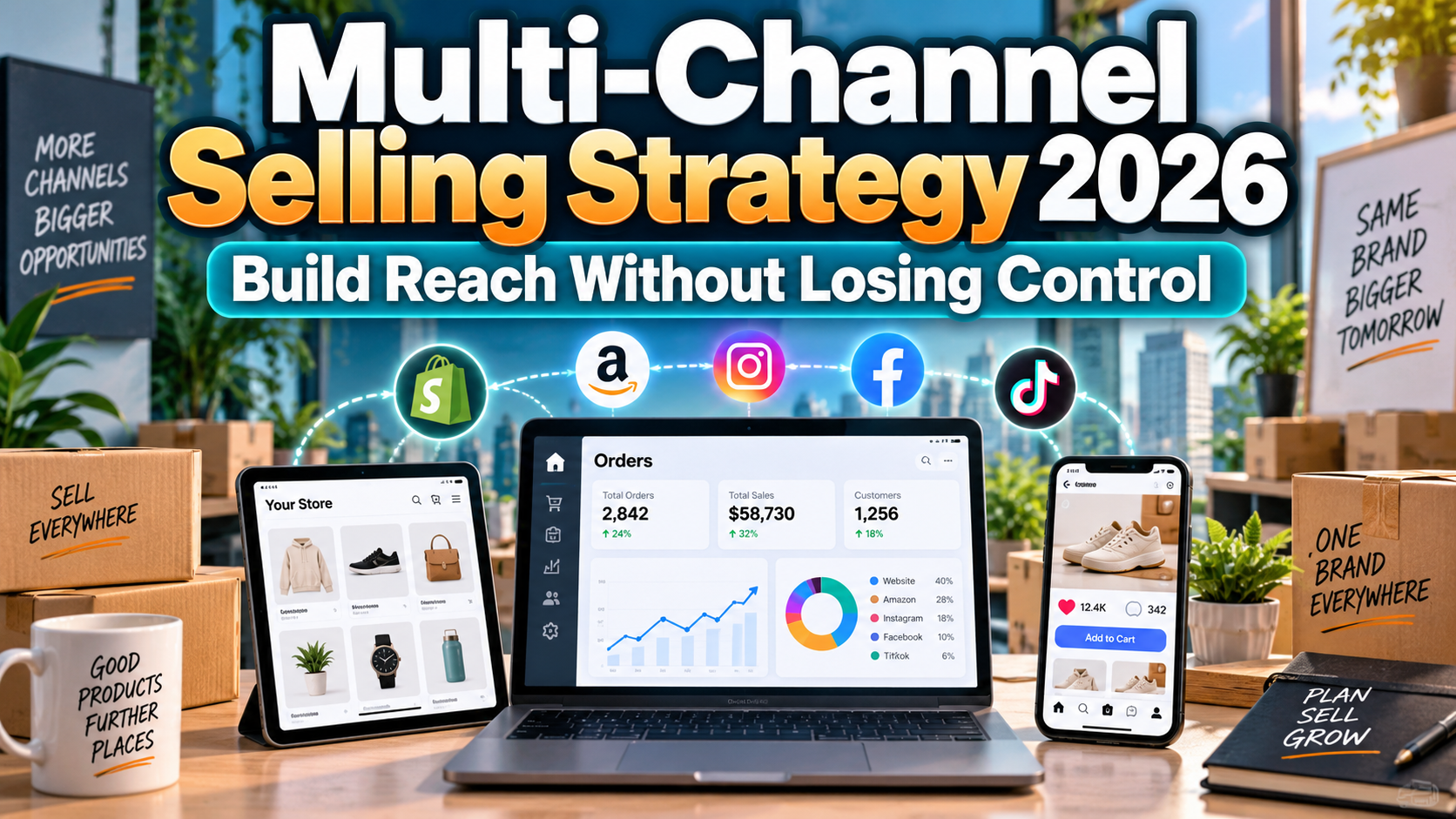
Multi-Channel Selling Strategy 2026: More Reach, One Recognizable Brand
Start With Two Channels, Not Every Platform
Begin your multi-channel selling strategy 2026 with an existing sales channel and one carefully selected addition. Prioritize customer fit, operating capacity, and sustainable margins over the number of storefronts.
Interview buyers about where they discover products and where they prefer to purchase. Before launching, verify regional availability, product eligibility, fees, and fulfillment requirements. Assign someone responsibility for each channel’s listings, messages, and order exceptions.
What Is Multi-Channel Selling?
Multi-channel selling means offering products through more than one sales channel. Omnichannel goes further by connecting those channels so customers can continue their journey without starting again.
Shopify describes this distinction through examples such as ordering online and collecting in-store. Simply opening several accounts does not create that continuity.
Build a Practical Cross-Channel System
Give Each Channel a Clear Role
Use your website for detailed explanations and direct purchases, a suitable marketplace for searchable listings, and social content for demonstrations and conversation.
Distinguish promotion from transactions. A social post linking to your website supports discovery; native social checkout is a separate selling capability. Verify which options are available before designing the journey.
Centralize Product Information and Stock
Maintain a master catalog with consistent product identifiers, variants, dimensions, images, and stock-keeping units. Choose an inventory system or integration compatible with your selected channels.
For example, Shopify Marketplace Connect synchronizes listings, orders, and inventory with supported marketplaces. Support is specific, not universal, so check the current integration list.
Test stock deductions, cancellations, and restocking. Set alerts for failed updates and consider a stock buffer for fast-moving products rather than assuming synchronization eliminates overselling.
Adapt Listings Without Changing Product Facts
Rewrite titles and descriptions for each platform’s format while preserving accurate specifications. Use photographs of the actual item and explain included accessories, condition, delivery, and returns.
Google Merchant Center requires submitted prices and availability to match the corresponding landing page and checkout. This is an operational requirement, not just a branding preference.
Use AI to draft variations from verified information, then review every specification and promotional claim.
Make Buying Clear and Accessible
Link campaigns to the relevant product or collection rather than always sending visitors to the homepage. Test the journey on a phone, including payment and confirmation.
For your own checkout, use clear labels, understandable error messages, and only necessary fields. W3C’s forms guidance recommends these practices to support accessible completion.
Explain delivery estimates, total costs, and support options before purchase.
Keep Branding Consistent, Not Identical
Create reusable rules for logo placement, colors, photography, typography, and tone. Adapt compositions to each platform without changing the brand’s identity.
Explore PutraCetol Studio’s display, serif, and handwritten fonts for campaign headlines and packaging. Pair expressive lettering with readable product details, and respect each channel’s image requirements.
For a hypothetical stationery brand, repeat the same collection name across website pages, marketplace listings, and social demonstrations. Change the format, not the product promise.
Measure Profitability and the Customer Journey
Compare net sales after discounts and refunds against product costs, platform fees, payment processing, advertising, shipping, and returns handling. Review cancellations, customer questions, and repeat purchases alongside revenue.
Add consistent UTM campaign parameters to permitted links directing visitors to your website. Google Analytics uses these parameters to identify referring campaigns.
Reconcile results with actual orders. Do not add every platform’s claimed conversions together or assume the final click explains the entire purchase.
Comparison
Use this framework to assign responsibilities before expanding.
| Channel | Suggested Role | Main Operational Priority |
|---|---|---|
| Your website | Detailed information and direct checkout | Usability, support, and order accuracy |
| Marketplace | Product discovery and platform-based purchasing | Listing rules, fees, and inventory |
| Social platforms | Demonstrations, conversation, and supported selling | Clear purchase routes and timely replies |
| Consented follow-up and relevant offers | Permission, usefulness, and preference controls |
Common Mistakes
The first mistake is expanding faster than fulfillment and customer service can handle. Pilot a small product range, place test orders, and resolve recurring failures before adding another platform. Keep delivery promises realistic and provide a clear returns process, including any channel-specific differences.
Another mistake is confusing access to buyer information with permission for marketing. Respect platform rules and obtain appropriate consent before adding customers to promotional lists. Avoid pressuring marketplace buyers to complete transactions elsewhere. Keep communication useful, protect personal information, and maintain an independent record of your own approved brand assets.
Conclusion
A strong multi-channel selling strategy 2026 connects audience reach with dependable operations. Select channels deliberately, coordinate inventory, adapt listings, and measure profit rather than activity alone.
Use consistent PutraCetol Studio typography to reinforce recognition across campaigns and packaging. The goal is not to appear everywhere, but to make every supported buying journey clear, trustworthy, and worth repeating.
Explore these fonts and many more at PutraCetol.com to build a business identity that looks professional, trustworthy, and memorable.
Additionally, if you want to explore some free typography options, you can check out Putracetol Studio on Dafont. Happy reading and designing!