

The strongest female character concept prompts begin with a decision that reveals who the character is. Hair color, clothing, age, and facial features may help an illustrator visualize her, but they rarely explain why an audience should care about her story.
Begin by placing the character between two meaningful outcomes. She may have to choose between protecting her family and exposing corruption, preserving a cultural tradition and changing an unfair system, or achieving the goal she has pursued for years and keeping the relationship she values most.
A useful starting formula is:
A woman with a specific role wants a meaningful goal, but an internal contradiction and external obstacle force her to make a choice that could change her identity.
For example:
A respected city architect wants to protect a historic neighborhood from demolition, but accepting the redevelopment contract would pay for her father’s medical care and secure the career she has spent twenty years building.
This concept already contains profession, motivation, conflict, relationship, stakes, and moral uncertainty. Visual details can then grow naturally from the life she leads.
What Are Female Character Concept Prompts?
Female character concept prompts are structured ideas used to develop women and girls for novels, comics, animation, films, games, illustrations, and brand storytelling. A prompt may describe a complete scenario or provide only enough information to begin exploring the character.
A useful prompt can include:
- Role or profession
- Age or life stage
- Cultural and social environment
- Personal goal
- Fear or emotional wound
- Contradictory personality traits
- Important relationship
- Secret or mistaken belief
- Visual motif
- Physical environment
- Practical limitation
- Decision that drives the story
The purpose is not to complete the character immediately. A good prompt creates productive questions that encourage the writer or designer to investigate her choices, relationships, and development.
A Practical Female Character Prompt Framework
Use the following structure to turn a simple idea into a layered concept.
1. Role
Give the character a position that affects how she moves through the world.
Instead of writing “a mysterious woman,” try “a night-shift train dispatcher,” “a retired courtroom interpreter,” or “the youngest engineer responsible for a failing orbital station.”
A specific role creates responsibilities, vocabulary, routines, social expectations, and possible conflicts.
2. Goal
Identify what she actively wants. The goal should be concrete enough to shape decisions.
She may want to win an election, recover a missing manuscript, rebuild a family business, become financially independent, protect a younger sibling, or discover why a scientific experiment failed.
3. Internal Contradiction
Combine qualities that do not fit together comfortably.
She might be courageous in emergencies but afraid of emotional intimacy. She could be deeply compassionate while holding grudges for years. And she may be an excellent strategist who becomes impulsive when her family is involved.
Contradiction creates a person rather than a collection of positive traits.
4. External Pressure
Place the character in a situation that does not allow her to remain unchanged.
A rival may expose her secret. A trusted institution may betray its stated values. A natural disaster might destroy the plan she spent years preparing. An unexpected promotion may force her to lead people who resent her.
5. Relationship
Give her at least one relationship that challenges a different part of her personality.
A mentor might admire her talent but distrust her methods. A daughter could support her ambition while resenting her absence. A rival may understand her better than her closest friend does.
6. Cost
Ask what success will require her to sacrifice.
Without cost, the goal may feel like a task rather than a story. The cost can involve status, safety, identity, family, reputation, freedom, belief, or belonging.
7. Visual Language
Choose design elements that reflect the character’s life and psychology rather than decorating her randomly.
A field medic may wear repaired equipment organized with obsessive care. A politician who fears appearing vulnerable may use tightly structured clothing and controlled colors. A botanist living in a polluted city might preserve one vivid green accessory as a personal symbol.
15 Female Character Concept Prompts
1. The Archivist of Forbidden Names
A royal archivist secretly preserves the identities of people erased from official history. She appears disciplined and emotionally reserved, but every hidden record makes it harder for her to remain loyal to the government that educated and employed her.
Visual direction: Structured robes, ink-stained fingers, hidden pockets, brass keys, faded documents, and one forbidden name embroidered inside her sleeve.
2. The Engineer Who Lied to Reach Orbit
A gifted mechanic enters an orbital repair program using qualifications that belonged to her deceased sister. When the station begins losing power, she may be the only person capable of fixing it, but solving the crisis could expose the fraud that gave her access.
Visual direction: Practical uniform, mismatched tools, repair marks, compact silhouette, worn family token, and lighting dominated by emergency red and cold blue.
3. The Queen Who Cannot Lie
A newly crowned ruler has a supernatural inability to speak anything she believes is false. Her honesty initially makes her popular, but diplomacy becomes dangerous when peace depends on ambiguity, strategic silence, and promises she cannot guarantee.
Visual direction: Symmetrical ceremonial clothing that gradually becomes less controlled as political pressure increases.
4. The Retired Spy Running a Community Library
A former intelligence operative manages a quiet neighborhood library under a new identity. She wants an ordinary life, but she begins recognizing coded messages inside donated books and must decide whether helping an old contact will endanger the community that now trusts her.
Visual direction: Soft knitwear over highly practical clothing, reading glasses, carefully positioned exits, annotated books, and habits that reveal constant situational awareness.
5. The Climate Navigator
A young navigator maps temporary routes between cities affected by rising seas. She is admired for making difficult decisions quickly, but she has hidden evidence that the route protecting her hometown will redirect danger toward a poorer settlement.
Visual direction: Waterproof maps, layered field clothing, salt-damaged equipment, tide markers, and colors inspired by fog, rust, and deep water.
6. The Healer Who No Longer Believes in Her Gift
A village healer continues treating patients even though she believes her celebrated ability disappeared years ago. Her remedies still work because of her observation, knowledge, and care, but the community credits magic she no longer trusts.
Visual direction: Carefully labeled plants, practical workwear, ceremonial objects she rarely uses, and a contrast between public confidence and private exhaustion.
7. The Investigative Podcaster Protecting the Wrong Source
An ambitious journalist receives evidence that could expose a powerful company. She promises anonymity to the source before discovering that the source manipulated part of the evidence for personal revenge.
Visual direction: Portable recording equipment, sleepless workspace, color-coded research walls, public confidence, and private disorder.
8. The Second-Generation Restaurant Owner
A chef inherits a restaurant that has become an important gathering place for her community. She wants to modernize the menu and business model, but regular customers treat every change as a rejection of the family history that built the restaurant.
Visual direction: Contemporary chef clothing mixed with inherited tools, handwritten recipes, renovated surfaces beside preserved details, and a palette inspired by ingredients.
9. The Sound Designer Who Prefers Silence
A highly respected game sound designer develops immersive worlds but finds everyday noise physically overwhelming. When her studio accepts a project built around constant sensory intensity, she must advocate for a different design approach without being dismissed as incapable of leading it.
Visual direction: Precise workstation, customizable audio equipment, layered textures, quiet personal spaces, and visual motifs based on waveforms and negative space.
10. The Portrait Restorer Receiving Messages From Paintings
A museum conservator begins finding newly painted details beneath damaged historical portraits. The messages appear to describe crimes that were removed from official accounts, but revealing them could destroy the museum that funded her career.
Visual direction: Fine brushes, magnifying lenses, cracked varnish, muted period colors, and subtle marks that repeat across unrelated portraits.
11. The Athlete Returning After Public Failure
A champion sprinter returns to competition after freezing during a nationally televised final. Her body has recovered, but she now measures every training session against the moment that changed how the public sees her.
Visual direction: Clean athletic silhouette, worn starting blocks, carefully logged performance data, and repeated imagery of lanes, thresholds, and unfinished lines.
12. The Artificial Intelligence Ethicist Investigating Her Own Memories
A researcher discovers that an AI model was trained using private recordings from her childhood. The system predicts her decisions with disturbing accuracy, forcing her to question which memories are truly private and whether deleting the model would erase evidence of a larger abuse.
Visual direction: Controlled corporate environment, fragmented home recordings, reflected faces, duplicated handwriting, and interfaces that gradually imitate her personal visual habits.
13. The Crisis Negotiator With Stage Fright
A negotiator can calmly speak with people during emergencies but struggles to address a room of colleagues. When she is promoted into leadership, she must teach others the instincts she has never been able to explain clearly.
Visual direction: Restrained professional clothing, handwritten conversation maps, discreet grounding objects, and compositions that contrast intimate spaces with large rooms.
14. The Courier of Forgotten Gifts
For a brand campaign or family-oriented story, create a courier who delivers gifts that were prepared but never given. Each delivery helps someone complete an unfinished relationship, while the courier avoids opening the package she has carried for herself for many years.
Visual direction: Distinctive coat, layered labels, reusable packaging, handwritten tags, weathered travel case, and a color assigned to every emotional category.
15. The Villain Who Built a Safe City
A brilliant administrator creates the safest city in the region by monitoring nearly every movement, conversation, and transaction. She genuinely believes that privacy is a privilege society can no longer afford, especially after losing her family during a preventable attack.
Visual direction: Immaculate architecture, controlled monochrome clothing, precise geometric accessories, and one personal room filled with objects she refuses to let the surveillance system record.
How to Turn a Writing Prompt Into a Visual Character Prompt
A narrative prompt explains what the character wants and why the conflict matters. A visual prompt translates that information into observable choices.
Use this structure:
Character role and life stage, physical presence, clothing shaped by profession and environment, meaningful personal object, dominant posture or expression, setting, lighting, color palette, visual motif, and emotional tension.
For example:
A middle-aged coastal engineer standing inside an abandoned flood-control station, weatherproof clothing repaired several times, salt-stained boots, rolled maps secured to one shoulder, a small silver compass inherited from her mother, alert posture hiding visible exhaustion, storm light entering through broken windows, muted teal, rust, and fog-grey palette, realistic cinematic character concept art.
For more reliable results, separate permanent traits from scene-specific details. A permanent trait might be her repaired equipment or deliberate posture. Rain, lighting, expression, and background activity may change from scene to scene.
Adapting Prompts for Different Creative Formats
Novels and Short Stories
Focus on voice, internal contradiction, relationships, and decisions. Ask what the character notices first, what she refuses to discuss, and what she misunderstands about herself.
A strong prose prompt should generate scenes, not only biography.
Comics and Graphic Novels
Add silhouette, recurring visual motifs, movement style, and emotional expressions. The character should remain recognizable in different clothing, lighting, and panel sizes.
Consider how her posture changes when she is confident, threatened, dishonest, or alone.
Games
Define capabilities, limitations, play style, progression, and relationship to the player. A strong game character needs motivations that remain visible through actions, dialogue, mechanics, and environment.
Avoid making her narrative identity unrelated to what the player repeatedly does.
Film and Animation
Consider casting range, costume evolution, physical behavior, voice, lighting, and how the character changes visually through the story.
A controlled costume may loosen as she becomes less guarded. A bright palette could gradually become subdued as her certainty disappears.
Brand Storytelling
Build the character around the brand promise and audience experience. A mascot or campaign heroine should have a clear role, recognizable silhouette, repeatable behavior, and enough personality to support multiple stories.
She should express the brand’s values through choices rather than simply wearing its colors.
Questions That Add Depth to Any Female Character
Ask these questions after drafting the initial concept:
- What does she want people to believe about her?
- What does she secretly fear may be true?
- Which skill makes her valuable?
- When does that same skill become a weakness?
- Who benefits if she never changes?
- Which relationship does she consistently misinterpret?
- What does she protect even when it harms her?
- What ordinary pleasure makes her feel safe?
- Which rule does she follow until the story forces her to break it?
- What will she lose if she succeeds?
- What belief must change before she can reach the ending?
- Which part of her identity exists independently of the main plot?
These questions move the character beyond a role such as warrior, mother, genius, villain, or love interest. They create a person whose behavior emerges from several competing needs.
Jump to Recommended Fonts
Reske Wuite | Zeviero | Grey Jewelry | Chiralla | Werd
Typography can establish the emotional world around a character before the audience reads her complete story. Use expressive serif fonts for character names, book covers, game titles, campaign headlines, profile cards, and presentation boards. Pair them with a simpler typeface for biographies, dialogue, specifications, and long narrative content.
1. Reske Wuite Elegant Serif Font
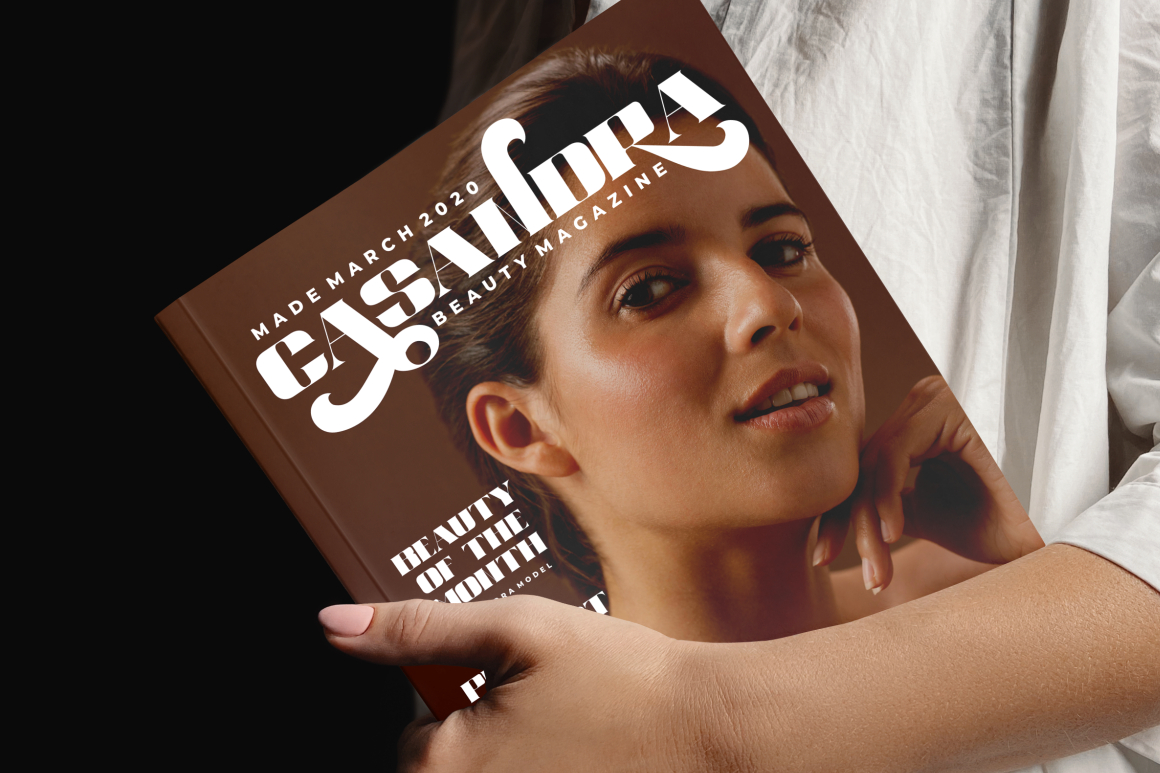
Reske Wuite combines an elegant serif foundation with substantial, attention-grabbing forms, giving character titles a balance of refinement and authority. The family includes regular and stamped treatments, allowing designers to move between polished presentation and a more weathered visual atmosphere. Its alternates, swashes, stylistic sets, and ligatures also provide options for creating more distinctive names and cover compositions.
PROS: Strong silhouette, clean and stamped options, extensive OpenType features, and luxury-inspired personality.
BEST FOR: Political heroines, historical drama, powerful matriarchs, adventure stories, book covers, game titles, and cinematic character presentations.
2. Zeviero Stylish Serif Font
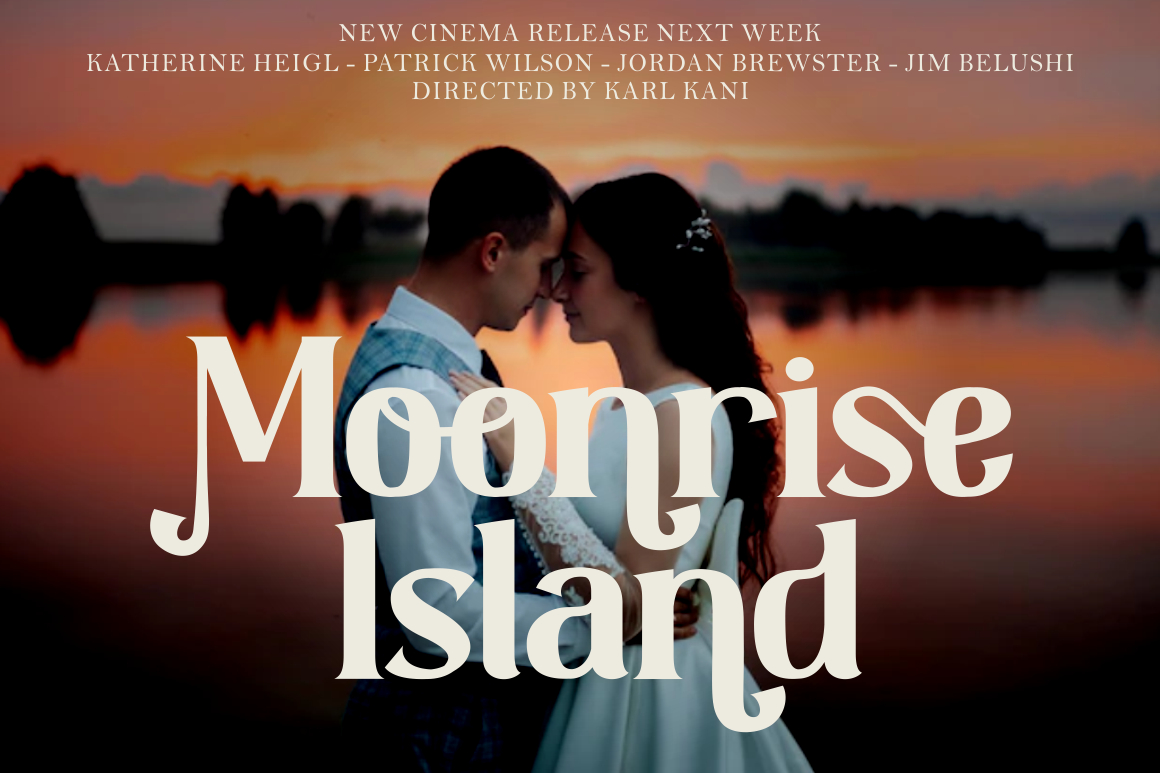
Zeviero is an elegant serif family offered in regular and textured styles. Its refined construction can support polished character identities, while the textured version introduces age, memory, or a more tactile atmosphere without requiring an unrelated typeface. OpenType alternates, contextual forms, swashes, and ligatures make it useful for customized titles, elegant logos, and editorial character profiles.
PROS: Regular and textured styles, refined serif character, flexible alternates, and broad editorial versatility.
BEST FOR: Mystery protagonists, fashion narratives, family sagas, historical fiction, premium comics, sophisticated game characters, and dramatic campaign storytelling.
3. Grey Jewelry Stylish Beautiful Serif
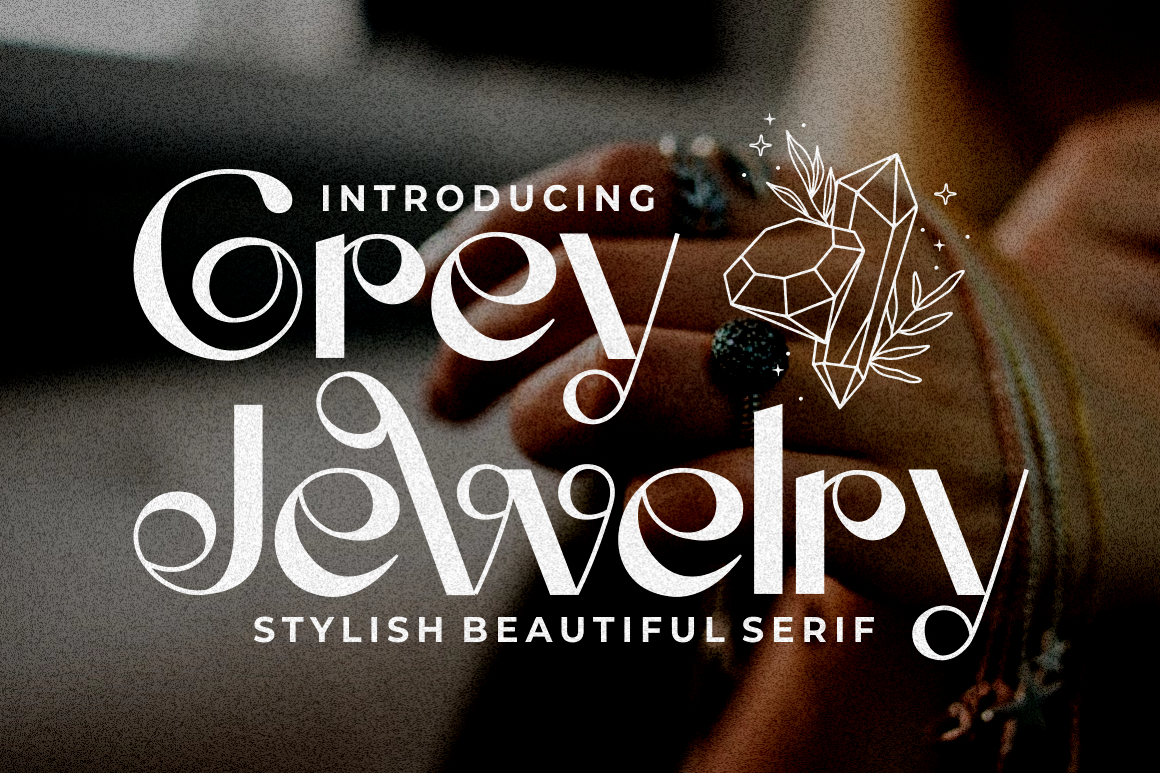
Grey Jewelry uses clean lines, elegant curves, and intricate details that give the typeface a polished but handcrafted quality. This combination is useful for characters whose stories involve beauty, status, craftsmanship, romance, or hidden complexity. The font includes uppercase and lowercase characters, numbers, punctuation, alternate glyphs, swashes, multilingual support, and desktop and web-ready formats.
PROS: Elegant curves, handcrafted details, alternate glyphs, multilingual support, and strong luxury appeal.
BEST FOR: Jewelry designers, aristocratic characters, romantic heroines, magical artisans, fashion stories, invitations, beauty campaigns, and elegant book covers.
4. Chiralla Elegant Serif Font

Chiralla is a classy serif inspired by modern luxury typography. Its extensive OpenType features include swashes, stylistic sets, stylistic alternates, contextual alternates, and ligatures, giving designers considerable control over the rhythm of a character name or title. It can feel graceful and professional while still providing enough decorative variety for fantasy, romance, editorial, and premium visual storytelling.
PROS: Rich OpenType selection, elegant structure, multilingual support, and flexible professional use.
BEST FOR: Fantasy royalty, romance, elegant villains, brand heroines, magical schools, fashion editorials, album narratives, and luxury character identities.
5. Werd Modern Stylish Serif Font
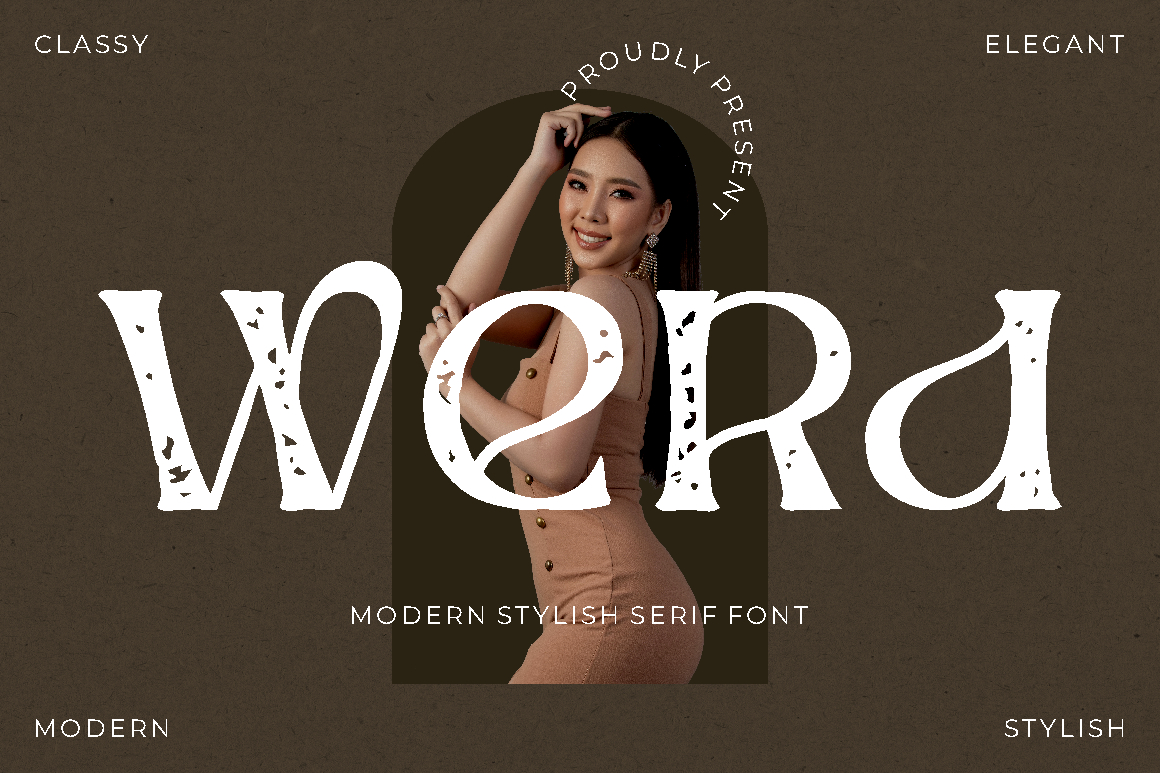
Werd has a contemporary, balanced serif construction designed for distinctive display work. The family presents clean and textured treatments alongside display variations, giving designers options for portraying different stages, timelines, or emotional versions of the same character identity. Its alternates and ligatures support customized titles while OTF, TTF, and WOFF formats make it practical across print and digital storytelling projects.
PROS: Contemporary proportions, multiple visual treatments, OpenType alternates, and flexible print and digital use.
BEST FOR: Contemporary drama, creative professionals, psychological stories, fashion-led characters, editorial campaigns, graphic novels, and modern brand storytelling.
Comparison
| Font | Visual Personality | Strongest Character Direction | Best Creative Application |
|---|---|---|---|
| Reske Wuite | Elegant, bold, and authoritative | Leaders, rebels, adventurers, and historical protagonists | Cinematic titles and commanding covers |
| Zeviero | Stylish, refined, and tactile | Mysterious, sophisticated, or memory-driven characters | Editorial profiles and dramatic fiction |
| Grey Jewelry | Luxurious, detailed, and graceful | Artisans, socialites, romantic leads, and magical creators | Beauty campaigns and premium storytelling |
| Chiralla | Classy, expressive, and ornamental | Royalty, fantasy heroines, elegant villains, and brand figures | Fantasy covers and character wordmarks |
| Werd | Contemporary, balanced, and artistic | Modern professionals, complex creatives, and psychological protagonists | Graphic novels and modern campaigns |
Common Mistakes When Creating Female Characters
The first mistake is building the character from appearance and gender stereotypes before giving her a personal objective. Descriptions such as beautiful, fierce, independent, mysterious, or kind may establish tone, but they do not create a complete person. Give her expertise, obligations, preferences, flawed assumptions, relationships, and a problem she approaches in a distinctive way. Her gender may influence how the world treats her, but it should not be the only force shaping her personality or story.
Another common problem is interpreting a “strong female character” as someone who never doubts herself, needs help, makes mistakes, expresses vulnerability, or changes direction. Invulnerability often removes the tension that makes a protagonist interesting. Strength can appear as persistence, honesty, strategic thinking, humor, adaptability, compassion, boundary setting, or the willingness to admit that an earlier belief was wrong. Let her competence have limits, and let success require more than defeating an external opponent.
The final mistake is overloading the concept with trauma, exceptional abilities, decorative details, and unrelated contradictions. A character does not become deeper simply because every possible dramatic element appears in her biography. Select a few defining pressures and explore their consequences across scenes. When using AI for visual or narrative development, review the results for generic beauty standards, repetitive costumes, cultural inaccuracies, and familiar gender roles. Use expressive fonts for titles and identity moments, but keep supporting information readable so the presentation strengthens the character rather than distracting from her.
Conclusion
Effective female character concept prompts create more than attractive heroines or dramatic backstories. They establish a person with a goal, contradiction, relationship, environment, limitation, and meaningful choice.
Begin with what she wants and why achieving it is difficult. Give her skills that solve some problems while creating others. Build relationships that expose different parts of her identity, and make the visual design reflect the life she has lived rather than a collection of fashionable details.
The same concept can then be adapted for novels, comics, games, animation, films, illustration, or brand storytelling. Writers can explore voice and internal conflict, while designers can translate history and motivation into silhouette, clothing, posture, objects, color, and typography.
Fonts from PutraCetol Studio can provide a distinctive visual language for these stories. Reske Wuite supports commanding identities, Zeviero combines refinement with texture, Grey Jewelry communicates handcrafted luxury, Chiralla offers expressive elegance, and Werd brings contemporary sophistication.
When character development and typography support the same emotional direction, a name on a cover or concept board becomes more than a label. It becomes the first invitation into the character’s world.
Explore these fonts and many more at PutraCetol.com to build a business identity that looks professional, trustworthy, and memorable.
Additionally, if you want to explore some free typography options, you can check out Putracetol Studio on Dafont. Happy reading and designing!