
Fantasy in Art and Design: Creating Visual Worlds Beyond Reality
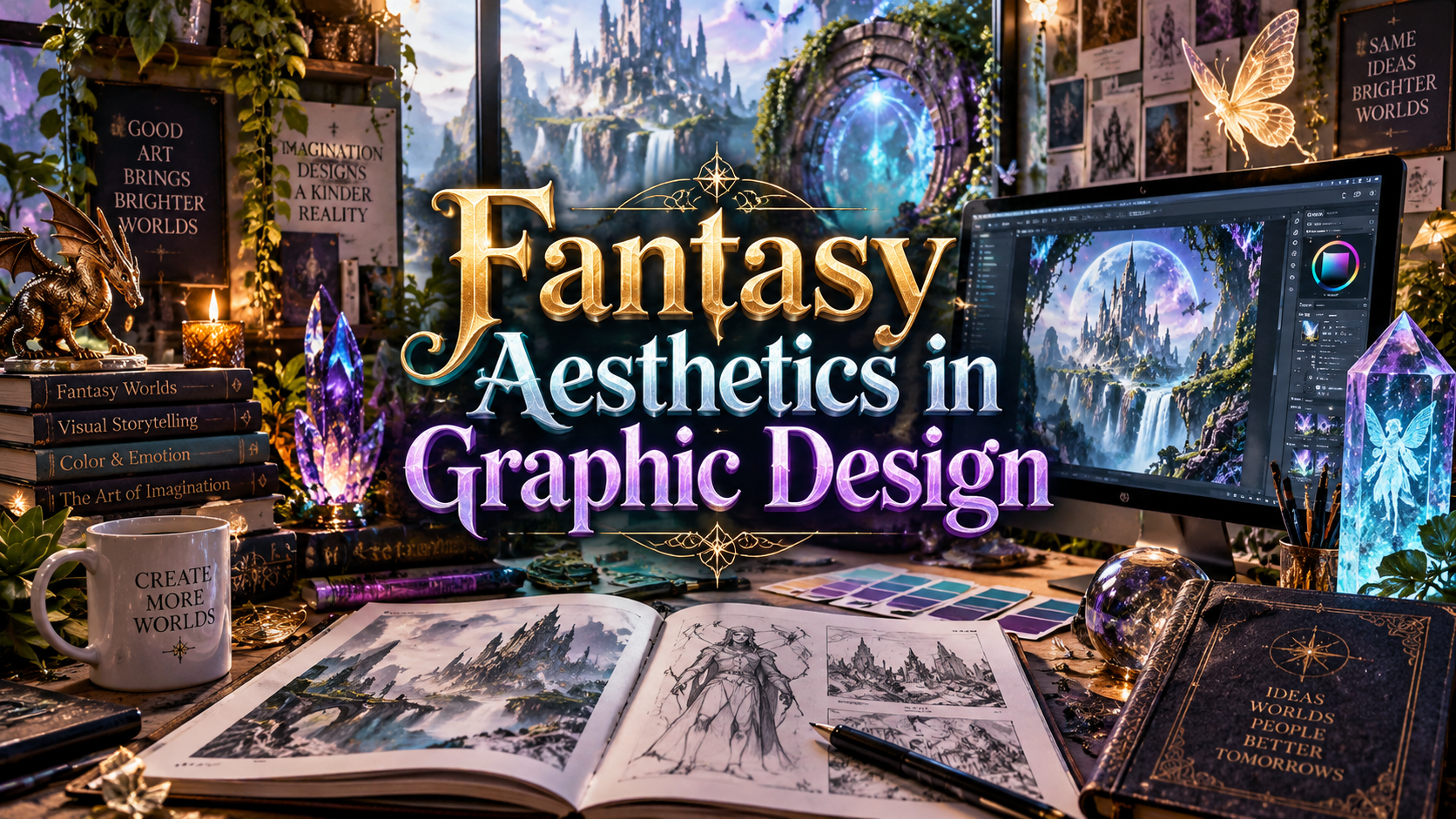
Begin With a World, Not Decoration
Strong fantasy in art and design begins with a believable world. Before adding dragons, glowing forests, ancient symbols, or magical light, decide what rules shape the setting. Ask who lives there, what they value, and how the environment reflects that culture.
This prevents fantasy from becoming a random collection. A coherent world gives every visual choice a reason to exist.
What Fantasy Means in Visual Design
Fantasy transforms familiar reality through imagination. Artists may invent impossible landscapes, symbolic creatures, supernatural systems, or futuristic myths. Designers can use the same thinking to make a campaign feel mysterious, heroic, romantic, playful, or otherworldly.
A floating garden, moonlit doorway, or ordinary object with one impossible detail may communicate magic more effectively than a crowded battle scene.
Core Elements of a Strong Fantasy Aesthetic
Worldbuilding Through Shape
Shape language defines the character of an imagined world. Tall arches can feel ceremonial, rounded homes suggest warmth, and jagged structures create danger. Repeat related forms across architecture, costumes, icons, and borders so the world feels intentionally designed.
Symbolism With Narrative Purpose
Crowns, moons, keys, swords, trees, wings, and mythical animals become meaningful when they support the story. A key may represent forbidden knowledge, a cracked crown can suggest lost authority, and a luminous tree may symbolize renewal.
Color, Light, and Atmosphere
Deep blue and silver create mystery, while gold and crimson suggest power. Moss green and warm cream suit folklore, whereas violet, cyan, and black support cosmic fantasy.
Lighting should reveal what matters. A character illuminated by one magical object creates a stronger focal point than a scene where every surface glows.
Typography as Part of the World
Typography can make a fantasy identity feel ancient, elegant, enchanted, or futuristic. Decorative serifs, blackletter-inspired forms, scripts, carved letters, and unusual ligatures work well for titles, logos, book covers, and game interfaces.
Use expressive typography for names and headlines, then pair it with a readable companion for descriptions and longer text. PutraCetol Studio offers display, serif, script, Gothic, ethnic, and experimental fonts that can help designers build a distinctive fantasy voice.
Applying Fantasy Across Creative Projects
Branding and Packaging
Fantasy branding suits games, books, fragrances, candles, beverages, jewelry, fashion, tourism, and entertainment. A perfume brand might use celestial symbols and an elegant serif. A tea package could build a botanical folklore world, while a game studio may combine runes with futuristic interface graphics.
Posters and Digital Campaigns
A fantasy poster should focus on one narrative moment: a mysterious location, unusual character, or symbolic object. Leave enough negative space for the title and essential information.
Fantasy also works well as a social series. Character profiles, maps, short myths, and animated symbols can reveal the world gradually. Repeating a limited palette and type treatment connects each post.
A Practical Fantasy Design Workflow
Start with a short brief describing the world, audience, mood, and medium. Build references from architecture, nature, clothing, and artifacts, but combine several sources so the result does not copy one culture or franchise.
Sketch small compositions before rendering details. Establish the focal point, silhouette, values, and space for typography. Then refine color, texture, symbols, and lighting. Test the design at its real size, especially for book thumbnails, packaging labels, and social posts.
Comparison
| Fantasy Direction | Main Mood | Best Applications |
|---|---|---|
| Epic fantasy | Heroic and cinematic | Games, films, book covers |
| Dark fantasy | Mysterious and threatening | Horror and entertainment |
| Folklore fantasy | Earthy and symbolic | Packaging and publishing |
| Romantic fantasy | Elegant and emotional | Beauty and jewelry |
| Sci-fantasy | Technological and magical | Gaming and digital campaigns |
| Whimsical fantasy | Playful and imaginative | Children’s brands and animation |
Common Mistakes
The first mistake is treating fantasy as a collection of clichés. Adding a dragon, castle, glowing sword, and medieval font does not automatically create a meaningful world. Begin with the audience, story, and emotional goal, then select only the elements that support them.
Another mistake is overloading the composition. Magical particles, ornaments, textures, dramatic lighting, and several decorative fonts may compete for attention. Establish one focal point, simplify the background, and reserve the most detailed treatment for the element carrying the story.
The final mistake is borrowing cultural symbols without understanding their origin. Fantasy often draws from mythology, traditional clothing, architecture, and sacred imagery. Research references carefully and avoid casually mixing unrelated traditions.
Conclusion
Fantasy in art and design gives creators a way to build emotion, identity, and narrative beyond ordinary reality. Its strongest forms combine worldbuilding, symbolism, atmosphere, and disciplined composition.
Use imagination as a system rather than an effect. When every shape, color, and type choice belongs to the same world, fantasy can transform a poster, package, brand, or digital campaign into an experience audiences want to explore.
Explore these fonts and many more at PutraCetol.com to build a business identity that looks professional, trustworthy, and memorable.
Additionally, if you want to explore some free typography options, you can check out Putracetol Studio on Dafont. Happy reading and designing!