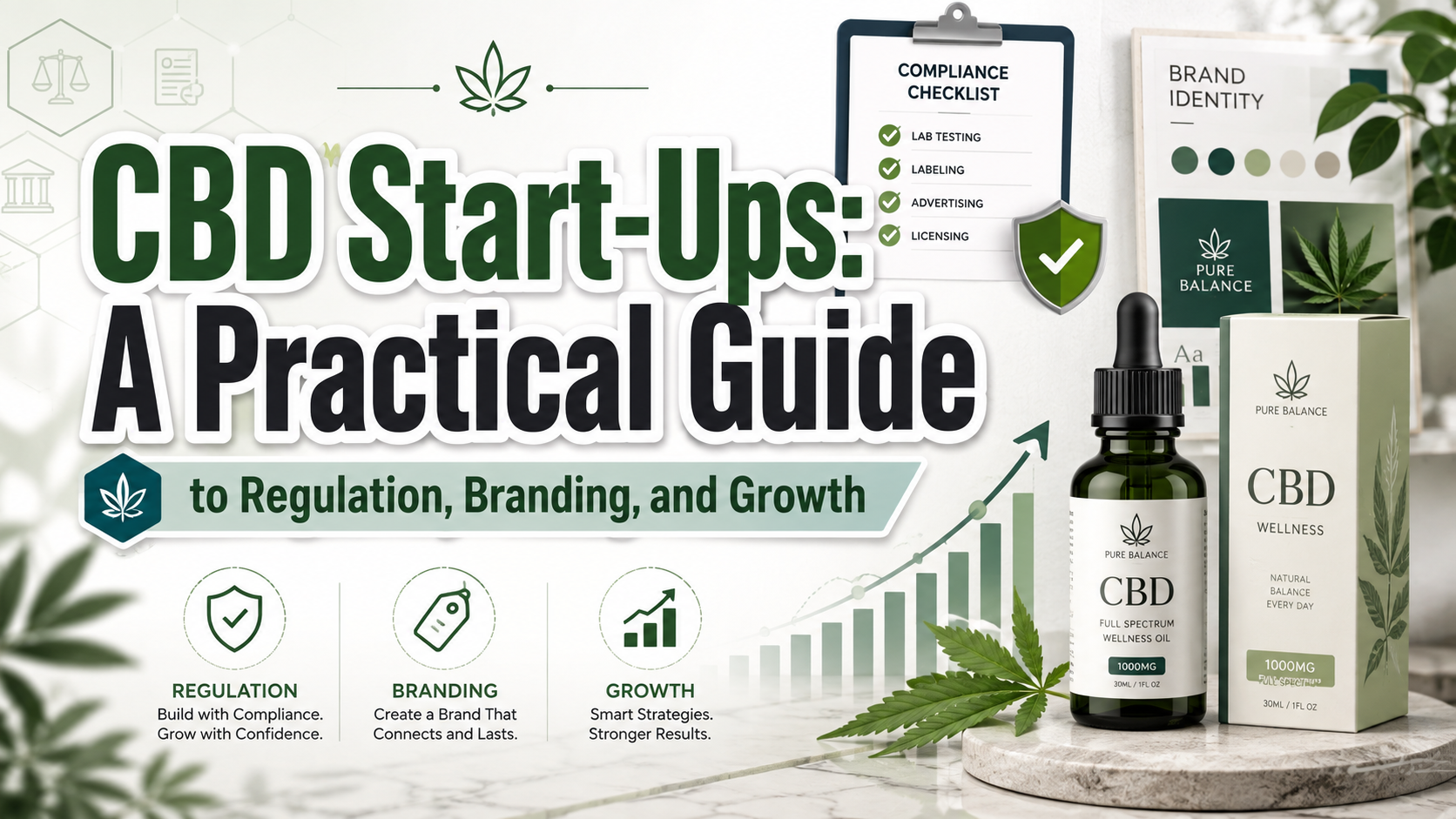
The first question for CBD start-ups should not be “What should the packaging look like?” or “How do we advertise this product?”
It should be:
What exactly are we legally allowed to manufacture, label, market, distribute, and sell in each target jurisdiction?
CBD sits at the intersection of hemp law, food and drug regulation, cosmetics regulation, state law, advertising standards, product safety, ecommerce rules, and changing federal definitions. That makes a compliance-first approach essential.
In the United States, hemp is currently distinguished from marijuana under federal law using the existing statutory definition tied to no more than 0.3% delta-9 THC on a dry-weight basis. However, Congress enacted a major change in November 2025. Effective November 12, 2026, the federal definition shifts to total THC, including THCA, and creates additional exclusions for certain hemp-derived cannabinoid products. Some final hemp-derived cannabinoid products containing more than 0.4 milligrams of combined total THC and related intoxicating cannabinoids per container will fall outside the new hemp definition.
That change is especially important for companies launching in 2026. A product model that appears viable today may require another legal review before November 12, 2026.
Founders should therefore treat legal analysis as part of product development, not paperwork completed after the product has already been manufactured.
What Is a CBD Start-Up?
A CBD start-up is an early-stage company whose product, service, technology, or business model involves cannabidiol.
Potential business models may include:
- Topical personal-care products
- Cosmetic formulations
- Wellness-oriented non-ingestible products
- B2B ingredient or formulation services
- Testing and quality-assurance services
- Retail technology
- Compliance software
- Packaging and traceability systems
- Education or professional industry services
- Specialized ecommerce infrastructure
The exact regulatory burden depends on what the business does.
A company selling a topical cosmetic does not face the same regulatory pathway as a company attempting to sell ingestible CBD products. A technology provider serving licensed CBD companies faces different issues from a manufacturer making therapeutic claims.
Do not assume that “hemp-derived” automatically means that every finished product or marketing use is lawful.
Understand the Federal CBD Landscape
Hemp Legalization Did Not Automatically Legalize Every CBD Product
The 2018 Farm Bill removed qualifying hemp from the federal Controlled Substances Act definition of marijuana. USDA currently describes hemp as Cannabis sativa L. and its derivatives containing no more than 0.3% THC under the existing federal framework.
However, the Farm Bill did not eliminate FDA authority over foods, drugs, cosmetics, and dietary supplements.
This distinction is fundamental for CBD start-ups.
A hemp-derived ingredient may fall outside federal controlled-substance rules while the finished consumer product still violates another federal law because of how it is formulated, labeled, or marketed.
FDA Does Not Currently Permit CBD as a Dietary Supplement
FDA states that CBD products cannot currently be legally marketed as dietary supplements under the Federal Food, Drug, and Cosmetic Act. The agency bases this position partly on CBD having already been studied and approved as an active drug ingredient.
FDA has also concluded that CBD cannot currently be lawfully added to conventional food for interstate commerce under the existing federal framework.
In 2023, FDA concluded that existing food and dietary-supplement frameworks were not appropriate for CBD and called for a different regulatory pathway rather than simply creating a conventional supplement rule. That remains a central issue for the industry.
For founders, this means that seeing CBD gummies, beverages, or supplements widely available does not necessarily mean those products have a clear federal legal pathway.
Market presence and regulatory legality are not the same thing.
Cosmetics Have a Different Regulatory Position
FDA does not currently prohibit cannabis-derived ingredients such as CBD simply because they appear in cosmetics. However, cosmetic products and ingredients must still comply with applicable federal requirements and cannot be adulterated or misbranded.
The distinction between a cosmetic and a drug often depends partly on intended use and claims.
A topical product marketed to beautify or moisturize is positioned differently from a product marketed to treat inflammation, arthritis, eczema, or a medical condition.
Once therapeutic claims appear, the regulatory analysis can change significantly.
The November 2026 Hemp Definition Change
CBD founders planning beyond the next few months should pay particular attention to November 12, 2026.
Congress amended the federal hemp definition in 2025. The new rules change the federal threshold from delta-9 THC alone to total THC, including THCA, and exclude several categories of hemp-derived cannabinoid products.
Among other provisions, the amended law distinguishes industrial hemp and places additional restrictions on intermediate and final cannabinoid products. A final hemp-derived cannabinoid product exceeding 0.4 milligrams per container of specified combined THC-type substances can fall outside the federal definition of hemp.
For a start-up, this creates several strategic questions:
- Will the current formulation remain within the federal hemp definition?
- Will existing suppliers remain compliant?
- Will certificates of analysis need different testing criteria?
- Will packaging or SKU strategy need revision?
- Will payment processors or advertising platforms change their policies?
- Will state law create stricter requirements?
- Should a planned launch occur before or after the change?
A company building inventory now should not wait until November to investigate these issues.
State and Local Rules Still Matter
Federal law is only one layer.
U.S. states can establish additional requirements involving:
- CBD product categories
- Age restrictions
- Labeling
- Testing
- Registration
- Retail licensing
- THC limits
- Manufacturing
- Packaging
- Online sales
- Shipping
- Product warnings
A product that can legally be sold in one state may face different restrictions in another.
This makes a national ecommerce rollout much more complicated than launching an ordinary skincare or lifestyle product.
Create a jurisdiction matrix before scaling.
For each market, document:
| Issue | What to Verify |
|---|---|
| Product legality | Is this category permitted? |
| THC/Cannabinoid limits | Which thresholds apply? |
| Registration | Does the product or company require registration? |
| Testing | Which laboratory standards apply? |
| Labeling | What disclosures and warnings are mandatory? |
| Age requirements | Are age restrictions imposed? |
| Ecommerce | Can the product be sold online? |
| Shipping | Can it be shipped into the jurisdiction? |
| Advertising | Are additional marketing restrictions imposed? |
Update the matrix regularly.
Product Quality Should Be a Core Brand Asset
CBD consumers face an unusually difficult trust problem.
Products may look similar while differing in:
- Cannabinoid content
- THC concentration
- Extraction methods
- Ingredient quality
- Contaminant testing
- Label accuracy
- Manufacturing quality
- Batch consistency
FDA has reported concerns that some CBD products may contain different amounts of CBD than their labels claim or may contain unlisted potentially harmful compounds.
A credible startup should treat quality control as part of the customer experience.
Use Independent Laboratory Testing
A certificate of analysis can help customers and business partners understand what is in a batch.
Depending on the product and jurisdiction, testing may cover issues such as:
- Cannabinoid profile
- THC concentration
- Residual solvents
- Heavy metals
- Pesticides
- Microbial contamination
Testing requirements vary. Use laboratories and protocols appropriate to the market and product category.
Build Batch Traceability
Each sellable unit should be traceable to the relevant production batch.
A customer should be able to locate a batch or lot number and, where appropriate, access the corresponding quality documentation.
QR codes can make certificates easy to access, but the underlying records matter more than the QR graphic itself.
Create Supplier Qualification Procedures
Do not purchase raw material based only on price.
Document:
- Supplier identity
- Hemp source
- Production method
- Testing procedures
- Certificates
- Batch consistency
- Insurance
- Regulatory history
- Recall process
- Quality agreements
Supply-chain discipline protects both compliance and reputation.
Avoid Medical Claims
One of the most serious marketing risks for CBD start-ups is making therapeutic claims that the business cannot legally support.
FTC has repeatedly acted against CBD companies for claims that products could treat, cure, mitigate, or prevent serious diseases without appropriate scientific substantiation. Its enforcement actions have addressed claims involving conditions including cancer, Alzheimer’s disease, chronic pain, hypertension, and other illnesses.
FDA similarly states that aside from the approved prescription drug Epidiolex, it has not approved other CBD products as drugs.
Avoid statements such as:
Treats anxiety
Reduces arthritis pain
Cures inflammation
Scientifically proven to prevent disease
Marketing language, testimonials, influencer content, product descriptions, email campaigns, and social posts can all create claims.
A testimonial does not provide a loophole. FTC has specifically told CBD companies to ensure claims communicated through testimonials are properly substantiated.
Build a Compliance Review Process for Marketing
Before publishing promotional material, review:
- Product claims
- Customer testimonials
- Influencer scripts
- Paid advertisements
- Landing pages
- Packaging claims
- Email marketing
- Blog content
- SEO metadata
- Product photographs
- Social captions
Flag language involving:
- Treatment
- Prevention
- Cure
- Diagnosis
- Pain relief
- Disease
- Medical efficacy
- Guaranteed results
- “Clinically proven”
- Safety guarantees
Your marketing team should not create claims first and ask compliance to repair them afterward.
Build compliant positioning into the original creative brief.
CBD Advertising Has Platform Restrictions
Paid acquisition can be harder for CBD companies than for ordinary ecommerce brands.
Meta
Meta’s current advertising standards allow CBD product advertising only under specific conditions. Advertisers must receive written authorization, maintain active LegitScript certification, comply with applicable laws, target only permitted audiences and locations, and avoid health or medical claims. Meta currently permits authorized CBD advertising in the United States and requires audiences to be 18 or older.
Google Ads
Google’s current policy is more restrictive. It permits certain ads for topical, hemp-derived CBD products containing no more than 0.3% THC, with certification requirements, and currently limits targeting to California, Colorado, and Puerto Rico.
These policies may change, particularly as the new federal hemp definition takes effect in November 2026.
Never build a customer-acquisition model assuming unrestricted Meta or Google advertising.
Build Organic Marketing Channels Early
Because paid media may be restricted, diversified customer acquisition is especially valuable.
SEO
Educational search content can build qualified traffic over time.
Useful topics may include:
- How to read a CBD certificate of analysis
- CBD terminology explained
- Full-spectrum vs. broad-spectrum terminology
- How CBD product testing works
- What hemp-derived means
- How to evaluate CBD product labels
- Questions to ask a CBD brand
Avoid turning educational content into unsupported health claims.
Email gives the company a direct communication channel that is less dependent on social algorithms.
Use it for:
- Product education
- New releases
- Brand storytelling
- Ingredient information
- Quality documentation
- Customer FAQs
Maintain consent and privacy practices appropriate to applicable law.
Brand Publishing
Create useful long-form content rather than endlessly publishing promotional posts.
A credible CBD brand can explain:
- Sourcing
- Manufacturing
- Laboratory testing
- Ingredient philosophy
- Packaging
- Regulatory changes
- Quality standards
Transparency can become an acquisition strategy.
Branding CBD Without Relying on Cannabis Clichés
CBD branding frequently falls into predictable visual territory:
- Cannabis leaves
- Green gradients
- Apothecary bottles
- Earth-tone packaging
- Generic wellness language
- White-and-green minimalist labels
These signals make the category recognizable, but they can also make brands difficult to distinguish.
Start with positioning rather than category decoration.
Premium Wellness
Use restrained typography, tactile materials, confident product photography, and careful spacing.
Science-Led
Use structured layouts, data visualization, clear batch information, and precise language.
Lifestyle-Oriented
Use editorial photography, warmer typography, and storytelling around routines rather than medical outcomes.
Sustainable
Communicate specific material and packaging improvements rather than relying on green colors alone.
Beauty and Personal Care
Use a visual system appropriate to skincare or cosmetics while clearly communicating the product category.
Typography can be especially valuable because a distinctive font can create recognition without using predictable cannabis imagery.
PutraCetol Studio’s serif, display, sans serif, script, organic, contemporary, and experimental font collections can help CBD brands build a more differentiated packaging and campaign identity while still keeping practical product information highly readable.
Build Packaging Around Transparency
A premium-looking bottle is not enough.
The customer should be able to identify:
- Product name
- Net quantity
- Ingredient information
- Batch or lot identification
- Responsible business information
- Relevant warnings
- Directions where appropriate
- Cannabinoid information where required
- Testing access
- Required state disclosures
Exact requirements depend on product type and jurisdiction.
Do not place typography purely according to visual preference. Regulatory information needs enough size, contrast, and physical space to remain legible.
A useful hierarchy could be:
Front:
Brand → Product → Core descriptive information → Quantity
Back/Side:
Ingredients → Directions → Required statements → Batch information → Testing access → Company details
Use expressive typography for branding and a simpler functional family for regulated information.
Think Carefully About Product Positioning
One of the biggest strategic decisions is what customers are actually buying.
Are they buying:
- A beauty product?
- A premium personal-care ritual?
- A lifestyle product?
- An ingredient-focused formulation?
- A science-led topical?
- A sustainable wellness brand?
“CBD product” is a category. It is not enough of a differentiated value proposition.
A stronger positioning statement might be:
A premium topical personal-care brand built around transparent cannabinoid testing and fragrance-free formulations.
That statement gives product development, packaging, content, and customer acquisition a clearer direction than:
High-quality CBD for everyone.
Customer Education Builds Trust
CBD terminology can be confusing.
Brands should explain terms carefully without exaggerating benefits.
Educational content can clarify:
CBD
Cannabidiol, one of the compounds found in cannabis.
THC
A group of tetrahydrocannabinol compounds associated with intoxicating effects.
Hemp
A legal classification that depends on statutory cannabinoid thresholds and other requirements.
Certificate of Analysis
A laboratory document showing results for a tested batch.
Full-Spectrum and Broad-Spectrum
Industry terminology describing different cannabinoid and constituent profiles. Because product definitions and standards can vary, explain what these terms mean for your specific product rather than assuming customers interpret them uniformly.
Good education reduces confusion while avoiding medical promises.
Ecommerce Operations Need Special Planning
Payment Processing
Some processors and banks treat CBD businesses as higher risk or apply special underwriting requirements.
Confirm the processor before building the complete checkout system.
Ask:
- Is CBD supported?
- Which product categories are allowed?
- Which jurisdictions are permitted?
- Are reserves required?
- What documentation is needed?
- Are chargeback thresholds stricter?
- Can international customers purchase?
Never conceal the nature of the business from a processor. Losing payment access after launch can be more damaging than starting with a higher-cost compliant provider.
Shipping
Verify whether each SKU can legally be shipped to the destination.
Create rules that prevent unsupported purchases rather than relying on customers to understand the law themselves.
Returns
Develop clear policies for:
- Opened products
- Damaged products
- Shipping errors
- Customer dissatisfaction
- Product recalls
Insurance
Speak with insurance professionals familiar with hemp or CBD businesses about appropriate coverage, including product liability.
Prepare for Recalls Before You Need One
A startup should know how it would respond if testing identifies a problem.
Document:
- How batches are identified
- Which customers purchased them
- How inventory can be isolated
- Who makes the recall decision
- How customers are contacted
- How regulators are notified where required
- How refunds or replacements are processed
- How the root cause is investigated
A traceability system is valuable only if the company can act on it quickly.
Build the Right Team
A CBD company may require expertise in:
- Regulatory compliance
- Legal counsel
- Quality assurance
- Product formulation
- Manufacturing
- Laboratory testing
- Supply chain
- Brand strategy
- Packaging
- Ecommerce
- Customer service
- Finance
Founders do not need every specialist as a full-time employee on day one.
Some expertise can be external, but ownership must still be clear.
“Everyone handles compliance” often means nobody owns it.
Investor Due Diligence for CBD Start-Ups
Investors evaluating a CBD company should look beyond revenue.
Review:
- Legal product status
- November 2026 exposure
- State compliance
- FDA risk
- Advertising claims
- Supplier contracts
- Batch testing
- Insurance
- Payment processing
- Gross margin
- Customer acquisition
- Brand differentiation
- Inventory exposure
- Recall procedures
- Regulatory correspondence
A company growing quickly through questionable claims or unsupported products may represent more risk than a smaller company with stronger controls.
Build a Regulatory Change Dashboard
Because the market changes frequently, CBD founders should monitor regulatory developments systematically.
Track:
| Area | Examples |
| Federal hemp law | Definition and cannabinoid thresholds |
| FDA | Foods, supplements, cosmetics, drugs, warning letters |
| FTC | Advertising and health-claim enforcement |
| USDA | Hemp cultivation requirements |
| State law | Product restrictions, testing, labeling, age rules |
| Advertising platforms | Certification and targeting requirements |
| Payment providers | Merchant acceptance rules |
| Shipping carriers | Product and destination restrictions |
Assign responsibility for reviewing changes.
The upcoming November 12, 2026 federal definition is an example of why regulatory monitoring must be ongoing rather than annual.
Comparison: CBD Start-Up Business Models
| Business Model | Regulatory Complexity | Branding Opportunity | Marketing Flexibility | Main Challenge |
| Topical cosmetic CBD brand | Moderate to high | Very high | Moderate | Claims and state requirements |
| Ingestible CBD brand | Very high | High | Low | Federal FDA restrictions |
| CBD ecommerce retailer | High | High | Moderate | Multi-state compliance and payment processing |
| CBD ingredient supplier | High | Moderate | B2B-focused | Quality, testing, and customer compliance |
| Laboratory/testing service | Moderate to high | Professional | High B2B potential | Accreditation and technical credibility |
| CBD compliance software | Moderate | High | High | Staying current across jurisdictions |
| Packaging/traceability platform | Moderate | High | High B2B potential | Integration with regulated workflows |
| CBD education/media business | Moderate | Very high | High | Avoiding misleading health claims |
| White-label CBD brand | High | Very high | Moderate | Reliance on manufacturer compliance |
Lower Product-Law Exposure
Compliance software, industry media, packaging technology, and professional services may avoid some of the direct product risks associated with manufacturing CBD consumer goods, although ordinary business, advertising, and sector-specific laws still apply.
Strongest Consumer Branding Opportunity
Topical personal-care and cosmetic brands can offer substantial room for visual differentiation, but claims and state-law compliance remain critical.
Highest Current U.S. Federal Risk
Ingestible food and dietary-supplement positioning remains especially problematic because FDA continues to state that CBD cannot currently be lawfully marketed through those federal pathways.
Common Mistakes
The first mistake is assuming that hemp-derived CBD is automatically legal in every product form and every state. Federal controlled-substance status, FDA rules, state cannabinoid laws, manufacturing requirements, and the upcoming November 12, 2026 hemp-definition change can all affect the same SKU. A founder may build packaging, inventory, ecommerce infrastructure, and advertising around a formulation that later requires significant modification. Complete the product-by-product legal analysis first and repeat it whenever the formulation, jurisdiction, or governing law changes.
The second mistake is building the brand around health outcomes that the company cannot lawfully substantiate. Words such as “pain relief,” “anti-anxiety,” “anti-inflammatory,” “sleep treatment,” or “clinically proven” may materially change how regulators interpret the product. Influencers and testimonials do not provide a safe workaround. Establish an internal claims policy, train the marketing team, review partner content, and make transparency around ingredients, testing, sourcing, and quality the foundation of credibility rather than unapproved therapeutic promises.
The final mistake is assuming that normal ecommerce growth tactics will work unchanged for CBD. Advertising platforms, banks, processors, marketplaces, carriers, and insurers can apply additional restrictions. A company that depends entirely on one paid-media platform may discover that certification, geography, or product-category limitations prevent the campaign from running. Build diversified acquisition through organic search, email, brand publishing, partnerships, and customer retention, while maintaining backup operational providers where possible.
Conclusion
Building successful CBD start-ups requires more than identifying a fast-growing wellness trend.
The strongest companies begin with regulatory clarity, product quality, and realistic operational planning. They understand exactly what they are selling, where it can be sold, what claims can be made, how every batch is verified, and how future legal changes could affect the business.
For U.S. founders, the current environment deserves particular attention. FDA continues to reject conventional food and dietary-supplement pathways for CBD under existing federal law, while advertising claims remain subject to FTC substantiation requirements.
At the same time, the federal definition of hemp is scheduled to change on November 12, 2026, introducing total-THC standards and additional restrictions on hemp-derived cannabinoid products.
CBD companies preparing products today should model their business for that future framework rather than assuming current rules will remain unchanged.
Branding remains important because regulated industries depend heavily on trust. CBD businesses can differentiate through professional typography, transparent packaging, thoughtful ecommerce design, quality documentation, clear educational content, and a visual identity that moves beyond generic cannabis imagery.
PutraCetol Studio fonts can support that visual layer across logos, packaging, editorial campaigns, ecommerce graphics, and brand storytelling. The expressive typography should be paired with clear functional type for ingredients, batch information, disclaimers, instructions, and other important customer information.
The opportunity for CBD founders is not to become the loudest wellness company.
It is to build a brand customers can understand and a business that can survive regulatory change.
Explore these fonts and many more at PutraCetol.com to build a business identity that looks professional, trustworthy, and memorable.
Additionally, if you want to explore some free typography options, you can check out Putracetol Studio on Dafont. Happy reading and designing!