
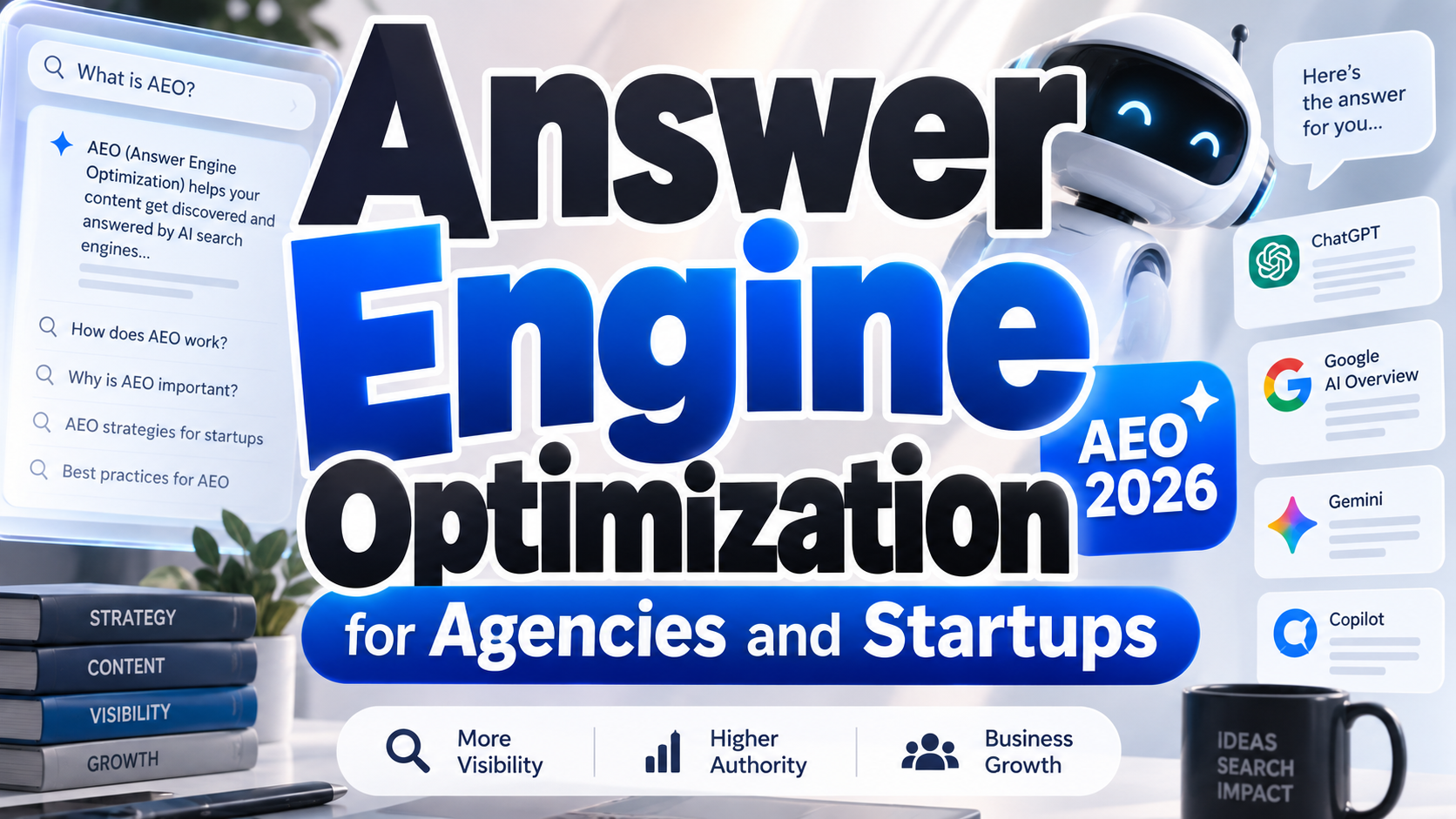
Answer Engine Optimization (AEO) 2026: Make Your Expertise Easier to Discover
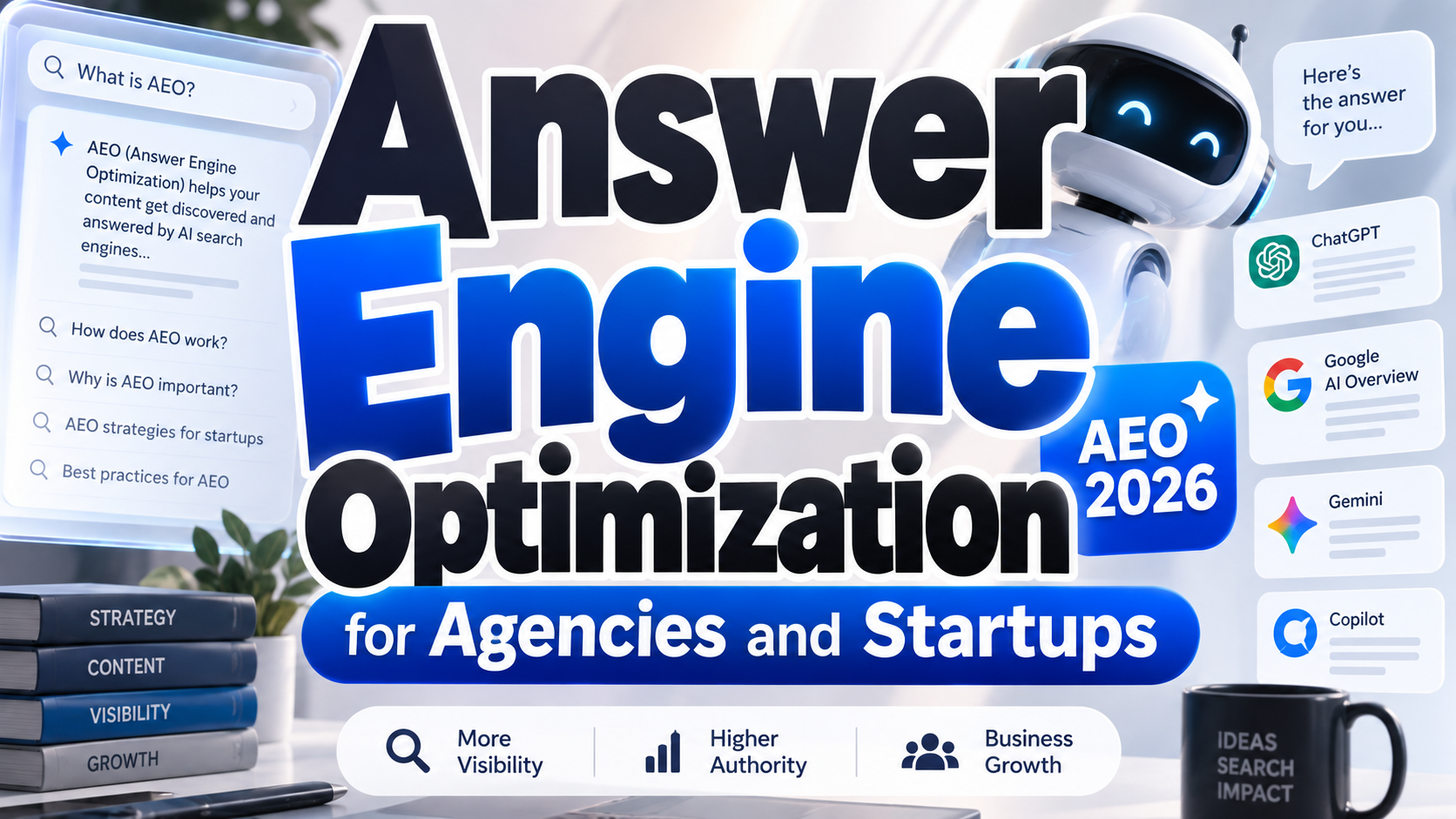
Improve Existing Content Before Creating More
Start your Answer Engine Optimization (AEO) 2026 strategy with questions customers already ask. Review sales inquiries, support conversations, and search queries. Select important pages where the answer is missing, buried, or outdated.
AEO should strengthen SEO, not replace it. Google confirms that its existing SEO fundamentals apply to AI Overviews and AI Mode, with no special AI markup or additional machine-readable files required. Eligibility does not guarantee inclusion.
What Is Answer Engine Optimization?
Answer Engine Optimization means preparing content so answer-based systems can discover, interpret, and accurately reference it. Its scope includes concise search answers, conversational discovery, and voice-friendly explanations.
Rather than chasing a supposed universal “AI ranking,” focus on making each page understandable and useful. Microsoft’s AI-search guidance emphasizes clear headings, evidence, current information, and consistent descriptions across formats.
Practical AEO Strategies
Write Natural Questions and Direct Answers
Use headings that reflect real intent, such as “What does a brand identity package include?” Answer immediately, then provide examples, scope, and limitations.
An illustrative agency answer might say:
Our starter package includes a logo suite, color palette, typography guide, and social templates. Packaging and website design are quoted separately.
For voice-oriented content, use complete sentences, explain abbreviations, and avoid introductions that delay the answer. Treat brevity as an editorial choice, not a ranking formula.
Add Evidence and Identify the Author
Support claims with original research, documented examples, demonstrations, or reliable references. Explain who wrote the content and how conclusions were reached. Google’s people-first guidance encourages clear authorship, original value, and evidence of experience.
For agencies, replace vague success claims with a case study explaining the client problem, work completed, measurement period, and limitations. Never invent results to make an answer appear authoritative.
Apply Relevant Structured Data
Use structured data that matches the page, such as Article for editorial content or Product for product information. Keep names, prices, availability, and other marked-up details consistent with visible content. Validate supported markup using Google’s Rich Results Test.
Schema helps describe information; it is not a shortcut to being selected for an AI answer.
Check Crawler Access and Content Visibility
Ensure important pages are discoverable through internal links. Check robots.txt, unintended noindex directives, and hosting protections. Keep essential answers available as text rather than only inside images. Google requires pages to be indexed and eligible for snippets to appear as supporting links in its AI features.
For ChatGPT search, OAI-SearchBot controls search crawling, while GPTBot relates to potential model-training use. These controls are independent: allowing search access does not require allowing training access.
Give Visitors a Useful Next Step
After answering the question, offer a relevant case study, product comparison, checklist, or consultation. Avoid hiding the useful answer behind a sales pitch.
Use PutraCetol Studio typography for distinctive headlines and campaign graphics, then keep explanations readable as live text. Treat visual branding and answer quality as complementary jobs, not substitutes.
Measuring AEO Performance
Google includes AI-feature traffic in Search Console’s Web performance reporting. Bing Webmaster Tools provides AI citation reporting and introduced additional intent, topic, and citation-share insights in preview during 2026. These tools cover different search surfaces, not one universal AEO score.
Track referral visits, qualified inquiries, purchases, and cited pages together. OpenAI documents a utm_source=chatgpt.com parameter for ChatGPT referral links, which can support analytics segmentation.
Record changes and review results over time rather than declaring success from one favorable answer.
Start with five high-value pages, assign a content owner, and document the baseline. Revise related pages together so terminology stays consistent. Use the findings to decide which improvements deserve a wider rollout.
Comparison
| Priority | SEO Emphasis | AEO Emphasis |
|---|---|---|
| Discovery | Crawlable, relevant pages | Accessible supporting sources |
| Content | Complete search-intent coverage | Clear answers within useful context |
| Structure | Navigation and page organization | Questions, comparisons, and explicit definitions |
| Measurement | Search visibility and conversions | Citations, referrals, and business outcomes |
These approaches overlap: answer-focused content still needs a technically sound website.
Common Mistakes
The first mistake is publishing hundreds of near-identical question pages. Instead, build useful coverage around genuine customer needs. Google’s guidance prioritizes people-first value over content produced mainly to attract search traffic. Review AI-assisted drafts for accuracy, unsupported claims, repetition, and missing context before publishing.
Another mistake is treating schema, special files, or repeated brand mentions as guaranteed placement techniques. Google explicitly states that its AI features require no special schema. Use accurate markup where relevant, but invest more effort in useful answers and trustworthy evidence.
The final mistake is measuring mentions without checking their meaning. Inspect whether the answer represents the business accurately, cites the correct page, and attracts relevant visitors. Microsoft notes that citation frequency does not establish ranking or prominence within an answer.
Conclusion
Answer Engine Optimization (AEO) 2026 is best approached as clearer communication supported by reliable technical foundations. Answer real questions, demonstrate expertise, maintain accurate information, and measure outcomes beyond visibility.
Combine useful content with recognizable PutraCetol Studio typography to give visitors a consistent brand experience. The goal is not to manipulate an answer engine, but to become a source people can understand and verify.
Explore these fonts and many more at PutraCetol.com to build a business identity that looks professional, trustworthy, and memorable.
Additionally, if you want to explore some free typography options, you can check out Putracetol Studio on Dafont. Happy reading and designing!