
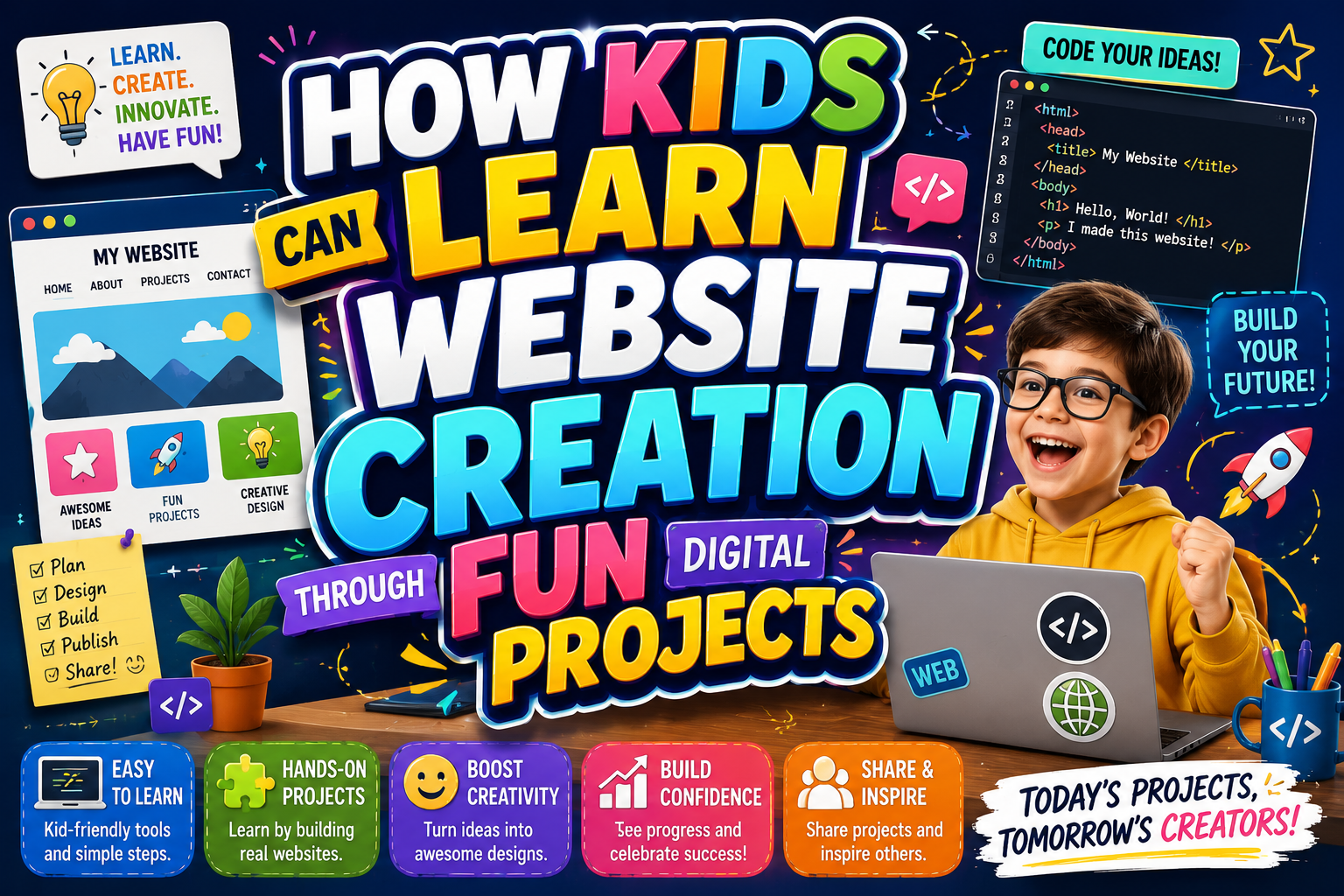
Website creation for kids has become one of the most engaging ways to introduce children to digital literacy, creativity, and problem-solving. Building a website allows young learners to combine storytelling, design, technology, and communication skills into one exciting project. Rather than simply consuming online content, children can become creators, learning how websites are planned, designed, and published. Educational website-building platforms increasingly focus on drag-and-drop interfaces, child-friendly templates, and safe environments that make web creation accessible even without coding experience.
Learning website creation also helps children develop valuable future-ready skills. Creating a website encourages critical thinking, project planning, creativity, content organization, and digital communication. Many educators and parents use website projects to support school assignments, digital storytelling, hobby showcases, and personal portfolios. As digital skills become increasingly important, website creation offers an enjoyable introduction to technology while encouraging self-expression and independent learning.
Whether the goal is creating a school project website, showcasing artwork, sharing stories, or learning web design fundamentals, website creation can be both educational and entertaining for young learners.
Initial Suggestion
Before starting a website project with children, focus on simplicity and creativity.
Choose an Age-Appropriate Platform
Look for platforms that offer:
- Drag-and-drop editing
- No coding requirements
- Kid-friendly templates
- Safe publishing options
- Easy customization tools
Platforms such as Wix are frequently recommended because they provide intuitive editors, educational resources, and beginner-friendly website creation tools.
Start with a Simple Project
Examples include:
- School projects
- Book review websites
- Animal information websites
- Art portfolios
- Hobby blogs
- Family history projects
Encourage Creativity
Children learn best when they create content about topics they genuinely enjoy.
Focus on Learning, Not Perfection
The goal is skill development rather than creating a perfect professional website.
Jump to Recommended Fonts
Typography is an important part of any children’s website. Fun, friendly, and highly readable fonts help make educational content more engaging while supporting learning. For school projects, creative storytelling websites, educational games, or classroom presentations, playful fonts can make websites feel more welcoming and memorable.
Designers, teachers, and parents who create educational materials can explore child-friendly typography collections from Putracetol to improve visual appeal while maintaining readability. Fonts designed for educational themes, playful branding, and children’s content can help transform ordinary school projects into engaging digital experiences.
Comparison
| Website Project Type | Difficulty | Creativity Level | Educational Value | Recommended Age |
|---|---|---|---|---|
| School Project Website | Easy | Medium | Very High | 8+ |
| Personal Hobby Website | Easy | High | High | 8+ |
| Storytelling Website | Medium | Very High | High | 9+ |
| Art Portfolio Website | Medium | Very High | High | 10+ |
| Educational Blog | Medium | Medium | Very High | 11+ |
| Coding-Based Website | Advanced | High | Very High | 12+ |
Popular Website Ideas for Kids
School Project Website
Students can present science projects, historical research, or classroom assignments in an interactive format.
Digital Storytelling Website
Children can create stories with images, videos, and interactive content.
Art and Creativity Portfolio
Young artists can showcase drawings, paintings, photography, or crafts.
Hobby Blog
Kids can share interests such as sports, gaming, reading, or collecting.
Educational Resource Site
Students can build websites that teach others about topics they enjoy.
Benefits of Website Creation for Kids
Builds Digital Literacy
Website creation helps children understand how online content is structured and published. Digital literacy is increasingly recognized as an essential skill for future education and careers.
Encourages Creativity
Children can personalize colors, layouts, images, and content to express their ideas.
Develops Communication Skills
Writing website content improves storytelling, organization, and presentation abilities.
Introduces Design Thinking
Website creation teaches planning, structure, usability, and visual communication.
Supports Future Career Skills
Early exposure to web design, content creation, and technology can inspire future interests in design, development, marketing, and entrepreneurship.
Choosing the Right Website Builder
Drag-and-Drop Platforms
These are often the easiest option for beginners because children can visually build pages without writing code.
Safe Sharing Options
Parents and teachers should select platforms that allow private publishing or restricted access when appropriate.
Educational Resources
Platforms that include tutorials, guides, and learning materials help children progress independently.
Mobile-Friendly Design
Modern website builders automatically optimize websites for phones and tablets, helping students create projects that look professional across devices.
Common Mistake
One of the most common mistakes when introducing website creation to children is making projects too complicated too quickly. Adults often focus on advanced features, coding concepts, or professional design standards before children have developed confidence with the basics. This can make the experience feel overwhelming and discourage creativity. Successful learning experiences begin with simple goals, such as creating a homepage, adding images, and writing short pieces of content. As confidence grows, children can gradually explore more advanced features.
Another frequent mistake is prioritizing visual effects over usability. Bright colors, animations, and decorative elements can be exciting, but too many distractions may make a website difficult to navigate. Children’s websites should remain clear, organized, and easy to understand. Educational design experts often emphasize balancing creativity with usability to keep young learners engaged while maintaining a positive user experience.
Parents and teachers sometimes overlook the importance of letting children make their own decisions during the design process. While guidance is valuable, allowing young creators to experiment encourages independence, confidence, and problem-solving skills. The most meaningful website projects often come from children’s own interests and ideas rather than strictly following adult instructions.
Conclusion
Website creation for kids is more than a technology activity. It is a creative learning experience that combines communication, design, digital literacy, and problem-solving into one engaging project. Whether children are creating school assignments, storytelling websites, art portfolios, or hobby blogs, they gain valuable skills that support future academic and professional success.
By choosing age-appropriate tools, encouraging creativity, and focusing on learning rather than perfection, parents and teachers can help children develop confidence in the digital world. Website creation empowers young learners to move beyond simply consuming content and become creators who share their ideas with others in meaningful ways. As technology continues to shape education and careers, these early experiences can provide a strong foundation for future opportunities.
Explore these fonts and many more at PutraCetol.com to build a business identity that looks professional, trustworthy, and memorable.
Additionally, if you want to explore some free typography options, you can check out Putracetol Studio on Dafont. Happy reading and designing!