
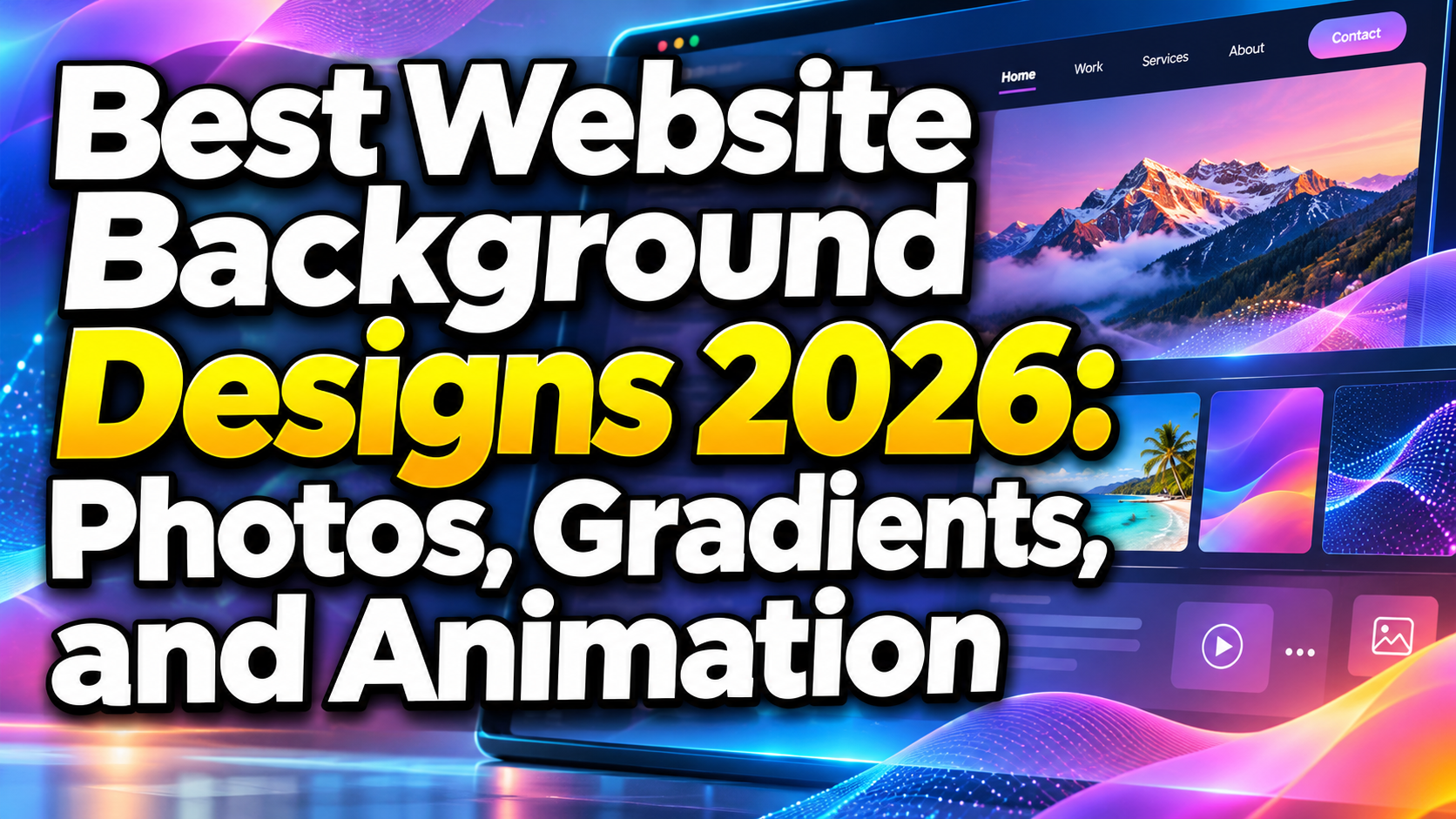
Stunning Website Backgrounds 2026: 6 Creative Ideas for Modern Web Design
A website background is more than a decorative element. It establishes atmosphere, supports visual storytelling, and influences how visitors perceive a brand.
The stunning website backgrounds 2026 trend emphasizes creative visuals that combine aesthetic appeal with functionality, accessibility, and performance.
From immersive photography and colorful gradients to subtle textures and interactive effects, modern backgrounds help businesses communicate their personality.
Whether you’re designing a portfolio, online store, creative agency website, or startup landing page, choosing the right background can transform an ordinary layout into a memorable digital experience.
Start With Your Brand’s Visual Personality
Before choosing a background, identify the atmosphere your website should communicate.
Luxury brands may benefit from minimalist compositions and sophisticated textures, while creative studios can experiment with expressive colors and abstract illustrations.
For example, a sustainable skincare website might use natural photography, muted green tones, and organic textures.
Consider your typography, content hierarchy, and target audience before selecting visual elements.
The strongest background supports your message rather than competing with it.
6 Stunning Website Background Ideas for 2026
1. Fullscreen Photography Backgrounds
Fullscreen photography creates an immediate emotional connection by introducing visitors to a brand’s world.
Large editorial photographs can communicate lifestyle, craftsmanship, product quality, or professional expertise.
For example, a travel agency could feature a breathtaking landscape, while an architectural studio might highlight a dramatic building photograph.
Choose images with sufficient negative space for headlines and navigation. Use overlays when necessary to maintain text contrast.
BEST FOR: Travel websites, photography portfolios, luxury brands, and hospitality businesses.
2. Modern Gradient Backgrounds
Gradient backgrounds offer a contemporary alternative to traditional flat colors.
Soft transitions between complementary shades create depth without requiring complex imagery.
For example, a technology startup could combine deep blue, violet, and subtle cyan gradients to communicate innovation.
Mesh gradients introduce additional variation through multiple blended colors, creating an expressive yet controlled appearance.
Keep transitions balanced and ensure important text remains readable throughout the composition.
BEST FOR: SaaS websites, technology startups, digital agencies, and creative portfolios.
3. Illustrated and Pattern-Based Backgrounds
Custom illustrations allow businesses to develop distinctive visual identities that conventional stock photography cannot always provide.
Hand-drawn elements, geometric patterns, abstract shapes, and playful characters can reinforce brand storytelling.
A children’s educational platform might use colorful illustrated landscapes, while a design studio could incorporate experimental geometric compositions.
Illustrated backgrounds work especially well when their colors, forms, and visual language remain consistent across the website.
BEST FOR: Educational websites, creative agencies, lifestyle brands, and artistic businesses.
4. Cinematic Video Backgrounds
Video backgrounds introduce movement and storytelling into modern website experiences.
Short cinematic sequences can showcase products, manufacturing processes, destinations, or creative portfolios.
For example, a fashion brand might display subtle runway footage, while a restaurant could feature close-up food preparation.
Keep videos short, compressed, and visually relevant. Provide a static fallback and respect reduced-motion preferences to avoid unnecessary distractions.
BEST FOR: Fashion websites, entertainment brands, restaurants, and production studios.
5. Subtle Textures and Abstract 3D Backgrounds
Textured backgrounds create depth while maintaining a sophisticated visual atmosphere.
Paper grain, subtle noise, fabric textures, and abstract three-dimensional forms can make minimalist layouts feel more distinctive.
For example, a premium stationery brand could combine warm paper textures with elegant typography.
Technology websites might incorporate carefully positioned abstract 3D shapes to suggest innovation.
Use restrained decoration to preserve visual hierarchy and avoid overwhelming important information.
BEST FOR: Premium branding, portfolio websites, creative studios, and luxury products.
6. Interactive and Parallax Backgrounds
Interactive backgrounds create engaging experiences through controlled movement and user interaction.
Parallax effects can give different visual layers an impression of depth as visitors scroll.
Subtle hover responses and animated shapes can also make a website feel more dynamic.
For example, a digital design agency could use interactive geometric elements to demonstrate its creative capabilities.
However, interaction should remain optional and should never interfere with navigation, readability, or essential content.
BEST FOR: Creative portfolios, interactive storytelling, digital agencies, and experimental websites.
Comparison: Which Website Background Is Best?
Different background styles support different design objectives.
| Background Type | Visual Character | Best Application |
|---|---|---|
| Fullscreen photography | Emotional, immersive | Lifestyle and hospitality |
| Color gradients | Modern, polished | Startups and SaaS |
| Illustrations | Creative, distinctive | Education and branding |
| Video backgrounds | Cinematic, dynamic | Fashion and entertainment |
| Textures and 3D | Sophisticated, dimensional | Luxury and technology |
| Interactive effects | Engaging, experimental | Portfolios and agencies |
How to Choose the Right Website Background
Select backgrounds according to brand identity, content requirements, and website performance.
For text-heavy sections, simpler backgrounds generally provide better readability. More expressive visual treatments often work best in hero sections or featured content areas.
Typography should complement the chosen background. Explore professional fonts at PutraCetol Studio to create distinctive website headlines, branding elements, and visual identities.
For accessibility, WCAG generally requires a minimum contrast ratio of 4.5:1 for normal text and 3:1 for large text.
Common Mistakes When Designing Website Backgrounds
One common mistake is prioritizing visual complexity over readability. Large photographs, animated gradients, and decorative illustrations can create striking first impressions, but excessive detail may distract visitors from important information. Poor text contrast, crowded compositions, and unclear navigation can reduce usability. Designers should maintain sufficient negative space, use appropriate overlays, and test text visibility across different screen sizes. A successful website background should support communication rather than dominate the entire experience.
Another mistake is ignoring website loading performance and accessibility. Oversized background images, uncompressed videos, and unnecessary animations can slow page rendering and create frustrating experiences. Optimize images, provide responsive media alternatives, and consider how background assets affect Largest Contentful Paint (LCP). Websites using motion effects should also respect reduced-motion preferences. Testing mobile layouts, browser compatibility, and actual loading conditions helps maintain a professional experience across devices.
Conclusion
The stunning website backgrounds 2026 trend demonstrates how thoughtful visual design can strengthen branding and improve digital storytelling.
Fullscreen photography creates emotional impact, gradients communicate modern simplicity, and illustrations introduce creative personality. Video, textures, and interactive effects offer additional opportunities for memorable experiences.
The ideal background should reflect your brand while supporting readability, accessibility, and performance.
Combine effective background design with distinctive typography from PutraCetol Studio to create a website that feels visually compelling, recognizable, and professional.
Explore these fonts and many more at PutraCetol.com to build a business identity that looks professional, trustworthy, and memorable.
Additionally, if you want to explore some free typography options, you can check out Putracetol Studio on Dafont. Happy reading and designing!