
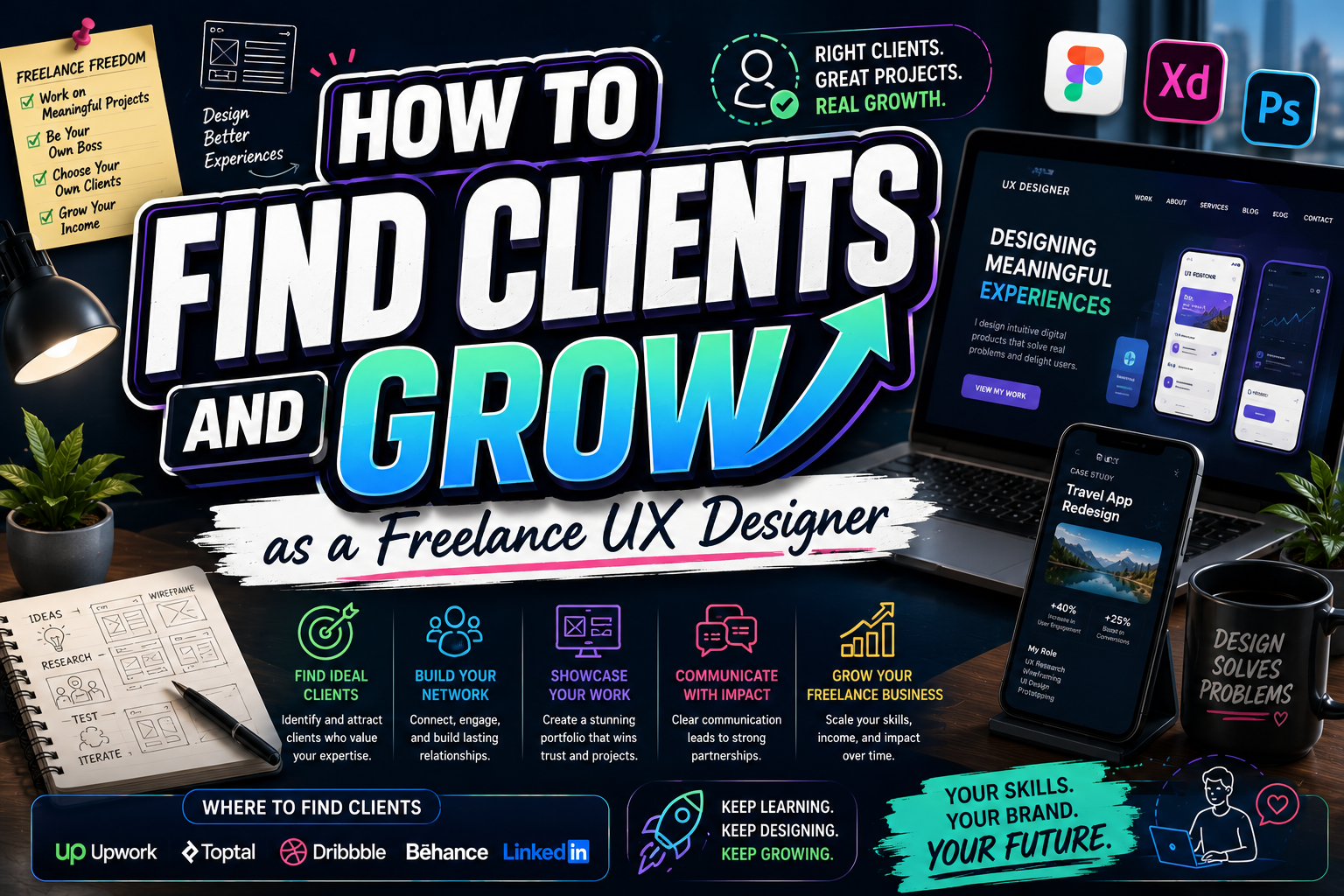
The demand for UX designers continues to grow as businesses increasingly focus on creating better digital experiences. At the same time, many designers are choosing freelancing as a way to gain flexibility, work with diverse clients, and build independent careers. Becoming a freelance UX designer allows professionals to choose their projects, set their own schedules, and develop expertise across multiple industries. However, freelancing also requires skills beyond design, including client acquisition, project management, contracts, pricing, and personal branding.
A successful freelance UX designer combines technical expertise with business thinking. Clients are not simply hiring someone to create wireframes or prototypes. They are hiring a problem solver who can improve user experiences, increase conversions, and help products succeed. Building a strong portfolio, maintaining a professional online presence, and developing long-term client relationships are often the foundation of a sustainable freelance career.
Whether you’re transitioning from a full-time UX role or starting your design journey, this guide will help you understand the key steps required to become a successful freelance UX designer.
Initial Suggestion
Before leaving a full-time position or launching a freelance career, establish a strong professional foundation.
Focus on UX Fundamentals
Clients expect expertise in:
- User research
- Wireframing
- Prototyping
- Information architecture
- Usability testing
- User-centered design
Build a Strong Portfolio
Your portfolio is often the first thing potential clients evaluate. A well-structured portfolio showcasing problem-solving skills and real project outcomes can significantly improve your chances of winning work.
Create a Personal Brand
Invest in:
- Professional website
- LinkedIn profile
- Portfolio case studies
- Design community participation
Treat Freelancing as a Business
Freelancing requires:
- Contracts
- Invoices
- Client communication
- Project planning
- Financial management
Successful freelancers understand both design and business operations.
Jump to Recommended Fonts
A strong personal brand is essential for freelance UX designers. Your portfolio website, case studies, presentations, proposals, and social media content should use typography that reflects professionalism, clarity, and user-centered thinking. Clean and modern fonts often perform best because they communicate trust, usability, and design expertise. If you’re creating a UX portfolio website or launching a personal design brand, choosing high-quality typography from Putracetol can help your visual identity stand out while maintaining professionalism.
Examples of suitable font categories include:
- Modern sans-serif fonts
- Corporate branding fonts
- Minimalist display fonts
- Professional portfolio fonts
- Contemporary logo fonts
These styles help reinforce the same principles UX designers apply to digital products: clarity, consistency, and excellent user experience.
Comparison
| Career Path | Flexibility | Income Potential | Client Responsibility | Stability |
|---|---|---|---|---|
| Full-Time UX Designer | Low | Medium | Low | High |
| Freelance UX Designer | Very High | High | High | Medium |
| UX Consultant | High | Very High | High | Medium |
| Agency UX Designer | Medium | Medium | Low | High |
| Product Designer | Medium | High | Medium | High |
Freelance UX Designer vs Full-Time Employment
Advantages of Freelancing
- Flexible schedule
- Project variety
- Potentially higher income
- Personal brand growth
- Location independence
Advantages of Full-Time Employment
- Predictable income
- Benefits package
- Team support
- Lower administrative workload
Build an Outstanding Portfolio
A portfolio is often the single most important factor when attracting freelance clients.
Include:
Case Studies
Explain:
- The problem
- Research process
- Design decisions
- Final outcome
Visual Process
Show:
- User flows
- Wireframes
- Prototypes
- Testing results
Business Impact
Whenever possible, demonstrate measurable results.
Clients want evidence that your work creates value.
Create a Professional Website
Every freelance UX designer should have a dedicated website.
Your website should include:
- Portfolio
- About page
- Services
- Testimonials
- Contact information
A professional website serves as your digital headquarters and helps build credibility with potential clients.
Invest in LinkedIn
LinkedIn remains one of the most effective platforms for freelance UX professionals.
Optimize:
- Headline
- Portfolio links
- Experience descriptions
- Recommendations
- Skills section
Many clients evaluate LinkedIn profiles before making hiring decisions.
Learn Client Acquisition
Finding clients is often the biggest challenge for new freelancers.
Common sources include:
- LinkedIn networking
- Design communities
- Referrals
- Freelance marketplaces
- Personal websites
- Industry events
Consistency in outreach is often more important than relying on a single platform.
Master Project Management
Successful freelancers manage more than design.
Essential skills include:
- Scope definition
- Time estimation
- Client communication
- Deadline management
- Feedback handling
Strong project management often leads to repeat business.
Use Contracts and Invoicing Systems
Professional documentation protects both parties.
Always establish:
- Project scope
- Deliverables
- Timelines
- Payment terms
- Ownership rights
Experienced freelancers consistently recommend using contracts before beginning any project.
Develop Soft Skills
Technical skills alone rarely guarantee success.
Clients value:
- Communication
- Reliability
- Empathy
- Collaboration
- Problem solving
Positive client experiences often generate referrals and long-term partnerships.
Continue Learning
The UX industry evolves rapidly.
Stay updated on:
- Accessibility standards
- AI-powered UX tools
- User research methods
- Product strategy
- Emerging technologies
Continuous learning helps maintain competitive advantages in the marketplace.
Common Mistake
One of the biggest mistakes aspiring freelance UX designers make is focusing entirely on design skills while ignoring business development. Many talented designers spend months perfecting their portfolios but invest little time in networking, marketing, or client outreach. As a result, they struggle to secure consistent projects despite having strong design capabilities. Freelancing requires balancing design excellence with business growth activities. Building relationships, promoting your expertise, and maintaining visibility are just as important as producing great work. Experienced freelance designers frequently emphasize that finding clients is an ongoing responsibility rather than a one-time task.
Another common mistake is creating portfolios that showcase visuals without explaining the underlying design process. UX clients are usually more interested in problem-solving, research methods, and measurable outcomes than beautiful screens alone. A portfolio that clearly demonstrates your thinking process, decision-making framework, and business impact often performs far better than one focused only on aesthetics. Strong case studies help clients understand how you approach challenges and why your work delivers results.
Many freelancers also underestimate the importance of contracts, pricing structures, and project boundaries. Without clear agreements, projects can expand beyond their original scope, creating frustration for both parties. Establishing professional systems from the beginning helps protect your business and build stronger client relationships.
Conclusion
Becoming a freelance UX designer offers an exciting opportunity to combine creativity, problem-solving, and entrepreneurship. While the path requires more responsibility than traditional employment, it also provides greater flexibility, diverse project experiences, and the potential to build a highly rewarding independent career.
Success as a freelance UX designer depends on more than design skills alone. Strong portfolios, effective networking, professional branding, client management, and continuous learning all contribute to long-term growth. By approaching freelancing as a business and consistently delivering value to clients, UX designers can create sustainable careers while helping companies build exceptional digital experiences.
Explore these fonts and many more at PutraCetol.com to build a business identity that looks professional, trustworthy, and memorable.
Additionally, if you want to explore some free typography options, you can check out Putracetol Studio on Dafont. Happy reading and designing!