
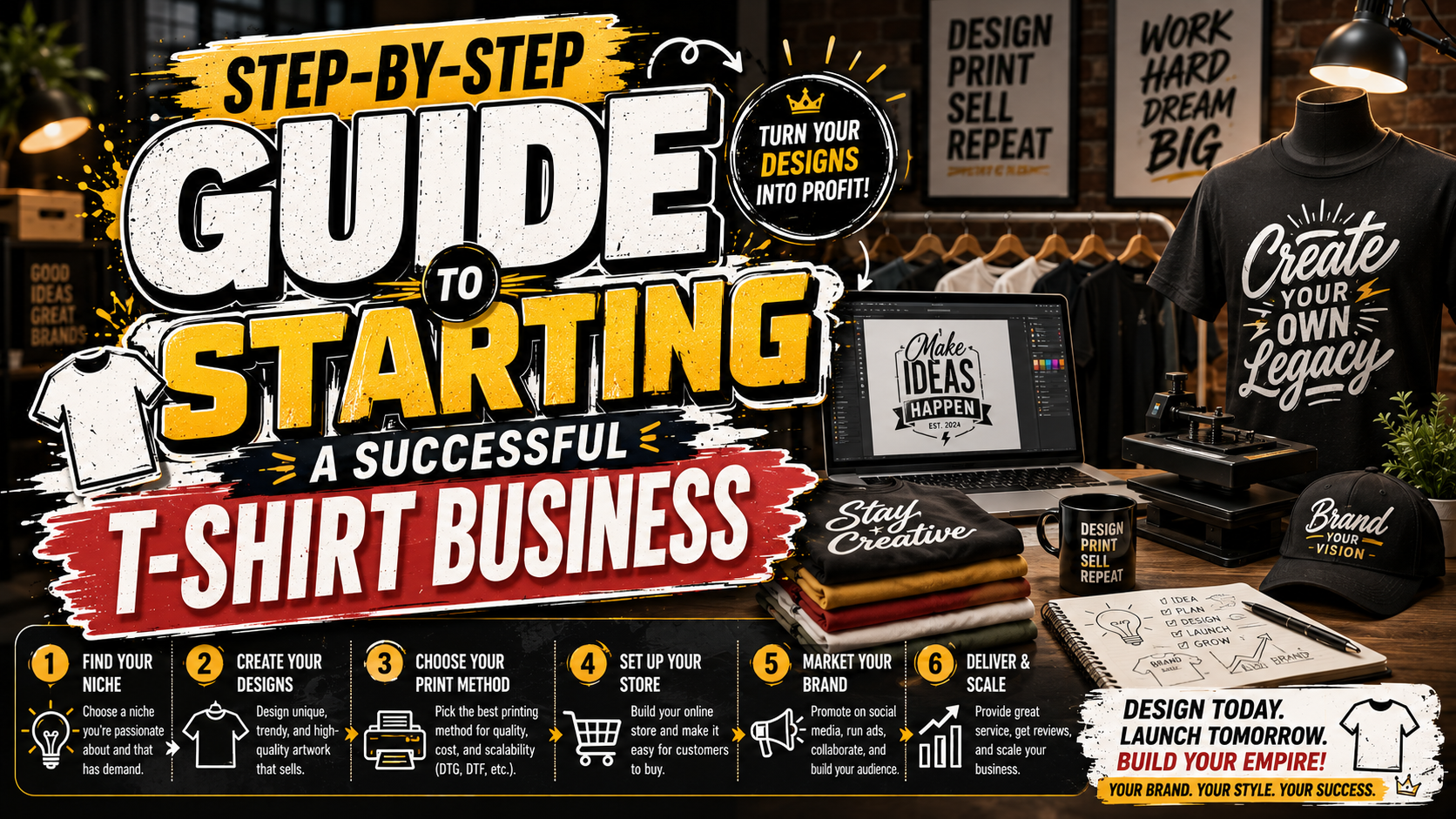
The t-shirt industry remains one of the most accessible and profitable segments of the fashion market. Whether you’re launching a streetwear brand, creating niche graphic tees, building a print-on-demand store, or developing a premium apparel label, there are countless opportunities to turn creative ideas into a thriving business.
Learning how to start a t-shirt business involves much more than creating attractive designs. Successful brands combine market research, niche selection, product quality, branding, pricing, eCommerce, and marketing into a complete business strategy. Modern entrepreneurs can start with relatively low investment thanks to print-on-demand services, online marketplaces, and digital marketing platforms.
The most successful t-shirt businesses understand that customers often buy into a brand’s message and identity as much as the shirt itself. Strong branding, unique positioning, and consistent marketing can help transform a simple apparel business into a recognizable fashion brand.
Initial Suggestion
Before creating designs or ordering inventory, focus on building a solid business foundation.
Start With a Specific Niche
One of the most common recommendations from successful t-shirt entrepreneurs is to avoid targeting everyone. Niche-focused brands often perform better because they connect with specific communities and interests. Examples include fitness enthusiasts, pet lovers, gamers, outdoor adventurers, or professional groups.
Build a Brand, Not Just a Product
Ask yourself:
- What does your brand represent?
- Who is your ideal customer?
- Why should customers choose your shirts over competitors?
- What story does your brand tell?
A strong brand creates customer loyalty and long-term growth.
Validate Your Designs
Before investing heavily in production:
- Gather feedback
- Run social media polls
- Create mockups
- Test audience interest
Early validation can save significant time and money.
Think About Scalability
Choose a business model that matches your budget and long-term goals.
Comparison
Popular T-Shirt Business Models
| Business Model | Startup Cost | Inventory Needed | Scalability | Best For |
|---|---|---|---|---|
| Print-on-Demand | Low | No | High | Beginners |
| Dropshipping | Low | No | Medium | New Entrepreneurs |
| Screen Printing | Medium | Yes | High | Growing Brands |
| DTG Printing | Medium | Limited | High | Custom Designs |
| Private Label Apparel | High | Yes | Very High | Premium Brands |
Step 1: Choose Your Niche
Your niche helps define:
- Design direction
- Target audience
- Marketing strategy
- Pricing structure
Brands with a focused audience often have an easier time building loyal communities. If everyone is your target customer, it’s harder to create meaningful differentiation.
Step 2: Create Unique Designs
Your designs are the heart of your t-shirt business.
Popular design categories include:
- Typography shirts
- Motivational quotes
- Pop culture-inspired concepts
- Minimalist graphics
- Niche community designs
- Vintage-inspired artwork
Strong designs should align with your brand identity and target audience.
Step 3: Select a Production Method
Several production options are available:
Print-on-Demand (POD)
Advantages:
- No inventory required
- Low startup costs
- Easy scalability
POD services allow businesses to sell custom apparel while third-party suppliers handle production and shipping.
Screen Printing
Advantages:
- Lower cost per unit at scale
- Excellent print durability
- Better profit margins for large orders
Direct-to-Garment (DTG)
Advantages:
- High-quality detail
- Ideal for complex artwork
- Flexible order quantities
Step 4: Choose Quality Materials
Successful apparel brands prioritize:
- Fabric quality
- Comfort
- Durability
- Fit consistency
A great design printed on a poor-quality shirt can damage customer trust.
Step 5: Calculate Costs and Pricing
Consider:
- Production costs
- Shipping costs
- Marketing expenses
- Platform fees
- Desired profit margin
Pricing should support both competitiveness and profitability.
Step 6: Build Your Brand Identity
Your brand identity should include:
- Business name
- Logo
- Typography
- Color palette
- Brand voice
A cohesive visual identity helps customers recognize and remember your brand.
Step 7: Create an Online Store
A professional online store provides:
- Product catalogs
- Secure checkout
- Brand storytelling
- Customer trust
Many entrepreneurs use dedicated eCommerce platforms combined with POD integrations to launch quickly and efficiently.
Step 8: Market Your T-Shirt Brand
Popular marketing channels include:
- TikTok
- Email marketing
- Influencer partnerships
- SEO content marketing
- Paid advertising
Consistent content and community engagement often outperform aggressive sales-focused campaigns.
Step 9: Protect Your Brand
As your business grows, consider protecting:
- Business name
- Domain name
- Social media handles
- Trademark assets
Trademark protection and proper business registration can help strengthen brand ownership and reduce future legal risks.
Common Mistake
One of the biggest mistakes new t-shirt entrepreneurs make is launching without a clear niche. Many beginners create generic designs intended for everyone, only to discover that their products fail to stand out in a highly competitive market. Successful apparel brands often build communities around specific interests, lifestyles, professions, or passions. A focused niche allows for stronger messaging, more effective marketing, and better customer loyalty. Entrepreneurs and POD communities consistently emphasize niche selection as one of the most important factors for success.
Another common mistake is prioritizing design quantity over brand quality. Some business owners launch dozens or even hundreds of designs before validating customer demand. While a large catalog may appear impressive, it often creates operational complexity and dilutes brand identity. Many successful t-shirt brands begin with a small collection of highly focused designs that represent their core audience and brand values. This approach allows entrepreneurs to gather feedback and refine their offerings before scaling.
Many new apparel businesses also underestimate the importance of branding. A t-shirt is relatively easy to manufacture, but building a recognizable brand requires consistent visual identity, professional presentation, and strong storytelling. Customers are often willing to pay premium prices when they feel connected to a brand’s message and community rather than simply purchasing a piece of clothing.
Conclusion
Learning how to start a t-shirt business requires balancing creativity with business strategy. While great designs are important, successful brands are built through careful niche selection, strong branding, quality products, effective pricing, and consistent marketing.
Whether you choose print-on-demand, screen printing, DTG production, or private-label manufacturing, the key is creating a brand that resonates with a specific audience. The most successful t-shirt businesses are not simply selling apparel; they are selling identity, community, and self-expression.
As the apparel market continues to grow, entrepreneurs who focus on brand building, customer experience, and long-term positioning will have the greatest opportunity to create profitable and sustainable t-shirt businesses.
Explore these fonts and more at PutraCetol.com to build a logo that strengthens your brand and supports long-term business growth. Additionally, if you want to explore some free typography options, you can check out Putracetol Studio on Dafont. Happy reading and designing!