Social Media Intern Internship 2026: A Practical Guide to Starting Your Digital Marketing Career
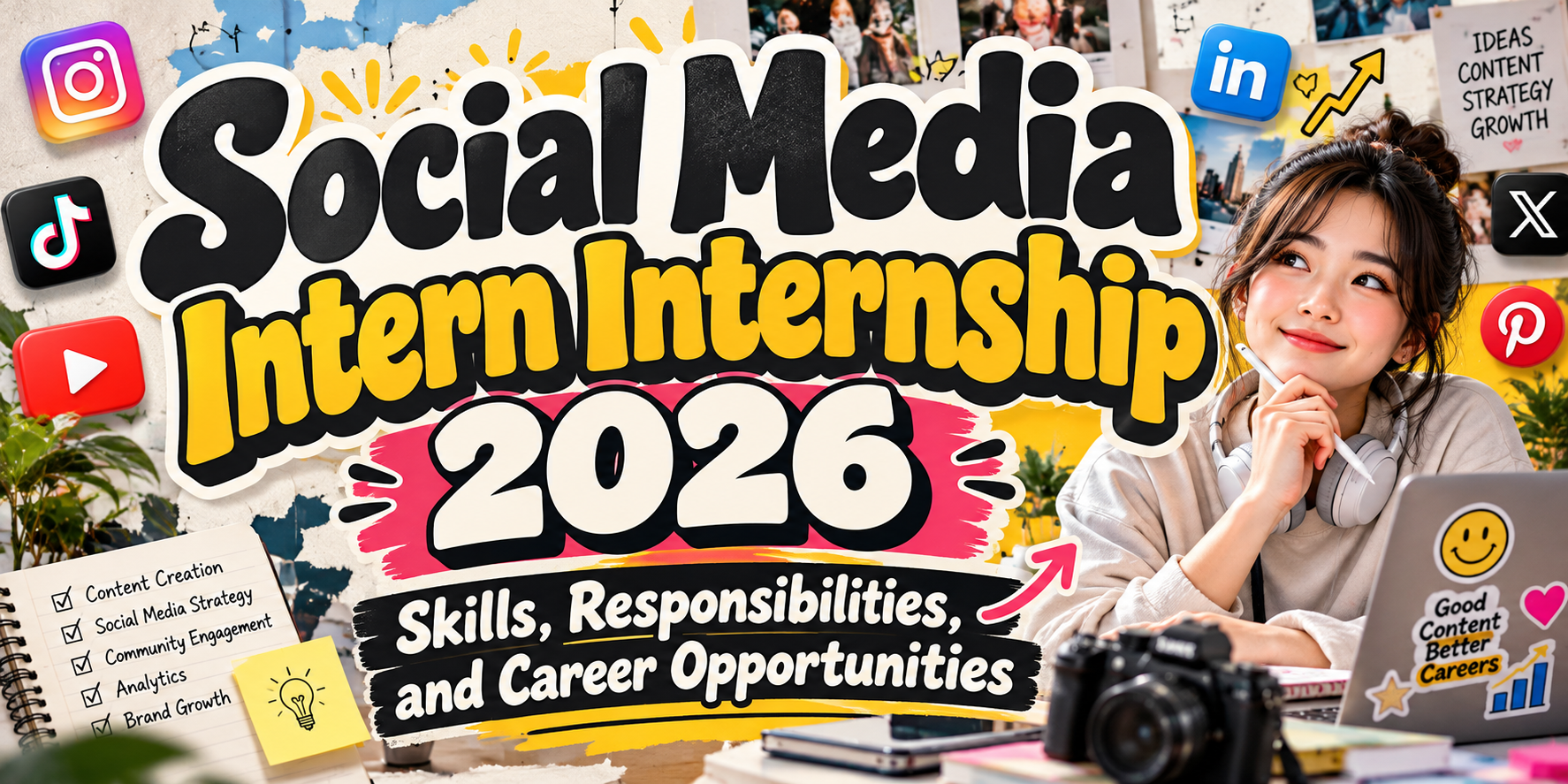
A social media intern internship 2026 can be one of the most practical entry points into digital marketing.
Instead of learning social media only through theory, interns work directly with content calendars, Instagram posts, TikTok videos, captions, community conversations, campaign ideas, and performance reports. These experiences help students and fresh graduates understand how social media contributes to real business objectives.
Current internship descriptions show that the role increasingly combines creative and analytical responsibilities. Employers frequently expect interns to help plan content, create short-form videos, monitor trends, engage with audiences, and review metrics such as reach and engagement.
For students interested in communication, marketing, design, content creation, or branding, this combination can create a strong foundation for several digital careers.
Treat the Internship as Portfolio Building
Do not think of a social media internship only as work experience to add to a résumé.
Treat every project as potential portfolio material.
For example, document how you researched a trend, created a campaign concept, produced three short videos, monitored performance, and adjusted the next content plan based on the results.
A portfolio that shows your thinking process is usually more meaningful than simply displaying attractive Instagram posts.
By the end of the internship, aim to demonstrate that you understand the complete process:
Research → Strategy → Idea → Creation → Publishing → Engagement → Measurement → Improvement
This workflow closely matches the responsibilities currently appearing across real social media internship roles.
What Does a Social Media Intern Do in 2026?
1. Content Planning and Trend Research
Social media interns often help maintain editorial calendars and research trends across Instagram, TikTok, LinkedIn, and other relevant platforms.
This involves more than following viral audio. Interns need to understand which trends actually fit the brand’s audience, tone, and campaign goals.
For example, a skincare brand may use educational short videos, while a technology startup might focus more heavily on LinkedIn carousels, founder insights, or product demonstrations.
2. Content Creation
Content creation is becoming one of the most important parts of the internship experience.
Interns may write captions, design carousels, create Stories, record product footage, develop Reels or TikTok scripts, and edit short-form videos.
Current internship listings frequently mention tools such as Canva and CapCut alongside basic photography, video editing, storytelling, and copywriting skills.
You do not need to be an advanced professional designer before applying. However, understanding visual hierarchy, typography, composition, and brand consistency can make your work noticeably stronger.
3. Community Engagement
Publishing content is only half of social media management.
Interns may also help respond to comments, monitor direct messages, track brand mentions, and maintain positive conversations with followers.
Community management teaches something that analytics cannot fully show: how audiences actually speak.
Frequently asked questions can become future content ideas. Complaints can reveal problems. Positive comments may identify potential customer advocates.
This makes community engagement valuable for both communication and market research.
4. Analytics and Performance Reporting
A modern social media intern should understand basic performance metrics.
Typical measurements include:
- Reach and impressions
- Engagement rate
- Video views and watch behavior
- Follower growth
- Saves and shares
- Link clicks
- Content performance over time
Current internships increasingly expect interns to review insights and prepare performance reports rather than simply post content.
The important skill is learning to turn data into decisions.
If educational videos consistently generate more saves than promotional posts, for example, the next content calendar should reflect that evidence.
Skills Employers Look for in Social Media Interns
The strongest candidates usually combine creative ability with organization.
Jobstreet’s 2026 career guidance highlights social media management tools, copywriting, analytics, content creation, communication, and creativity as important skills for building a social media career. It also identifies internships and content creation roles as common entry points toward positions such as Social Media Specialist and Digital Marketing Specialist.
Practical skills worth developing include short-form video editing, basic graphic design, caption writing, trend research, content planning, analytics, and presentation skills.
Soft skills matter equally. Deadlines move quickly in social media, so adaptability, attention to detail, collaboration, curiosity, and the ability to accept feedback are valuable.
Social Media Internship Skill Comparison
| Skill Area | Typical Intern Task | Career Value |
|---|---|---|
| Content Planning | Build calendars and research trends | Strategy |
| Copywriting | Write captions and hooks | Brand communication |
| Design | Create posts and carousels | Visual branding |
| Video | Produce Reels and TikToks | Content creation |
| Community | Reply to comments and DMs | Customer engagement |
| Analytics | Review reach and engagement | Data-driven marketing |
A good internship exposes you to several of these areas rather than limiting you to repetitive posting.
How to Build a Strong Social Media Portfolio
Your portfolio does not need to contain work from famous brands.
University organizations, personal projects, local businesses, student communities, and fictional campaign concepts can demonstrate relevant skills.
Include complete examples such as a content calendar, three-post campaign, short video, caption strategy, and performance analysis.
Presentation matters too. Consistent typography, layout, thumbnails, and visual identity can make portfolio projects feel more professional. Creators and design students can explore fonts from PutraCetol Studio when developing campaign mockups, portfolio covers, social graphics, and personal branding materials.
Common Mistakes
One common mistake is applying for internships without creating any examples of social media work. Employers cannot easily evaluate creativity from a résumé alone. Even a small self-initiated portfolio can demonstrate content thinking, copywriting, visual judgment, and familiarity with major platforms.
Another mistake is focusing only on aesthetics. Attractive graphics are useful, but professional social media work also involves strategy, audience understanding, deadlines, analytics, and business goals. Learn to explain why you created a piece of content and what result you expected from it.
Finally, avoid copying every trend simply because it is popular. Strong interns learn to evaluate whether a trend matches the brand. Strategic judgment is more valuable than producing content that looks current for only a few days.
Conclusion
A social media intern internship 2026 can provide much more than an introduction to posting content.
It can teach content strategy, short-form video, copywriting, community engagement, branding, analytics, campaign execution, and professional collaboration.
The most valuable interns approach every assignment as an opportunity to understand why content works, not just how to produce it.
Build a portfolio, learn to read performance data, develop your visual and communication skills, and use the internship as the first step toward roles such as Social Media Specialist, Content Strategist, Community Manager, Digital Marketer, or Social Media Manager.
Explore these fonts and many more at PutraCetol.com to build a business identity that looks professional, trustworthy, and memorable.
Additionally, if you want to explore some free typography options, you can check out Putracetol Studio on Dafont. Happy reading and designing!