
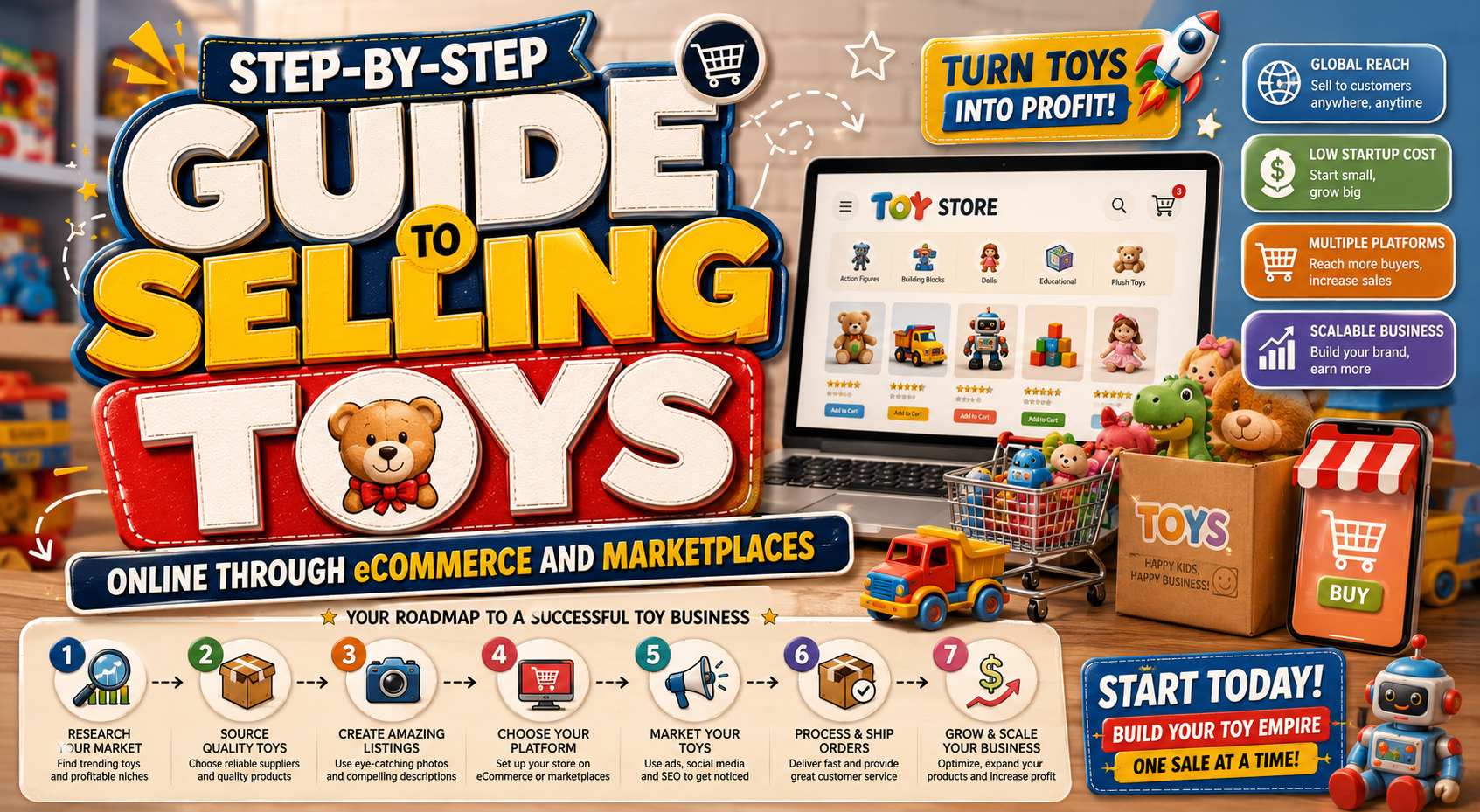
The toy industry continues to thrive as parents, educators, gift buyers, and collectors increasingly purchase products online. From educational toys and STEM kits to plush toys, action figures, puzzles, and collectibles, the demand for toys through digital channels has created significant opportunities for entrepreneurs and small business owners. Online selling allows toy businesses to reach customers far beyond their local markets while building stronger brand recognition and customer loyalty.
Learning how to sell toys online involves much more than listing products on a marketplace. Successful toy businesses combine product selection, niche targeting, branding, safety compliance, eCommerce optimization, and digital marketing into a complete growth strategy. Whether you’re creating your own toy brand, sourcing products from manufacturers, or selling collectible items, understanding the fundamentals can help increase sales and build a sustainable business.
The most successful online toy stores focus on creating trust with customers. Parents and gift buyers want confidence that products are safe, high-quality, and appropriate for their intended age group. This makes branding, product information, and customer experience especially important in the toy market.
Initial Suggestion
Before launching a toy business, focus on understanding your target audience.
Start With a Specific Toy Niche
Rather than selling every type of toy, consider specializing in a category such as:
- Educational toys
- STEM toys
- Plush toys
- Wooden toys
- Action figures
- Collectibles
- Puzzle games
- Eco-friendly toys
Niche-focused businesses often find it easier to build authority and attract loyal customers.
Understand Safety Requirements
Toy safety should be a priority from day one.
Depending on your market, toy products may require:
- Safety testing
- Compliance documentation
- Product certifications
- Proper age labeling
Businesses selling children’s toys should understand applicable safety regulations before launching products.
Build a Brand, Not Just a Store
Customers often purchase from brands they trust.
Strong toy brands typically invest in:
- Professional logos
- Packaging design
- Product photography
- Clear brand messaging
- Consistent customer experience
Focus on Long-Term Growth
Instead of chasing every trend, build a product catalog that combines evergreen sellers with carefully selected trending products.
Comparison
Popular Ways to Sell Toys Online
| Sales Channel | Startup Cost | Brand Control | Traffic Potential | Best For |
|---|---|---|---|---|
| Own Website | Medium | Very High | Medium | Long-Term Brands |
| Amazon Marketplace | Low | Medium | Very High | Fast Exposure |
| Walmart Marketplace | Low | Medium | High | Growing Businesses |
| Etsy | Low | Medium | High | Handmade Toys |
| Social Commerce | Low | High | Medium-High | New Brands |
Step 1: Research the Toy Market
Start by identifying:
- Popular toy categories
- Competitor products
- Price ranges
- Customer preferences
- Seasonal trends
Research helps validate demand before investing in inventory. Many toy entrepreneurs recommend understanding customer demographics and niche preferences before launching products.
Step 2: Choose a Profitable Niche
Examples of strong toy niches include:
Educational & STEM Toys
Parents often seek toys that combine entertainment with learning.
Collectibles & Action Figures
Collectors frequently pay premium prices for rare or limited-edition products.
Eco-Friendly Toys
Growing numbers of consumers are looking for sustainable and non-toxic alternatives.
Plush Toys
Soft toys remain one of the most consistent categories in the toy market.
Step 3: Source or Manufacture Products
Common sourcing methods include:
- Wholesale suppliers
- Manufacturers
- Private label production
- Handmade creation
- Custom toy development
Choose suppliers that can consistently maintain product quality and safety standards.
Step 4: Create an Online Store
A professional toy website should include:
- High-quality product photos
- Detailed descriptions
- Age recommendations
- Customer reviews
- Secure checkout
A dedicated website also gives businesses greater control over branding and customer relationships.
Step 5: Optimize Product Pages
Each product page should contain:
- Clear product titles
- Feature highlights
- Safety information
- Multiple images
- SEO-friendly descriptions
Detailed product information can increase trust and improve conversion rates.
Step 6: Sell Through Multiple Channels
Many successful toy sellers use a multichannel approach.
Examples include:
- Independent website
- Amazon
- Walmart Marketplace
- Social media shops
- Specialty marketplaces
Marketplaces provide access to large customer bases while your website helps build brand equity.
Step 7: Create a Marketing Strategy
Popular marketing channels include:
- TikTok
- Email marketing
- Influencer collaborations
- SEO content marketing
Visual marketing performs especially well for toy businesses because customers want to see products in action.
Step 8: Focus on Customer Reviews
Reviews help:
- Build trust
- Improve conversions
- Increase visibility
- Reduce purchase hesitation
Positive customer feedback often becomes one of the most valuable assets for a growing toy brand.
Step 9: Monitor Performance and Scale
Track:
- Best-selling products
- Customer acquisition costs
- Conversion rates
- Repeat purchase rates
- Seasonal demand
Data-driven decisions help businesses grow more efficiently.
Common Mistake
One of the biggest mistakes new toy entrepreneurs make is trying to compete purely on price. While discounting may attract some buyers, it often creates pressure on profit margins and makes it difficult to build a recognizable brand. Successful toy businesses typically focus on value, customer experience, product quality, and niche positioning rather than competing solely on cost. Customers are often willing to pay more when they trust the brand and perceive higher quality.
Another common mistake is overlooking product safety and compliance requirements. Toys intended for children may be subject to safety testing, certification, and labeling requirements depending on the target market. Ignoring these requirements can create legal risks and damage customer trust. Safety should be treated as a fundamental business responsibility rather than an afterthought. Regulatory agencies emphasize that manufacturers and importers must understand and comply with applicable toy safety standards.
Many toy businesses also rely too heavily on marketplace traffic without building their own brand identity. While marketplaces can generate sales quickly, businesses that invest in their own website, customer database, packaging, and content marketing often create more sustainable long-term growth. A recognizable brand helps reduce dependence on any single platform and increases customer loyalty over time.
Conclusion
Learning how to sell toys online requires more than simply listing products on an eCommerce platform. Successful toy businesses combine market research, niche selection, product safety, strong branding, optimized product pages, and strategic marketing to create sustainable growth.
Whether you’re selling educational toys, collectibles, plush products, or custom creations, the key is understanding your audience and delivering value consistently. Entrepreneurs who focus on trust, customer experience, and brand development are often best positioned to succeed in the competitive online toy market.
As eCommerce continues to expand, businesses that invest in professional branding, strong product presentation, and multichannel selling strategies will have greater opportunities to attract customers and grow their toy brands successfully.
Explore these fonts and more at PutraCetol.com to build a logo that strengthens your brand and supports long-term business growth. Additionally, if you want to explore some free typography options, you can check out Putracetol Studio on Dafont. Happy reading and designing!