
Romanticism in Design: Emotion, Nature, and Visual Storytelling
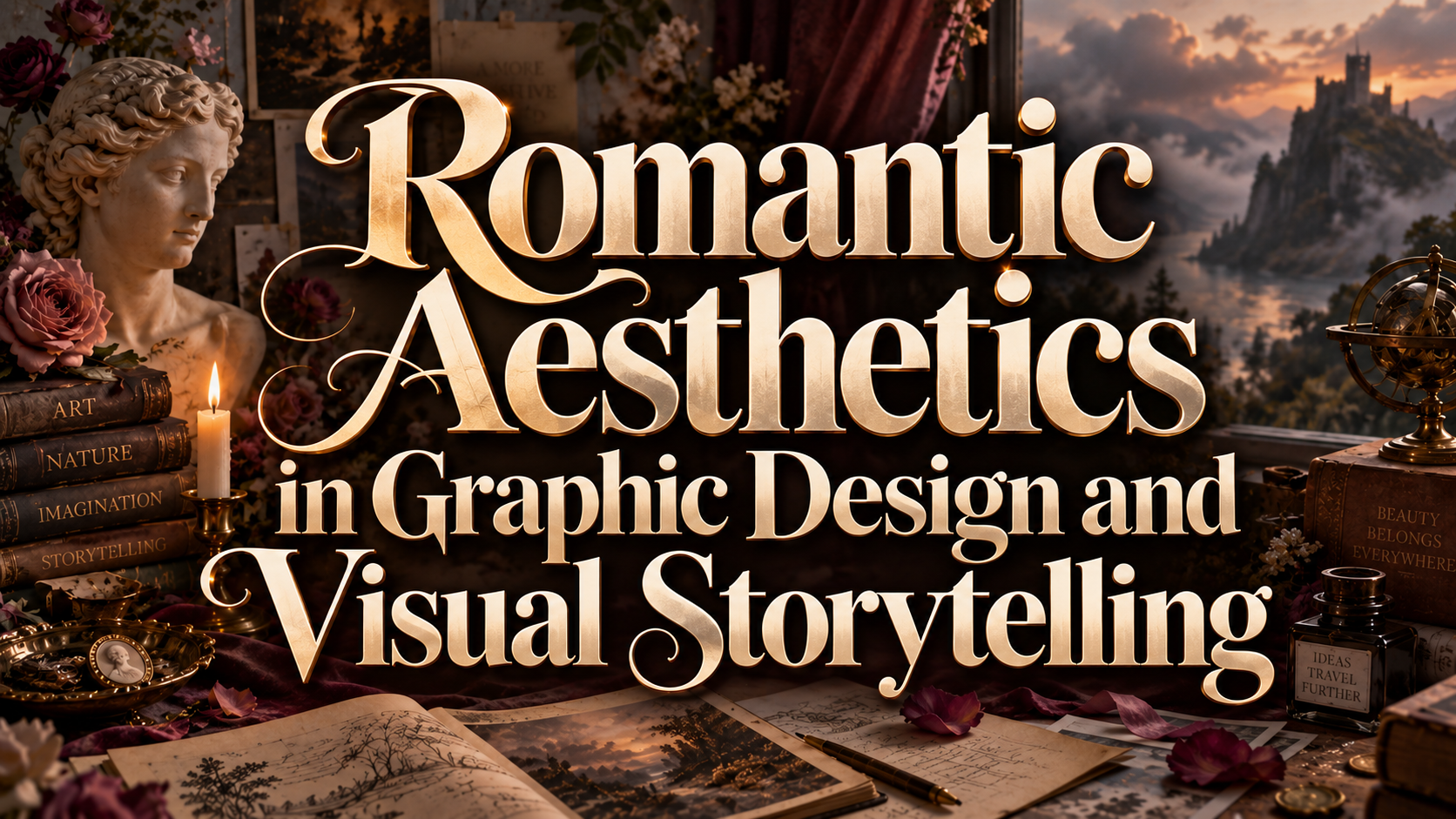
Start With Emotion Before Decoration
The most effective way to explore romanticism in design is to begin with an emotional question rather than a historical visual style. Ask what the audience should feel: wonder, loneliness, rebellion, nostalgia, danger, freedom, or awe.
Romanticism emerged in Europe during the late eighteenth and early nineteenth centuries as artists and writers placed greater emphasis on emotion, imagination, individuality, nature, and subjective experience. Instead of treating reason and order as the only paths to meaning, Romantic creators explored the dramatic, mysterious, heroic, and sometimes supernatural sides of human experience.
Modern designers can use the same principles without recreating nineteenth-century paintings. The goal is to translate Romantic thinking into contemporary typography, photography, illustration, color, composition, motion, and branding.
What Does Romanticism Mean in Modern Design?
Romantic design is not limited to flowers, handwritten scripts, or sentimental imagery. Historically, Romanticism could be beautiful, violent, mysterious, melancholic, rebellious, or sublime.
That wider emotional range makes it useful for contemporary visual communication.
A fashion campaign might show a solitary figure against an overwhelming landscape. A fragrance identity may combine botanical imagery with dramatic shadows. A music poster could use expressive lettering, storm-like textures, and asymmetrical composition to communicate emotional intensity.
The common element is storytelling. Romanticism asks designers to create a mood and an experience rather than simply organize information.
Nature as an Emotional Character
Nature played an important role in Romantic art because landscapes could express feelings that were difficult to communicate directly.
Mountains might represent freedom or human insignificance. Storms can suggest conflict. Forests communicate mystery, while oceans may symbolize danger, distance, or possibility.
Contemporary designers can use these ideas through dramatic landscape photography, botanical illustration, atmospheric gradients, organic textures, and cinematic lighting.
The landscape should not simply decorate the composition. It should contribute to the narrative.
For example, a sustainable outdoor brand might use large-scale wilderness imagery to communicate respect for nature rather than filling every layout with green icons and environmental symbols.
Folklore, Myth, and the Supernatural
Romantic artists frequently explored mythology, legends, medieval stories, national folklore, dreams, and supernatural themes.
These ideas remain powerful in entertainment, fashion, publishing, gaming, fragrance, and cultural branding.
Designers can translate folklore through symbols, illustrations, ornamental borders, mysterious characters, historic references, and carefully selected typography. The strongest approach is to research the original story before transforming it.
Avoid combining random mystical symbols simply because they look dramatic. A coherent mythology creates a much stronger visual identity than decorative fantasy without meaning.
Typography and Romantic Expression
Typography can communicate Romantic emotion before an audience reads the words.
Elegant serifs can suggest literature and historical sophistication. Blackletter-inspired fonts may introduce medieval drama. Expressive scripts communicate intimacy, while distressed or irregular display fonts can bring rebellion and emotional tension.
The choice depends on the story.
A poetry collection might combine an elegant serif title with understated body typography. A Gothic fashion campaign could use sharp decorative lettering against dark photography. A folklore-inspired packaging system might use an expressive display typeface supported by simpler informational typography.
PutraCetol Studio offers serif, script, Gothic, fantasy, vintage, experimental, and decorative display fonts that designers can explore when creating identities with a stronger narrative atmosphere.
The Sublime: Designing Awe and Scale
One of the most useful Romantic ideas for contemporary designers is the sublime, the feeling created when something appears beautiful yet overwhelming.
Modern design can create this through scale.
Place a tiny human figure beneath enormous mountains. Use oversized typography beside minimal information. Surround a product with dramatic darkness or vast negative space.
The contrast between small and enormous can create emotional tension without requiring complicated graphics.
This approach works especially well in film posters, fashion campaigns, travel branding, outdoor products, editorial design, and cinematic social content.
Individualism and Personal Expression
Romanticism also valued the individual imagination. For modern designers, this can encourage work that feels more personal and less dependent on generic templates.
Custom lettering, handmade illustrations, unusual compositions, personal photography, and experimental textures can give a project a recognizable voice.
This does not mean ignoring visual systems. Emotional expression becomes stronger when it is supported by consistent typography, color, spacing, and art direction.
A memorable identity balances personality with discipline.
Romanticism in Branding and Digital Content
Modern brands can use Romantic principles when emotional connection matters as much as functional information.
A perfume brand might build a mysterious story around moonlight, flowers, and memory. A boutique hotel could use historic architecture, local legends, and cinematic photography. A music artist might create an entire visual era around tragedy, longing, or rebellion.
Motion design can deepen the experience through slow camera movement, fading light, drifting particles, fabric movement, or typography that appears gradually.
The objective is not simply to make content look cinematic. Every element should reinforce the emotional narrative.
Comparison
| Romantic Principle | Historical Expression | Contemporary Design Use |
|---|---|---|
| Emotion | Dramatic painting and poetry | Branding and campaign storytelling |
| Nature | Mountains, storms, forests | Photography and environmental imagery |
| Individualism | Personal artistic expression | Custom typography and distinctive identity |
| Folklore | Legends and traditional stories | Packaging, gaming, editorial design |
| Supernatural | Dreams and mysterious subjects | Entertainment and fashion campaigns |
| Sublime | Humans overwhelmed by nature | Dramatic scale and cinematic layouts |
Common Mistakes
The first mistake is reducing Romanticism to soft flowers, pastel colors, and elegant scripts. Romanticism contains tragedy, rebellion, fear, mystery, heroism, wilderness, and supernatural imagination. Designers who explore this wider emotional vocabulary can create far more distinctive visual identities.
Another mistake is copying historical paintings or decorative motifs without understanding why they were powerful. Instead of reproducing an old aesthetic directly, identify the principle behind it. Dramatic lighting might become cinematic photography, the sublime might become extreme scale, and folklore might become a contemporary storytelling system.
The final mistake is creating so much atmosphere that communication becomes unclear. Dark textures, ornamental fonts, dramatic imagery, and complex symbolism should never hide essential information. Use expressive elements for emotional impact while maintaining readable typography and clear hierarchy.
Conclusion
Romanticism in design continues to influence visual culture because its central ideas remain deeply human. Emotion, imagination, nature, individuality, mythology, tragedy, and wonder still give designers powerful ways to communicate beyond purely functional information.
Modern designers do not need to imitate nineteenth-century art. Instead, they can translate Romantic principles into typography, photography, illustration, motion, and branding.
Combined with expressive fonts from PutraCetol Studio, these ideas can help create visual identities that feel personal, dramatic, memorable, and rich with narrative.
Explore these fonts and many more at PutraCetol.com to build a business identity that looks professional, trustworthy, and memorable.
Additionally, if you want to explore some free typography options, you can check out Putracetol Studio on Dafont. Happy reading and designing!