
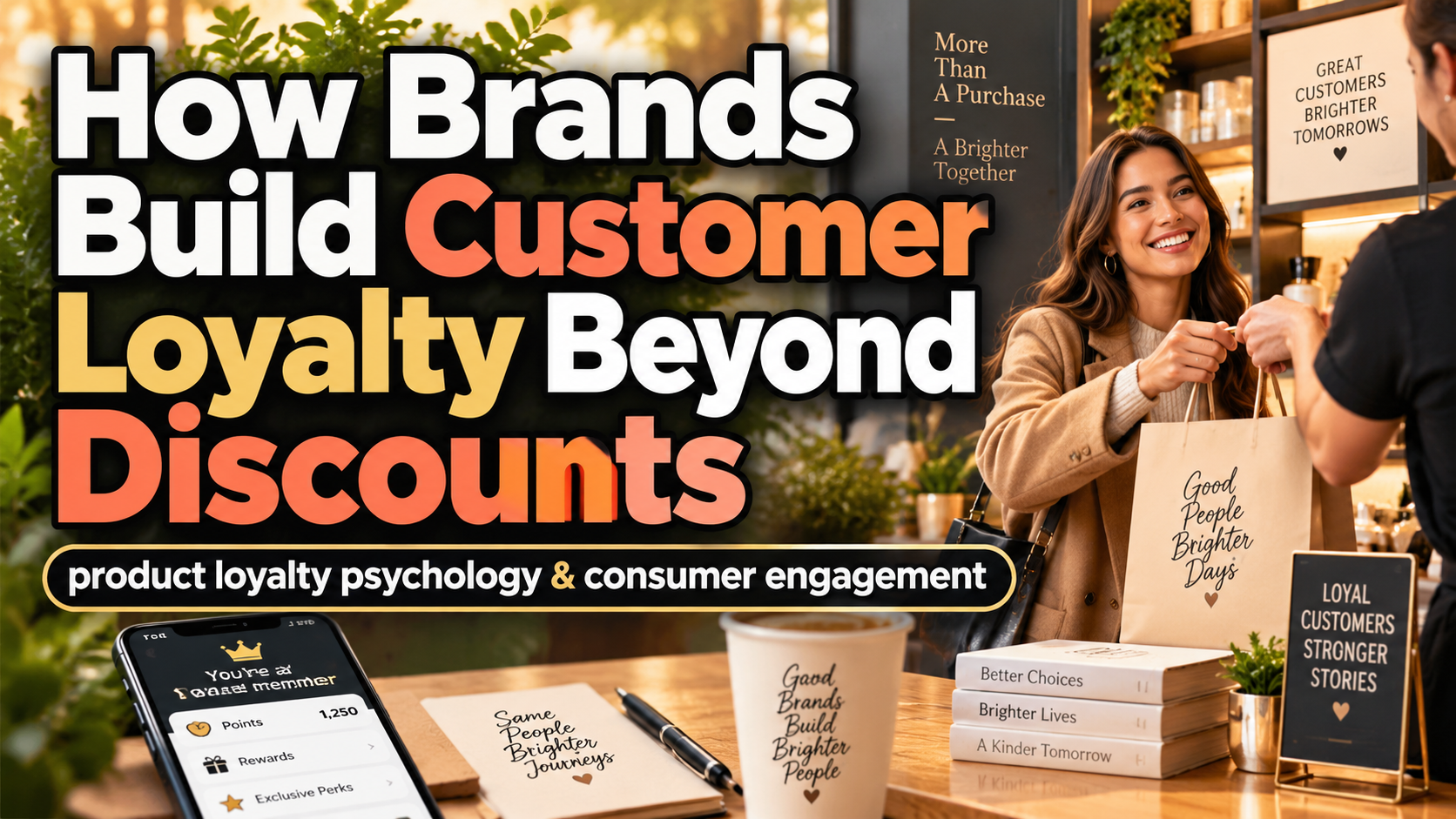
Product Loyalty Psychology & Consumer Engagement 2026: Why Customers Return
Ask Why Customers Stay
Begin with a question: would customers still choose your brand if switching were easy?
Repeat purchases can reflect preference, convenience, or situational constraints. Research by Dick and Basu distinguishes repeat patronage from the customer’s relative attitude toward a brand. Counting transactions alone therefore gives an incomplete picture of loyalty.
Interview repeat buyers, recent defectors, and customers who purchase only during promotions. Ask what they value, what disappoints them, and which alternatives they consider.
What Current Evidence Says About Loyalty
Deloitte’s January 2026 report, based on a 2025 survey of 5,564 US adult loyalty-program members, found that respondents enrolled in eight programs on average but actively participated in five. These findings describe surveyed program members, not every consumer worldwide.
The practical lesson is simple: enrollment is not engagement. Treat a loyalty program as one tool within the customer relationship, not as proof that customers feel committed.
The Psychology Behind Stronger Relationships
Trust and Positive Emotion
A study covering 107 brands found relationships between brand trust, positive feelings toward the brand, purchase loyalty, and attitudinal loyalty. This supports considering functional reliability alongside emotional experience, without promising that an attractive campaign will cause retention.
Make product descriptions accurate, deliver what you promise, and resolve problems fairly. For a software business, prioritize dependable features and clear support before adding celebratory badges or premium-looking graphics.
Familiarity and Useful Routines
Make returning easier through saved preferences, accessible order histories, clear onboarding, and optional replenishment reminders. Keep recurring purchases transparent and adjustable.
For example, let coffee subscribers change delivery frequency or pause during travel. Design convenience around their routine rather than making cancellation difficult. Ask whether the experience saves effort while preserving choice.
Identity and Community
Research into brand communities describes shared identity, rituals, and responsibility toward fellow members. Loyalty can therefore have a social dimension beyond an individual transaction.
Create opportunities for useful participation: workshops, customer showcases, repair sessions, or moderated discussions. Credit contributions and welcome criticism. A running brand might organize beginner-friendly meetups instead of rewarding only its fastest customers.
Relevant Recognition and Personalization
Deloitte’s research highlights financial value, simplicity, and usable benefits in loyalty programs. Emotional storytelling should complement practical rewards rather than dismiss customers’ budgets.
Offer benefits connected to the product: relevant tutorials, convenient service, or rewards customers can realistically redeem. Explain conditions before enrollment.
For AI-assisted recommendations, let customers edit preferences and choose notification frequency. W3C’s Privacy Principles emphasize data minimization, stated purposes, and meaningful user control. Collect what supports the service rather than building profiles without clear limits.
Turn the Strategy Into a Consistent Experience
Consider a hypothetical stationery brand. After a purchase, it provides a short guide to using the planner, invites optional creative submissions, and sends reminders only when requested.
Repeat the same typography, colors, and conversational tone across packaging, email, and support. Explore PutraCetol Studio fonts for distinctive headlines, then use a readable companion for instructions and account information.
Treat visual identity as a recognizable expression of the promise, not a substitute for product quality.
Comparison
Use this framework when reviewing retention plans.
| Focus | Transaction-Only Approach | Relationship-Oriented Alternative |
|---|---|---|
| Rewards | Discounts without context | Useful benefits with clear conditions |
| Engagement | More clicks and notifications | Relevant, voluntary participation |
| Personalization | Hidden assumptions | Editable preferences |
| Retention | Obstacles to leaving | Reasons to return |
| Branding | Campaign appearance alone | Consistent communication and service |
Common Mistakes
The first mistake is confusing retained customers with satisfied customers. Investigate whether people stay because of genuine preference, practical convenience, or switching barriers. Include cancellation feedback and competitor comparisons in research. Do not label all repeat buyers “brand advocates” without evidence.
Another mistake is rewarding behavior that adds little value. Daily notifications, complicated points, and short redemption windows deserve testing rather than automatic adoption. Review whether the benefit helps customers use the product and whether the program remains financially sustainable after rewards, fulfillment, and support costs.
The final mistake is measuring activity without outcomes. Track repeat purchases within a realistic buying cycle, retention by customer cohort, complaints, referrals, and margin after incentives. Compare equivalent groups or use controlled tests where feasible. Members may already be enthusiastic customers, so higher spending among members alone does not prove that the program caused the increase.
Conclusion
Effective product loyalty psychology & consumer engagement 2026 connects dependable value with trust, relevance, and voluntary participation.
Start by understanding why people return, then improve the product experience, clarify rewards, and protect customer choice. Support those decisions with consistent branding and thoughtfully selected PutraCetol Studio typography.
The objective is not to make customers feel trapped. It is to give them worthwhile reasons to choose the brand again.
Explore these fonts and many more at PutraCetol.com to build a business identity that looks professional, trustworthy, and memorable.
Additionally, if you want to explore some free typography options, you can check out Putracetol Studio on Dafont. Happy reading and designing!