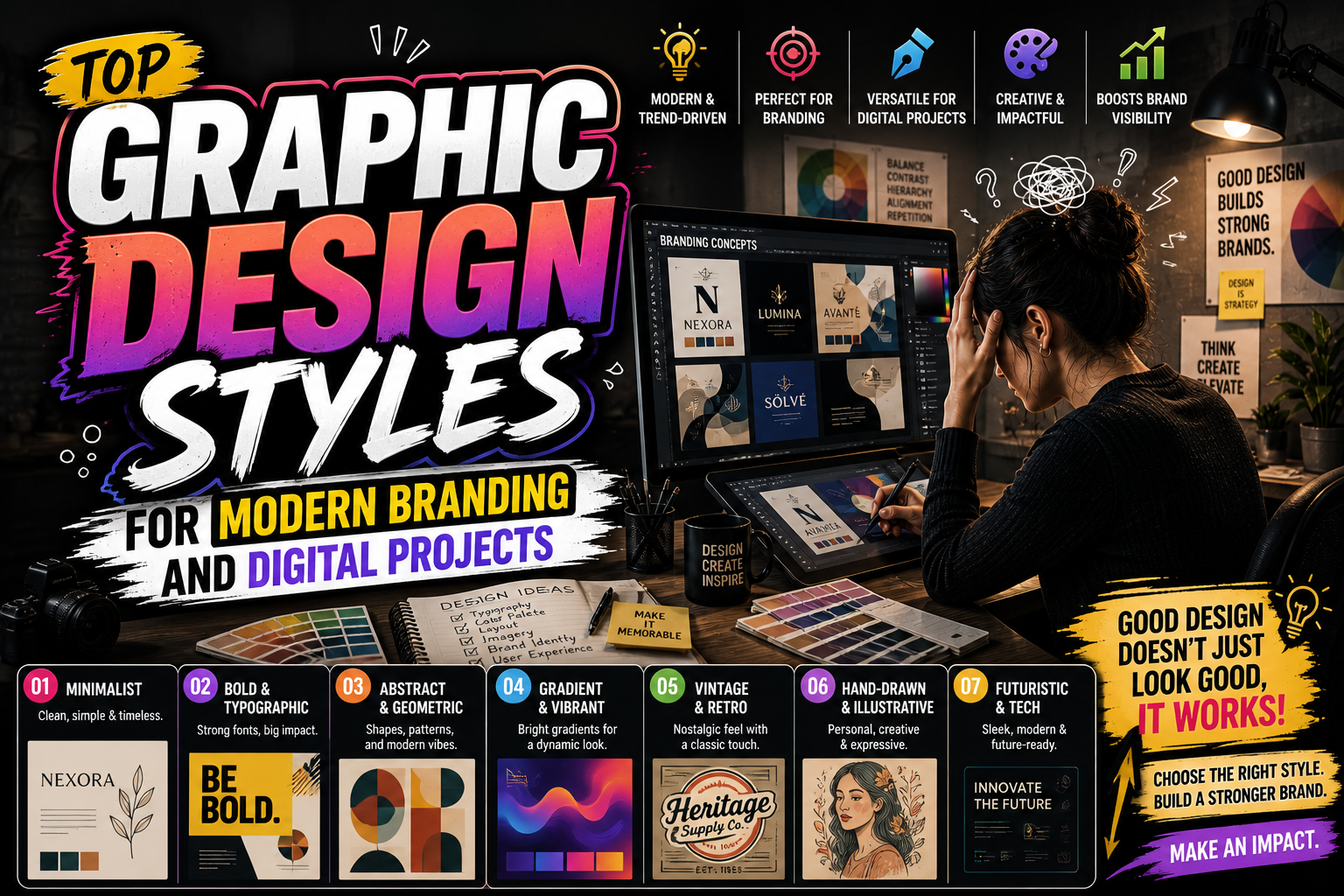
15+ Modern Graphic Design Styles Every Designer Should Know
Graphic design is constantly evolving. What worked a few years ago may no longer feel relevant today. Modern audiences expect visuals that are not only attractive but also clear, functional, and optimized for digital platforms.
That’s why understanding modern graphic design styles is essential for designers, marketers, and brands. These styles go beyond colors and typography. They involve layout systems, visual hierarchy, and adaptability across devices, especially mobile.
In this guide, we’ll explore more than 15 modern design styles, grouped into key categories, along with practical insights on how to use them effectively.
Why Modern Graphic Design Styles Matter
Before diving into specific styles, it’s important to understand why they matter.
Improve Communication
Different styles convey different messages. Choosing the right one helps communicate your idea more effectively.
Strengthen Brand Identity
Consistent visual style makes your brand recognizable and memorable.
Adapt to Digital Platforms
Modern design must work across websites, social media, and mobile apps.
1. Clean Minimal Layouts
Minimal design continues to dominate modern visual communication. It focuses on clarity, spacing, and simplicity.
Swiss Grid
A structured layout system based on alignment and balance. It’s widely used in corporate and tech design.
Quiet Luxury
Subtle, refined visuals with soft colors and elegant typography. Often used in high-end branding.
Monochrome Contrast
Black-and-white palettes with strong contrast for clarity and impact.
Soft Gradient
Smooth color transitions that add depth without overwhelming the design.
Best for:
Tech brands, fashion, lifestyle, and corporate design.
2. Typography-Driven Styles
Typography is no longer just a supporting element. In many modern designs, it becomes the main focus.
Bold Condensed Posters
Large, compressed text that creates strong visual impact.
Editorial Typography
Inspired by magazines, combining serif and sans-serif fonts for a refined look.
Kinetic Type
Animated or dynamic typography often used in digital media.
Maximal Type Collage
Layered typography with overlapping elements for expressive visuals.
Outline Typography
Minimal text using outlines instead of filled letters.
Best for:
Campaigns, posters, streetwear branding, and digital ads.
3. Shapes and Geometry
Geometric design brings structure and visual interest.
Geometric Modular
Design built from repeating shapes and grids.
Bauhaus Style
Combines bold colors, simple shapes, and functional design principles.
Memphis Revival
Playful patterns, bright colors, and abstract shapes.
Isometric Geometry
3D-like visuals using isometric perspective.
Best for:
Creative studios, UI promotions, and youth-oriented products.
4. Texture and Realism
Modern design is increasingly incorporating tactile and realistic elements.
Paper Texture
Adds a handmade, organic feel.
Risograph Layers
Layered printing effects with vibrant colors.
Photo + Type Overlay
Combining photography with typography for storytelling.
Cinematic Grading
Color grading inspired by film aesthetics.
Best for:
Indie brands, storytelling, café promotions, and creative campaigns.
5. Social Creator Styles
With the rise of social media, design has adapted to content-driven platforms.
Carousel Cards
Multi-slide designs optimized for Instagram.
Sticker UI
Playful, sticker-like elements for engagement.
Screenshot Highlight
Designs that mimic app interfaces or screenshots.
Template-Led Posts
Reusable templates for consistent content creation.
Best for:
Instagram, Pinterest, online courses, and digital marketing.
6. Futuristic Styles
Technology-driven brands often use futuristic visuals to signal innovation.
Holographic Gradient
Iridescent colors that shift and reflect light.
Glassmorphism
Transparent elements with blurred backgrounds.
Data-Driven Graphics
Visualizations that highlight data and analytics.
Best for:
Tech startups, SaaS platforms, music visuals, and digital products.
7. Playful and Expressive Styles
Some brands focus on creativity and personality.
Hand-Drawn Doodles
Informal, sketch-like illustrations.
Collage Cutout
Layered visuals combining photos and graphics.
Best for:
Youth brands, lifestyle products, music, and creative campaigns.
The Role of Typography in Modern Design
Typography is one of the most defining elements of any design style. The right font can reinforce the mood and message of your visuals.
Here are five font styles that align with modern design needs:
Urban Dharma Hindi Font – Cultural and Expressive

Adds a unique, ethnic character to designs.
Best for:
- Cultural branding
- Spiritual themes
- Artistic projects
Vidage Elegant Serif Typeface – Classic and Refined

A sophisticated serif font for premium design.
Best for:
- Editorial layouts
- Luxury branding
- Fashion content
Flece Display Modern Sans Font – Clean and Contemporary

A modern sans-serif font designed for digital use.
Best for:
- Startups
- UI design
- Tech branding
Zambeza Display Font – Bold and Artistic

A strong, expressive font for impactful visuals.
Best for:
- Streetwear
- Posters
- Creative campaigns
Paperlight Script Calligraphy Font – Elegant and Personal

A script font that adds warmth and personality.
Best for:
- Wedding design
- Handmade products
- Lifestyle branding
Quick Summary Table
| Font | Characteristics | Best Use |
|---|---|---|
| Urban Dharma Hindi | Exotic, ethnic | Cultural, spiritual |
| Vidage Elegant Serif | Elegant, classic | Luxury, editorial |
| Flece Display Sans | Modern, clean | Startups, technology |
| Zambeza Display | Bold, expressive | Fashion, streetwear |
| Paperlight Script | Romantic, elegant | Weddings, handmade |
How to Choose the Right Design Style
Choosing a design style should not be based on trends alone.
Consider Your Audience
Different audiences respond to different visual styles.
Align with Your Brand
Your design should reflect your brand’s personality and values.
Think About Platform
Designs for social media, websites, and print require different approaches.
Combine Styles Carefully
Mixing styles can create unique results, but it must be done thoughtfully.
Common Mistakes in Modern Design
- Following trends without purpose
- Overloading designs with too many elements
- Ignoring readability and usability
- Lack of consistency across platforms
A good design balances creativity with clarity.
Why Modern Design Is More Than Trends
Modern graphic design is not just about aesthetics. It’s about communication, usability, and adaptability.
- Minimal layouts improve clarity
- Bold typography adds impact
- Textures create emotional connection
- Futuristic styles signal innovation
The best designs combine multiple elements while staying focused on the message.
Final Thoughts
Understanding modern graphic design styles gives you the flexibility to create visuals that are both relevant and effective. Whether you’re working on branding, social media, or digital products, choosing the right style can significantly improve your results.
Typography, layout, and color all play a crucial role in shaping visual identity. By combining these elements with the right design approach, you can create work that stands out and communicates clearly.
For more inspiration, creative tools, and high-quality fonts, platforms like Putracetol.com offer valuable resources to help you bring your ideas to life.
Additionally, if you want to explore some free typography options, you can check out Putracetol Studio on Dafont. Happy reading and designing!