
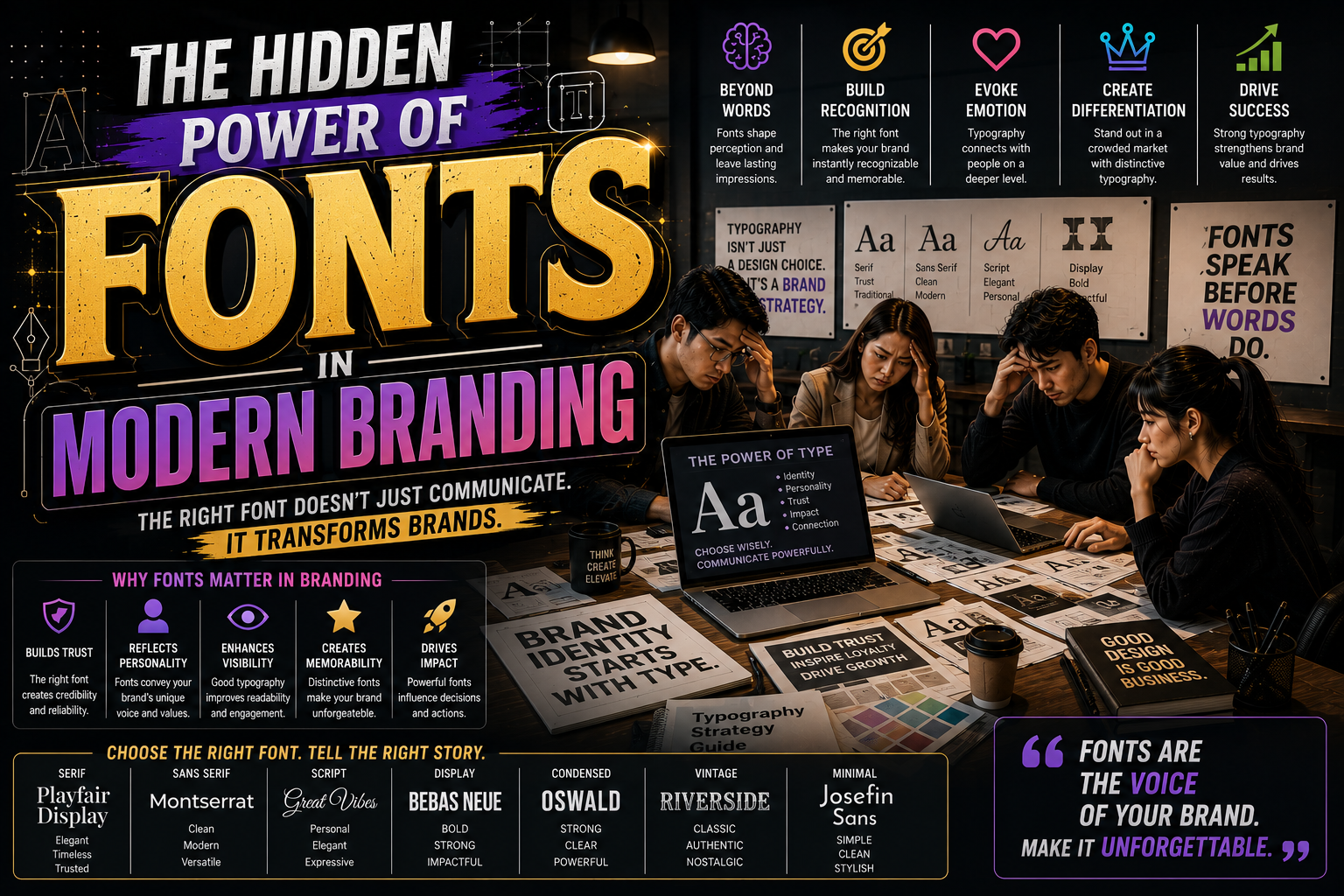
Fonts as the Silent Power of Branding
Branding is often associated with logos, colors, advertising campaigns, and visual marketing. However, one of the most powerful branding elements is often overlooked: typography.
Fonts work quietly behind the scenes, yet they strongly influence how people perceive a brand. Long before customers read a message or understand a product, typography shapes emotional impressions and visual expectations.
This is why fonts are often called the “silent power” of branding. They communicate personality, professionalism, emotion, and trust without saying a single word directly.
In this article, we’ll explore the importance of fonts in branding, how typography affects audience perception, and how businesses can choose the right fonts to build stronger visual identities.
Why Fonts Matter in Branding
Typography is not just decoration. It is a strategic communication tool.
The shape, weight, spacing, and style of a font all contribute to how a brand feels. Even subtle typography changes can dramatically shift perception.
Fonts Create Emotional Signals
Different typography styles communicate different emotions:
- Bold fonts → Strong, dominant, trustworthy
- Rounded fonts → Friendly, playful, approachable
- Serif fonts → Elegant, professional, traditional
- Minimal sans-serif fonts → Modern, clean, innovative
These visual signals influence audiences almost instantly.
Fonts Work Silently but Powerfully
Unlike colorful advertisements or loud marketing campaigns, typography works more subtly.
A customer may not consciously think:
“This font feels premium.”
But their brain still processes:
- Professionalism
- Creativity
- Trustworthiness
- Luxury
- Simplicity
This silent communication is one of typography’s greatest strengths.
First Impressions Begin with Typography
People form impressions very quickly. In branding, typography often becomes part of that first interaction.
Whether someone sees:
- A website header
- Product packaging
- Social media graphics
- A logo
- An advertisement
Typography immediately contributes to perception.
Professional Fonts Build Trust
Brands using clean and consistent typography appear:
- More reliable
- More established
- More organized
Poor font choices can create the opposite effect.
Consistency Strengthens Recognition
Consistent typography helps customers recognize a brand across multiple platforms.
This includes:
- Websites
- Packaging
- Mobile apps
- Marketing materials
Typography as a Meaningful Visual Language
Typography does more than improve readability. It also communicates deeper brand meaning.
Bold and Dark Fonts
Heavy fonts with strong contrast often communicate:
- Power
- Authority
- Confidence
- Security
These styles are common in:
- Automotive branding
- Corporate identity
- Technology companies
Rounded and Friendly Fonts
Rounded typography creates softer emotional tones.
These fonts often feel:
- Fun
- Relaxed
- Playful
- Youthful
They are commonly used in:
- Children’s products
- Food branding
- Casual lifestyle brands
Elegant Serif Typography
Serif fonts communicate:
- Tradition
- Luxury
- Sophistication
- Professionalism
Luxury brands frequently rely on serif typography because it creates a timeless and premium appearance.
The Role of a Font Finder in Branding
Choosing typography can be difficult, especially with thousands of font options available today.
This is where a font finder becomes extremely valuable.
What Is a Font Finder?
A font finder helps designers and businesses:
- Identify fonts from images
- Discover similar typefaces
- Explore typography styles
- Find fonts matching brand identity
This simplifies the font selection process significantly.
Why Font Finders Matter
A font finder helps businesses:
- Save time
- Improve typography consistency
- Discover professional fonts faster
- Match fonts with branding goals
Instead of randomly testing fonts, designers can make more strategic typography decisions.
Recommended Branding Fonts from Putracetol
Here are five typography recommendations that work exceptionally well for branding projects.
Urban Dharma Hindi Font – Cultural and Expressive

Urban Dharma Hindi features strong ethnic-inspired visuals with artistic personality.
Best For
- Cultural branding
- Spiritual projects
- Artistic campaigns
Why It Works
Its unique shapes create memorable visual identity while communicating authenticity.
Vidage Elegant Serif Typeface – Premium and Sophisticated

A refined serif font designed for luxury aesthetics.
Best For
- Editorial branding
- Fashion businesses
- High-end identity systems
Why It Works
Its elegant structure instantly creates professionalism and exclusivity.
Flece Display Modern Sans Font – Clean and Contemporary

A minimalist sans-serif with strong digital readability.
Best For
- Startups
- Technology companies
- UI and app branding
Why It Works
Its modern balance helps brands appear innovative and approachable.
Zambeza Display Font – Bold and Artistic
An expressive display font with strong visual energy.
Best For
- Fashion campaigns
- Creative posters
- Streetwear branding
Why It Works
Its bold personality immediately captures attention.
Paperlight Script Calligraphy Font – Romantic and Elegant
A flowing script font with emotional warmth and refined curves.
Best For
- Wedding brands
- Handmade products
- Lifestyle branding
Why It Works
It creates intimacy and emotional connection.
Quick Summary Table
| Font | Characteristics | Best Use |
|---|---|---|
| Urban Dharma Hindi | Exotic, ethnic | Cultural, spiritual |
| Vidage Elegant Serif | Elegant, classic | Luxury, editorial |
| Flece Display Sans | Modern, clean | Startups, technology |
| Zambeza Display | Bold, expressive | Fashion, creative |
| Paperlight Script | Romantic, elegant | Weddings, handmade |
How to Choose the Right Font for Branding
Typography selection should never be random.
Understand Your Brand Personality
Ask:
- Is the brand formal or casual?
- Modern or traditional?
- Luxury or affordable?
- Bold or friendly?
The font should align with these characteristics.
Prioritize Readability
A visually beautiful font is useless if audiences struggle to read it.
Typography must remain clear across:
- Mobile devices
- Websites
- Packaging
- Social media
Maintain Consistency
Strong brands use typography systems consistently across all touchpoints.
This includes:
- Font family
- Weight hierarchy
- Letter spacing
- Typography usage rules
Common Typography Mistakes in Branding
Even strong branding can fail because of poor typography decisions.
Using Too Many Fonts
Too many styles create inconsistency and visual confusion.
Choosing Trendy Fonts Without Strategy
Trends fade quickly. Strong branding requires longevity.
Ignoring Digital Readability
Fonts must work well across screens and responsive layouts.
Copying Competitors
Typography should help differentiate the brand, not imitate others.
Why Typography Is Becoming More Important
Modern branding increasingly relies on digital communication.
Typography now appears across:
- Websites
- Apps
- Social media
- Digital advertising
- User interfaces
As screen-based branding grows, typography becomes even more critical in shaping user perception.
Typography and Emotional Branding
People emotionally respond to typography even when they don’t consciously notice it.
Typography can create feelings of:
- Trust
- Excitement
- Calmness
- Luxury
- Innovation
This emotional connection is one reason why typography remains one of the most influential elements in branding.
Final Thoughts
The role of fonts in branding goes far beyond aesthetics. Typography silently communicates identity, shapes first impressions, and strengthens emotional connection with audiences.
Fonts influence how brands are remembered, trusted, and differentiated. Whether using elegant serif styles, modern sans-serif typography, or expressive display fonts, the right choice helps businesses build stronger and more consistent visual identities.
With tools like font finders and creative resources from Putracetol, brands now have greater access to typography systems that align with their goals and personality.
In modern branding, fonts are not just letters. They are part of the brand voice itself.
Additionally, if you want to explore some free typography options, you can check out Putracetol Studio on Dafont. Happy reading and designing!