
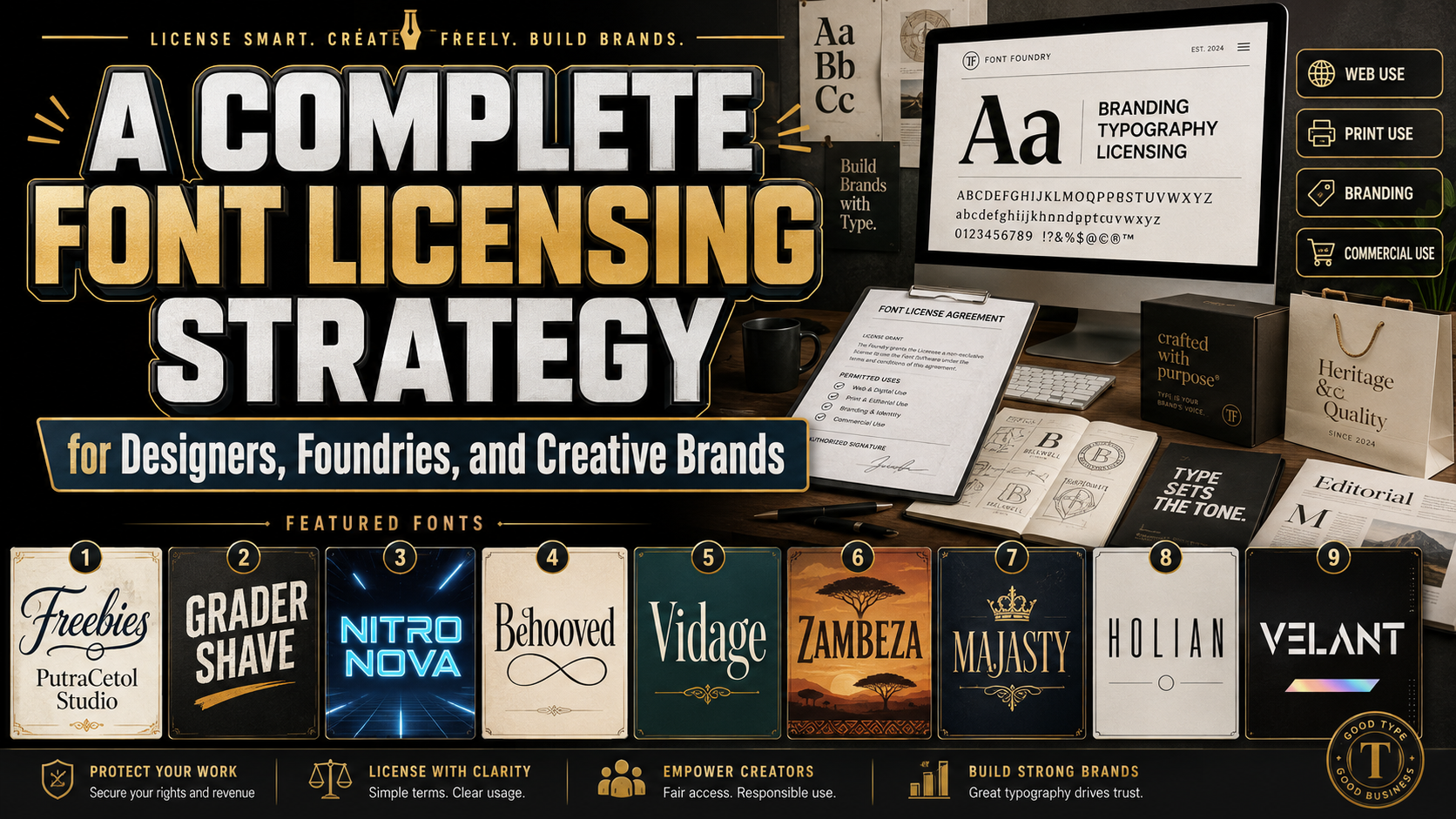
A strong font licensing strategy protects creative work while giving customers clear and practical ways to use it. Type designers are not simply selling letter shapes. They are licensing font software that may be installed, embedded, shared, modified, or distributed across many different environments.
Those environments can include desktop applications, websites, mobile apps, electronic publications, games, servers, social media campaigns, editable templates, merchandise, advertising, and broadcast media. Each use creates a different level of exposure and commercial value, so a single universal license rarely provides fair or practical coverage.
The legal treatment of typography also varies between countries. In the United States, typeface design itself is generally not protected by copyright, but original font software may qualify for protection as a computer program. Other countries may provide broader protection for the visual design. This makes licensing, contracts, trademarks, software ownership, and distribution controls essential parts of a professional protection strategy.
A good licensing system should achieve three goals:
- Protect the designer’s intellectual property
- Make purchasing understandable for legitimate customers
- Create upgrade paths as a client’s usage expands
Free fonts can also be part of this strategy. A carefully limited free license can introduce new users to a foundry, demonstrate product quality, and generate future commercial customers without giving away unlimited rights.
The Freebies collection from PutraCetol Studio demonstrates this model. Designers can access selected fonts at no cost under defined terms, while broader commercial uses require an appropriate paid or custom license.
Initial Suggestion
Treat Fonts as Licensed Software
When someone downloads or purchases a font, they are usually not buying ownership of the design or software. They receive permission to use the font under specific conditions stated in an End User License Agreement or EULA.
A licensing strategy should clearly answer:
- Who may install the font?
- How many devices are covered?
- Can the font be used commercially?
- Can it be embedded in a website or app?
- Can it be used in a registered trademark?
- Can it appear on products for sale?
- Can customers interact with it in an editable template?
- Can the font file be shared with clients or contractors?
- Can the software be modified or converted?
- What happens when usage exceeds the original limits?
Clear answers reduce confusion and make customers more confident when purchasing.
Separate Licenses by Usage Environment
Different uses create different distribution risks. A desktop font used to export a static poster is not exposed in the same way as a webfont placed on a public server. Likewise, an app may distribute font data to thousands or millions of users.
A practical license structure may include:
Freebies or Trial License
Best for sampling, learning, personal projects, and limited commercial use. The license should clearly state project limits, user limits, trademark restrictions, and prohibited activities.
Desktop or Standard License
Allows licensed users to install the font and create static outputs such as logos, posters, printed materials, packaging artwork, and flattened graphics. User and installation limits should be clearly defined.
Website License
Covers embedding through @font-face on one or more domains. Pricing may be based on domains, monthly pageviews, traffic, or business scale.
Social Media, POD, or Editable Template License
Designed for monetized social media, print-on-demand products, online template platforms, or systems where customers can interact with the typeface.
App, Game, or Software License
Required when font data is embedded in a mobile app, desktop program, game, device, or downloadable software product.
Server License
Covers systems that generate dynamic designs, personalized products, documents, advertisements, or customer-created content from a server.
Broadcast License
Used for television, film, streaming productions, motion graphics, digital billboards, and other time-based media.
Corporate or Custom License
Provides broader rights for larger organizations, multiple teams, international campaigns, numerous products, or complex distribution models.
Build a Clear Upgrade Path
A customer should not need to replace a font simply because their business grows. Instead, the licensing structure should allow them to upgrade.
For example, a small entrepreneur may begin with a free license for limited projects. As the business grows, they may need:
- Trademarked logo rights
- Additional users or devices
- Website embedding
- Monetized advertising
- Higher merchandise quantities
- App or game embedding
- International corporate coverage
A transparent upgrade path protects the designer while supporting the customer’s success.
Control Font File Distribution
The most important rule in many font licenses is that the font file itself may not be redistributed.
Customers should normally be prohibited from:
- Uploading the font to public download sites
- Sending the font file directly to clients
- Including the original font inside product packages
- Reselling the font as part of a bundle
- Converting it into another font format
- Sharing one license across unlicensed team members
- Uploading it to an editable design platform without proper coverage
Designers can reduce unauthorized distribution by using controlled download systems, customer accounts, purchase records, license certificates, and clearly written documentation.
Keep Licensing Records
Both creators and customers benefit from proper records.
Store:
- Customer name
- Purchase date
- Font name and version
- License category
- Number of users
- Approved domains
- Covered products or applications
- Invoice
- EULA version
- Upgrade history
- Custom permissions
This information becomes especially valuable when companies expand, rebrand, hire new employees, or audit their design assets.
Jump to Recommended Fonts
The following fonts are available through PutraCetol Studio’s promotional Freebies License. They offer different visual directions while giving designers an accessible way to test font quality and understand licensed usage.
Current Freebies terms should always be checked on the official product page before use. Free access does not mean that redistribution, unlimited commercial production, trademark registration, app embedding, broadcast use, or font modification is automatically permitted.
1. Freebies PutraCetol Studio 10-Font Collection
This collection provides ten different fonts in one promotional package, making it an excellent entry point for students, new designers, small businesses, and creative teams exploring typography. The variety allows users to test different brand personalities before committing to a larger commercial font library.
Its greatest selling point is accessibility. Instead of receiving only one visual style, users can experiment with several type directions for logos, social media graphics, packaging concepts, and educational projects.
PROS
- Ten fonts in one package
- Useful for typography exploration
- Suitable for mood boards and early concepts
- Accessible for students and startups
- Helps users understand font pairing
BEST FOR
- Design education
- Personal projects
- Small-business concepts
- Social media graphics
- Branding experiments
- Typography practice
2. Grader Shave Modern Futuristic Font
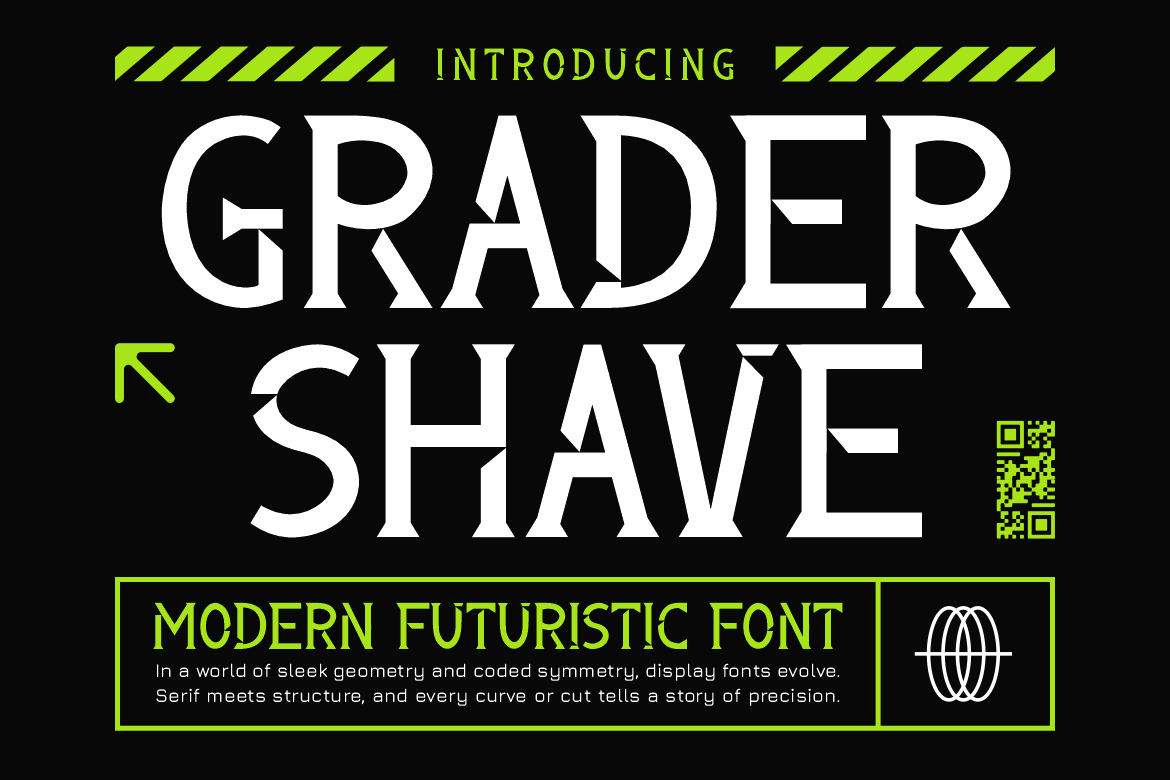
Grader Shave combines sharp geometric construction with a futuristic serif personality. Its precise cuts and technological rhythm create a distinctive look for projects that need to communicate innovation, speed, or advanced systems.
The font works especially well as a display typeface. It can give logos, posters, packaging, and digital campaigns a forward-looking identity without relying on generic science-fiction lettering.
PROS
- Futuristic serif construction
- Strong geometric personality
- Memorable at large sizes
- Suitable for digital and print
- Supports modern technology themes
BEST FOR
- Technology startups
- Gaming projects
- Esports branding
- Automotive campaigns
- Science-fiction posters
- Digital products
3. Nitro Nova Race Font
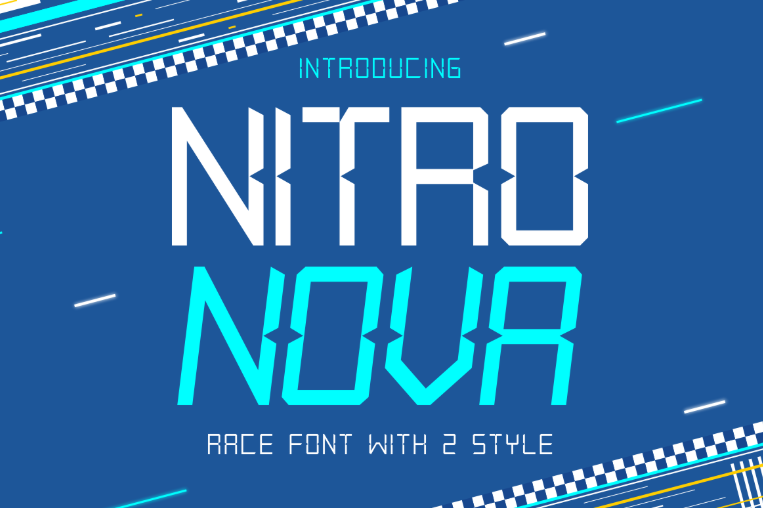
Nitro Nova is a dynamic racing font built around speed, movement, and precision. Sharp angles and streamlined shapes create an energetic typographic voice that performs well in industries connected to competition and performance.
Its visual momentum makes short names and headlines feel faster and more powerful. It is especially useful for automotive brands, sports promotions, games, merchandise, and event graphics.
PROS
- Strong sense of speed
- Clear racing identity
- High visual impact
- Effective for logos and headlines
- Suitable for energetic campaigns
BEST FOR
- Motorsport branding
- Racing events
- Automotive products
- Sports merchandise
- Gaming graphics
- Performance businesses
4. Behooved Ligature Serif Font

Behooved is a characterful serif with a retro and groovy personality. Its ligatures, swashes, and stylistic alternatives help designers build expressive wordmarks that feel more customized than standard typed text.
The font can shift between playful and sophisticated depending on its layout, colors, and supporting typography. This makes it useful for lifestyle branding, invitations, packaging, editorial titles, and creative merchandise.
PROS
- Rich ligature selection
- Decorative swashes
- Retro-inspired personality
- Strong logo customization potential
- Works with modern or vintage layouts
BEST FOR
- Lifestyle brands
- Editorial covers
- Wedding stationery
- Boutique packaging
- Creative logos
- Social media campaigns
5. Vidage Elegant Serif Typeface Font
 Vidage combines a bold display presence with elegant serif details. Its clean structure creates a refined appearance, while alternative characters provide designers with more flexibility when creating logos and promotional titles.
This balance makes Vidage suitable for brands that want to appear premium without becoming excessively formal. It performs especially well in beauty, fashion, weddings, luxury products, and editorial design.
PROS
- Elegant serif construction
- Bold visual presence
- Alternative characters
- Contemporary luxury appeal
- Versatile across print and digital
BEST FOR
- Fashion branding
- Beauty packaging
- Wedding invitations
- Premium logos
- Magazine titles
- Luxury promotions
6. Zambeza Display Font

Zambeza combines modern display typography with vintage poster influences. Its alternative characters and decorative end swashes help create more varied titles, logos, and campaign headlines.
The font is particularly valuable for designers who want expressive typography without completely sacrificing readability. It can bring personality to branding, posters, labels, fashion campaigns, and product packaging.
PROS
- Modern and vintage balance
- Alternative characters
- Decorative end swashes
- Strong headline performance
- Flexible visual personality
BEST FOR
- Posters
- Fashion campaigns
- Product packaging
- Brand logos
- Editorial design
- Vintage-inspired promotions
7. Majasty Elegant Stylish Serif Font
 Majasty offers a polished serif style that blends classical elegance with a contemporary appearance. Its graceful curves and refined proportions help brands communicate sophistication and quality.
It is a practical choice for designers who need premium typography for logos, invitations, packaging, editorial materials, and beauty-related projects. Its character is noticeable without overwhelming supporting content.
PROS
- Elegant and stylish construction
- Timeless serif personality
- Professional appearance
- Strong premium positioning
- Broad industry flexibility
BEST FOR
- Cosmetics
- Boutique branding
- Editorial layouts
- Luxury packaging
- Invitations
- Professional logos
8. Holian Script Font
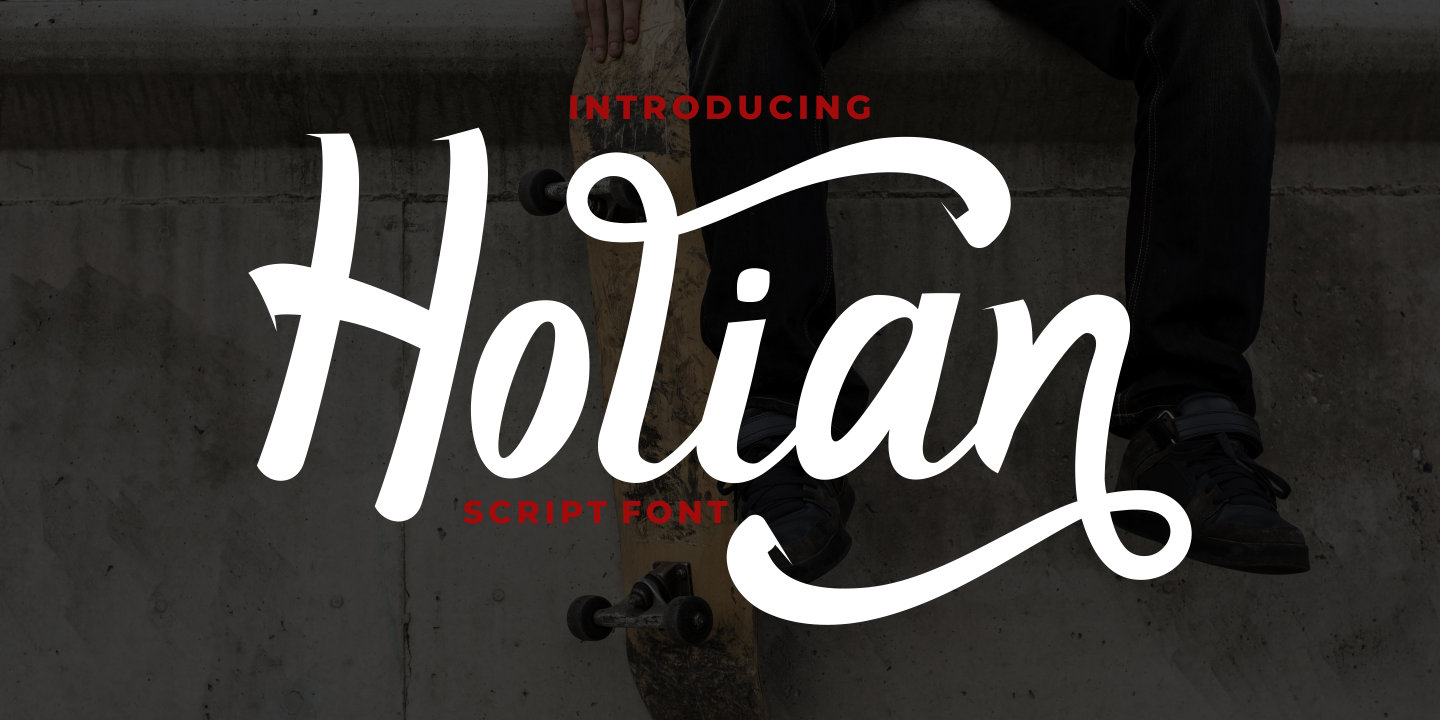 Holian is a bold script font inspired by posters, magazine titles, streetwear, and expressive handwritten lettering. Its strong strokes create immediate visual impact and help short words feel energetic and personal.
Unlike delicate signature fonts, Holian has enough weight for apparel, posters, packaging, and event graphics. It is a strong option for brands that want an informal but confident voice.
PROS
- Bold handwritten style
- Strong display visibility
- Urban and youthful personality
- Effective for merchandise
- Suitable for energetic promotions
BEST FOR
- Streetwear brands
- Apparel graphics
- Music events
- Posters
- Product packaging
- Social media content
9. Velant Unique Experimental Font
 Velant uses bold forms, controlled spacing, and unconventional details to create a modern experimental identity. Its design feels distinctive while remaining readable enough for logos, titles, and major campaign text.
The font is particularly suitable for designers who want something more expressive than a conventional sans-serif but more controlled than abstract display lettering. It can support fashion, digital products, startups, packaging, and editorial projects.
PROS
- Experimental but readable
- Distinctive modern character
- Alternative glyph possibilities
- Strong brand differentiation
- Suitable for international creative work
BEST FOR
- Creative agencies
- Digital startups
- Fashion campaigns
- Editorial headlines
- Modern packaging
- Portfolio branding
Comparison
Font License Model Comparison
| License Type | Typical Usage | Main Control | Common Upgrade Trigger |
|---|---|---|---|
| Freebies License | Personal and limited commercial projects | Projects, users, devices, trademark restrictions | Growing commercial usage |
| Desktop License | Static logos, packaging, print, graphics | Number of users and installations | Larger teams or more projects |
| Website License | Font embedding on websites | Domains and pageviews | Additional domains or traffic |
| Social/POD License | Monetized content and products for sale | Sales, platforms, and editable access | Higher volume or more stores |
| App/Game License | Font embedded in software | Applications and platforms | New apps, games, or user growth |
| Server License | Dynamic or customer-generated content | Servers, CPUs, or output volume | Higher automation or traffic |
| Broadcast License | Film, TV, streaming, and motion media | Productions, channels, or reach | Additional productions |
| Corporate License | Organization-wide usage | Brand, company, teams, and global scope | Custom expansion needs |
Promotional Font Comparison
| Font | Style | Main Personality | Strongest Application |
| 10-Font Collection | Mixed | Flexible and exploratory | Education and concept development |
| Grader Shave | Futuristic serif | Technical and progressive | Gaming and technology |
| Nitro Nova | Racing display | Fast and energetic | Automotive and sports |
| Behooved | Ligature serif | Retro and expressive | Lifestyle branding |
| Vidage | Elegant serif | Premium and polished | Fashion and beauty |
| Zambeza | Vintage display | Creative and distinctive | Posters and packaging |
| Majasty | Stylish serif | Refined and timeless | Editorial and luxury |
| Holian | Bold script | Urban and confident | Streetwear and events |
| Velant | Experimental display | Modern and unconventional | Startups and creative studios |
Common Mistake
One of the most common licensing mistakes is assuming that purchasing or downloading a font transfers ownership. A font license usually grants limited usage rights, while the designer or foundry retains ownership of the font software and intellectual property. This distinction becomes critical when a client asks for the original font file, when several employees need access, or when typography is embedded inside a product. Every user and environment should be covered by the applicable license rather than relying on one personal purchase.
Another mistake is treating all commercial usage as identical. A static logo exported as an image does not create the same distribution risk as a font embedded in a website, app, game, electronic publication, server, or editable template. Businesses should map every use case before purchasing and upgrade whenever the font moves into a new environment. Free fonts require the same discipline because every free font still has a license. The price may be zero, but the conditions remain legally meaningful.
A third mistake is neglecting distribution controls and internal documentation. Font files are often copied into shared drives, packaged with design documents, sent to clients, or uploaded to public platforms without checking permissions. This can create unlicensed users and uncontrolled redistribution. A professional font licensing strategy should include centralized storage, named license owners, purchase records, approved-user lists, version tracking, and a clear process for vendors or clients who need their own copies.
Conclusion
A professional font licensing strategy protects the economic and creative value of typography while making legitimate usage easier for customers. The strongest systems do not rely on vague statements such as “personal use” or “commercial use.” They define users, devices, projects, domains, pageviews, product quantities, trademark rights, embedding environments, and distribution restrictions clearly.
Free fonts can play an important role in this system. A limited Freebies License introduces designers to the quality and personality of a foundry’s work while preserving upgrade opportunities for larger commercial applications. Collections such as the PutraCetol Studio free fonts allow users to test typography in real projects before investing in broader coverage.
Grader Shave, Nitro Nova, Behooved, Vidage, Zambeza, Majasty, Holian, and Velant demonstrate how a promotional collection can cover a wide range of creative industries without giving every user unlimited rights. Each font remains valuable because access and usage are separated strategically.
For type designers, good licensing supports sustainable income and long-term creative independence. For customers, it provides legal clarity and confidence. Before using any font, review the current license, document the intended use, and contact the foundry when the available options do not match the project.
Explore the official Freebies collection at PutraCetol.com, test the fonts in your branding concepts, and upgrade the license as your team, audience, products, or distribution channels grow.
Explore these fonts and many more at PutraCetol.com to build a business identity that looks professional, trustworthy, and memorable.
Additionally, if you want to explore some free typography options, you can check out Putracetol Studio on Dafont. Happy reading and designing!