
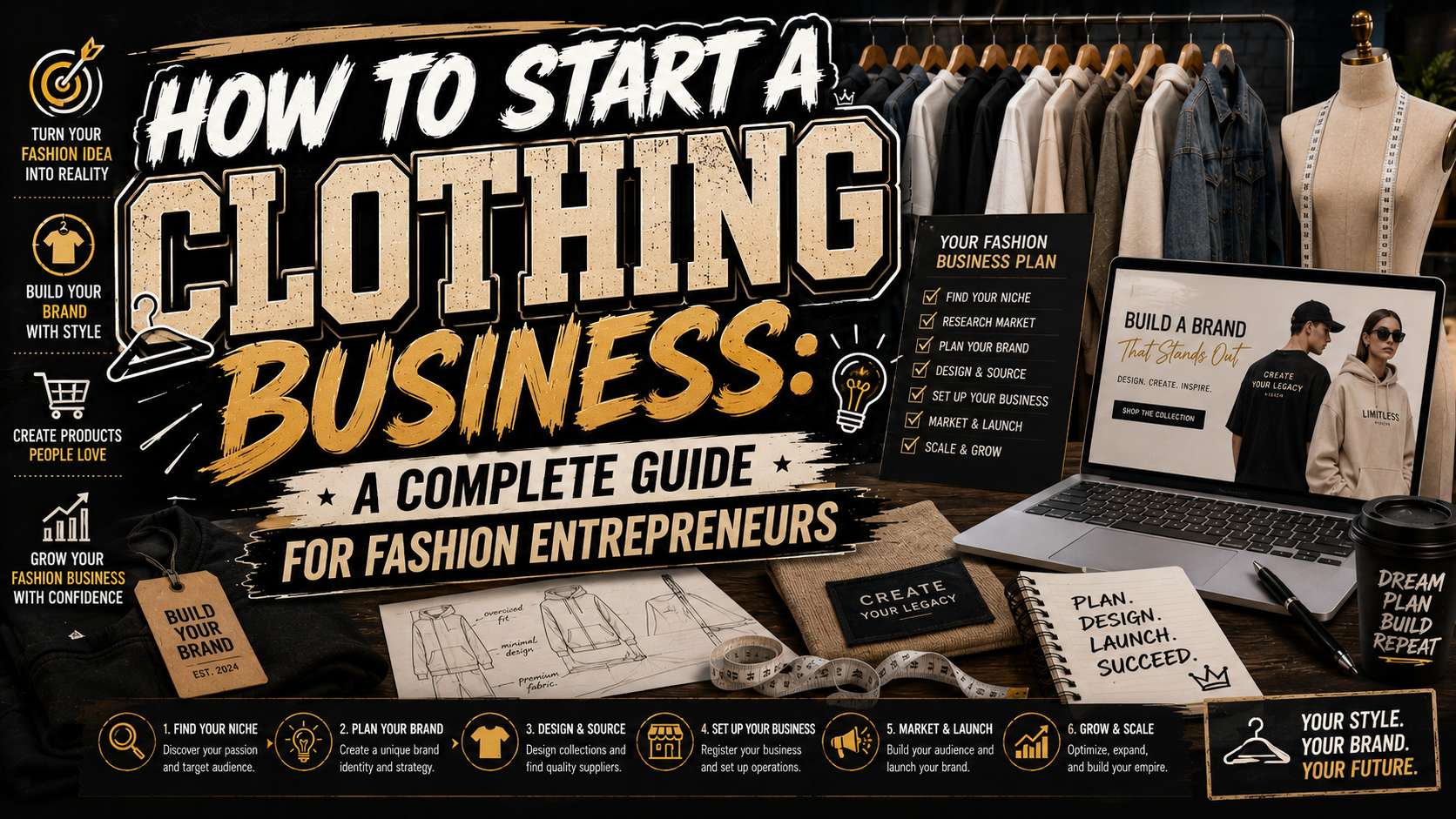
The fashion industry remains one of the most exciting and creative industries for entrepreneurs. From streetwear brands and activewear labels to luxury fashion and sustainable clothing companies, opportunities continue to grow for business owners who can identify a market need and build a strong brand around it.
Learning how to start a clothing business involves much more than designing apparel. Successful clothing brands combine market research, branding, product development, manufacturing, eCommerce, and marketing into a complete business strategy. Whether you’re launching a small print-on-demand store or building a full-scale fashion label, understanding each stage of the process can help reduce risk and improve your chances of long-term success.
Today, starting a clothing business is more accessible than ever. Entrepreneurs can choose from multiple business models, including print-on-demand, private label, dropshipping, or custom manufacturing, allowing them to enter the market with different budget levels and growth goals.
Initial Suggestion
Before investing in products, logos, or marketing campaigns, focus on building a strong business foundation.
Start With a Clear Brand Vision
Ask yourself:
- What type of clothing do you want to sell?
- Who is your ideal customer?
- What makes your brand different?
- What values will your brand represent?
Successful clothing businesses often start with a specific niche rather than trying to appeal to everyone.
Focus on a Niche Market
Examples include:
- Streetwear
- Sustainable fashion
- Fitness apparel
- Luxury fashion
- Children’s clothing
- Workwear
- Plus-size fashion
A niche makes it easier to build a recognizable brand and connect with a specific audience.
Build the Brand Before the Product
Many successful fashion companies start by developing:
- Brand identity
- Brand values
- Target audience profile
- Visual direction
- Marketing strategy
Your clothing should reflect your brand story, not the other way around.
Think Like a Business Owner
Fashion is creative, but profitability matters.
Understand:
- Production costs
- Shipping expenses
- Marketing budgets
- Profit margins
- Inventory management
Strong financial planning is essential from the beginning.
Comparison
Popular Clothing Business Models
| Business Model | Startup Cost | Inventory Required | Profit Potential | Best For |
|---|---|---|---|---|
| Print-on-Demand | Low | No | Medium | Beginners |
| Dropshipping | Low | No | Medium | New Entrepreneurs |
| Private Label | Medium | Yes | High | Growing Brands |
| Custom Manufacturing | High | Yes | Very High | Serious Fashion Brands |
| Handmade Clothing | Medium | Limited | High | Artisan Businesses |
Step 1: Research the Market
Every successful clothing brand begins with research.
Study:
- Fashion trends
- Customer preferences
- Competitor brands
- Price ranges
- Market gaps
Research helps identify opportunities and prevents launching products that customers don’t want.
Step 2: Create a Brand Identity
Your brand identity includes:
- Business name
- Logo
- Color palette
- Typography
- Brand voice
- Brand story
Fashion customers often buy into the identity and lifestyle associated with a brand, not just the clothing itself.
Step 3: Choose Your Products
Instead of launching dozens of products, start with a focused collection.
Examples:
- Signature t-shirt
- Premium hoodie
- Activewear collection
- Oversized streetwear line
Many experts recommend starting with a hero product before expanding into larger collections.
Step 4: Select a Business Model
Choose a model that matches your budget and goals.
Common options include:
- Print-on-demand
- Private label
- Dropshipping
- Custom manufacturing
Each model offers different levels of control, investment, and scalability.
Step 5: Create Samples and Prototypes
Before selling products, test them.
Evaluate:
- Fabric quality
- Fit
- Durability
- Comfort
- Customer feedback
Product testing helps reduce costly mistakes later.
Step 6: Register Your Business
Depending on your location, this may include:
- Business registration
- Tax identification
- Licenses
- Trademark considerations
Establishing a legal business structure helps protect your brand and improve credibility.
Step 7: Build an Online Store
Your website serves as the foundation of your clothing business.
A professional store should include:
- Product pages
- Size guides
- Brand story
- Secure checkout
- Mobile optimization
A dedicated website also gives you more control over branding and customer relationships.
Step 8: Launch Your Marketing Strategy
Popular clothing marketing channels include:
- TikTok
- Email marketing
- Influencer partnerships
- Paid advertising
Consistent marketing helps build awareness and generate sales.
Common Mistake
One of the biggest mistakes new fashion entrepreneurs make is skipping market validation. Many people become excited about designing clothing and immediately invest in inventory without confirming whether there is actual demand. Successful clothing brands typically begin by identifying a target audience, researching competitors, and understanding customer needs before spending significant money on production. Market research often reveals valuable insights about pricing, trends, and opportunities that can improve a brand’s chances of success.
Another common mistake is trying to launch too many products at once. New business owners often believe that a larger catalog will generate more sales, but this frequently leads to higher costs, inventory challenges, and weaker branding. Many successful brands begin with a single standout product or a small capsule collection. This approach allows entrepreneurs to focus on quality, customer feedback, and marketing rather than managing unnecessary complexity.
A third mistake is neglecting branding. Clothing businesses compete in an industry where visual identity matters enormously. A strong brand name, professional logo, consistent typography, compelling photography, and clear brand story often influence purchasing decisions just as much as the clothing itself. Businesses that invest in branding early are often better positioned to build customer loyalty and long-term recognition.
Conclusion
Understanding how to start a clothing business requires balancing creativity with business strategy. While great designs are important, successful fashion brands are built on strong research, clear positioning, effective branding, quality products, and consistent marketing.
The most successful clothing businesses start with a niche, develop a recognizable brand identity, validate demand before scaling, and build direct relationships with customers through online channels. Whether you choose print-on-demand, private label manufacturing, or a custom fashion line, the principles remain the same: know your audience, create value, and build a brand people want to support.
As the fashion industry continues to evolve, entrepreneurs who combine creativity with strategic planning will be best positioned to build sustainable and profitable clothing brands in the years ahead.
Explore these fonts and many more at PutraCetol.com to build a business identity that looks professional, trustworthy, and memorable.
Additionally, if you want to explore some free typography options, you can check out Putracetol Studio on Dafont. Happy reading and designing!