
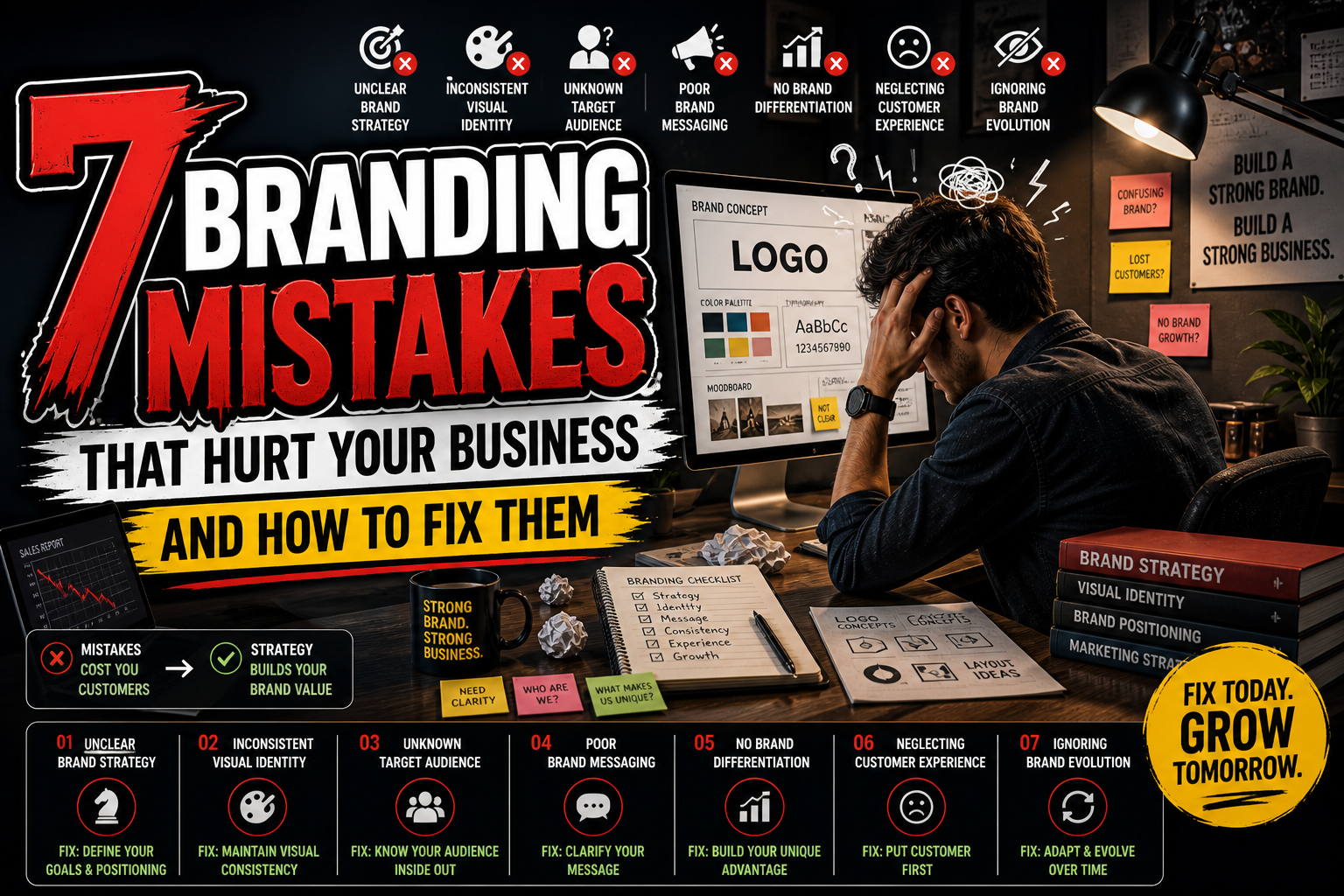
Common Branding Mistakes and How to Avoid Them
Branding is often misunderstood as just a logo or a visual style. In reality, it’s much broader. Branding shapes how people perceive your business, how they remember it, and how they connect with it emotionally.
When done right, branding builds trust, recognition, and loyalty. But when mistakes happen, even small ones, they can weaken your identity and reduce your impact. Understanding common branding mistakes is essential for any business that wants to grow consistently and stand out in a competitive market.
In this guide, we’ll break down the most frequent branding mistakes and show you how to avoid them with practical strategies.
Why Branding Mistakes Matter
Branding is not just about appearance. It affects how customers experience your business at every touchpoint.
- First impressions are formed quickly
- Consistency builds trust
- Clarity improves communication
- Strong identity increases recognition
When branding is inconsistent or unclear, it creates confusion and weakens your credibility.
1. Inconsistent Visual Identity
One of the most common branding mistakes is inconsistency. This happens when colors, typography, and design styles change frequently across platforms.
Why It’s a Problem
- Confuses your audience
- Weakens brand recall
- Makes your business look unprofessional
How to Avoid It
- Create a brand guideline
- Use consistent color palettes
- Stick to a defined typography system
Consistency is what turns a brand into something recognizable.
2. Ignoring the Target Audience
Branding that doesn’t align with its audience is ineffective, no matter how visually appealing it is.
Why It’s a Problem
- Fails to connect emotionally
- Reduces engagement
- Misses market expectations
How to Avoid It
- Research your audience deeply
- Understand their preferences and behavior
- Align your tone, visuals, and messaging with their needs
Your brand should speak directly to the people you want to reach.
3. Overly Complicated Logos
A complex logo might look creative, but it often creates more problems than benefits.
Why It’s a Problem
- Hard to recognize
- Difficult to scale across platforms
- Less memorable
How to Avoid It
- Focus on simplicity
- Use clean shapes and clear typography
- Test your logo at different sizes
Simple logos are easier to remember and more versatile.
4. Unclear Brand Messaging
If people don’t understand what your brand stands for, they won’t connect with it.
Why It’s a Problem
- Creates confusion
- Weakens positioning
- Reduces trust
How to Avoid It
- Define your value proposition clearly
- Communicate your message consistently
- Keep your language simple and direct
Your audience should understand your brand within seconds.
5. Poor Typography Choices
Typography is often underestimated, but it plays a major role in shaping brand perception.
Why It’s a Problem
- Wrong fonts can make your brand look unprofessional
- Inconsistent typography reduces visual harmony
- Poor readability affects user experience
How to Avoid It
Choose fonts that match your brand personality. Here are some examples:
- Tierra Bonito Mexican Food Font → Cheerful and vibrant, great for cultural or food-related brands
- Burger Riot Bold Font→ Strong and bold, ideal for streetwear or music brands
- Maison Veloria Condensed Font → Elegant and modern, perfect for fashion or editorial use
- Moochy Pops Bold Retro Script Font → Playful and expressive, suitable for creative or snack brands
- Blooming Pages Spring Font → Soft and romantic, ideal for weddings or handmade products
Typography should reinforce your identity, not contradict it.
6. Lack of Competitor Research
Many brands fail because they don’t understand their competitive landscape.
Why It’s a Problem
- Results in similar-looking brands
- Reduces differentiation
- Weakens positioning
How to Avoid It
- Analyze competitor branding
- Identify gaps and opportunities
- Position your brand uniquely
Standing out is essential in crowded markets.
7. Neglecting Customer Experience
Branding is not only visual. It includes every interaction customers have with your business.
Why It’s a Problem
- Creates inconsistency between promise and reality
- Damages trust
- Reduces customer loyalty
How to Avoid It
- Ensure your service matches your brand promise
- Focus on user experience across all touchpoints
- Maintain consistent communication
A strong brand delivers a consistent experience, not just a consistent look.
The Role of Typography in Branding
Typography is one of the most powerful tools in branding. It communicates tone, personality, and professionalism.
Key Typography Principles
- Choose fonts that match your brand identity
- Maintain consistency across platforms
- Prioritize readability
- Limit font combinations to maintain clarity
The right typography strengthens recognition and builds trust.
Quick Summary Table
| Font | Characteristics | Best Use |
|---|---|---|
| Tierra Bonito | Cheerful, ethnic | Culinary, cultural |
| Block Rebel Bold | Bold, daring | Streetwear, music |
| Maison Veloria Condensed | Elegant, slim | Fashion, editorial |
| Moochy Pops Retro Script | Playful, expressive | Snacks, creative |
| Blooming Pages Spring | Soft, romantic | Weddings, handmade |
How to Build a Strong Brand Identity
Avoiding mistakes is only part of the process. Building a strong brand requires a proactive approach.
Define Your Core Identity
Understand your mission, values, and audience.
Create Clear Guidelines
Document your colors, fonts, and design elements.
Maintain Consistency
Apply your branding across all platforms and touchpoints.
Evolve Strategically
Adapt your brand when necessary, but keep its core identity intact.
Why Consistency Is the Key to Branding Success
Successful brands are consistent in every detail:
- Visual design
- Messaging
- Customer experience
Consistency builds familiarity, and familiarity builds trust.
Final Thoughts
Understanding and avoiding common branding mistakes is essential for building a strong and lasting identity. From inconsistent visuals to poor typography and unclear messaging, these issues can weaken even the most promising brands.
By focusing on clarity, consistency, and audience alignment, you can create a brand that feels professional, memorable, and trustworthy. Typography, in particular, plays a crucial role in shaping perception, so choosing the right fonts is not just a design decision, it’s a strategic one.
If you’re looking for inspiration and high-quality design resources, platforms like Putracetol.com l offer a wide range of fonts and creative assets to help you build a cohesive and impactful brand identity.
Additionally, if you want to explore some free typography options, you can check out Putracetol Studio on Dafont. Happy reading and designing!