
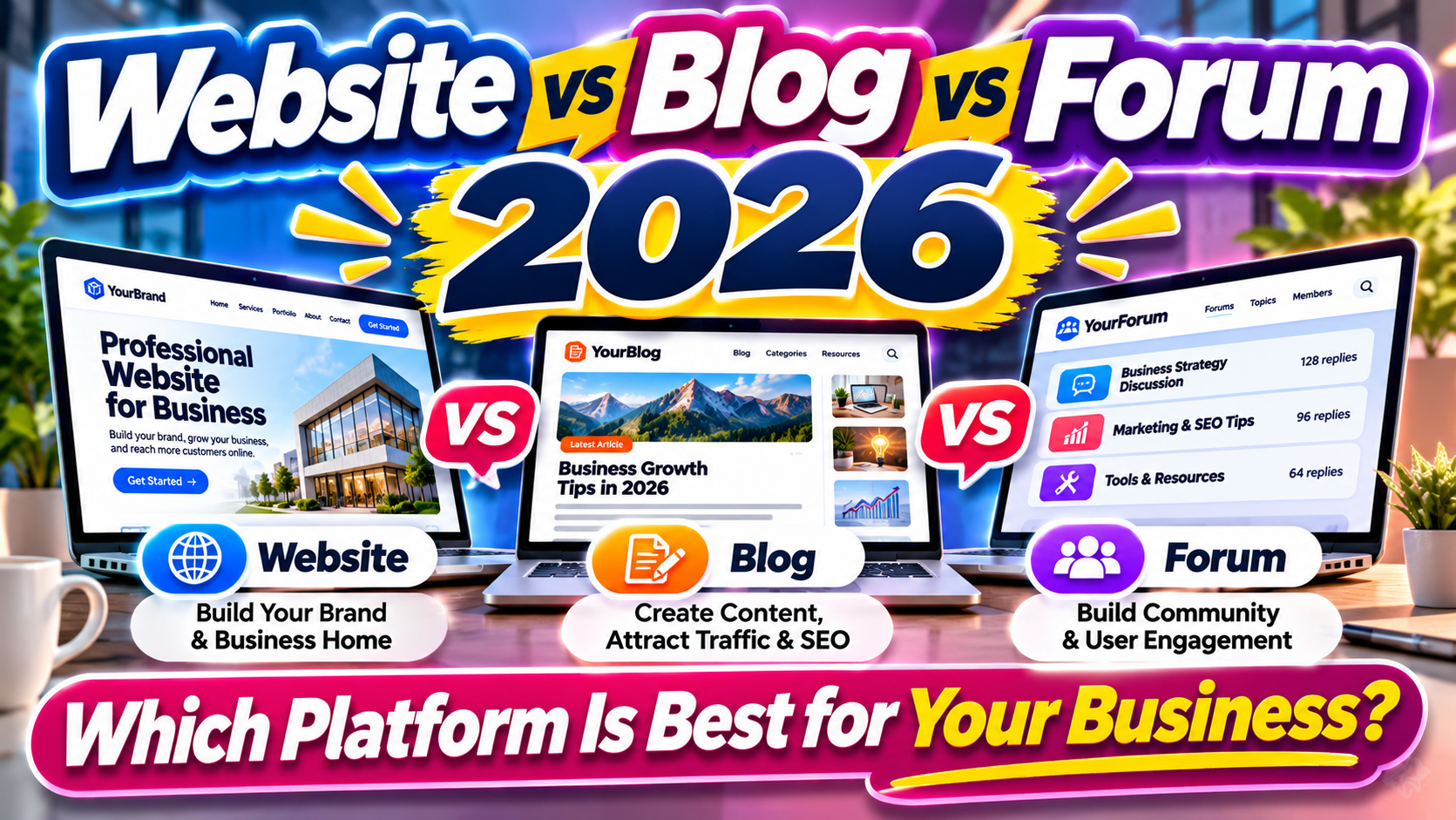
Website vs Blog vs Forum 2026: Which Platform Is Best for Your Business?
Building a successful online presence requires more than publishing content or creating an attractive website. Businesses must choose digital platforms that support their branding, marketing, and customer engagement goals.
The website vs blog vs forum 2026 comparison explores three important approaches to establishing an online presence.
Websites provide a central destination for business information, blogs support content marketing and organic discovery, and forums encourage conversations between community members.
Although each serves a different purpose, combining them can create a stronger digital ecosystem that attracts visitors, builds credibility, and encourages meaningful relationships.
Understanding the Difference Between Websites, Blogs, and Forums
A website is a collection of interconnected web pages that may contain business information, products, services, and other digital features.
A blog is a content publishing format, typically organized around regularly published articles, tutorials, or updates.
A forum is a discussion platform where users can create topics, ask questions, and exchange information.
Importantly, blogs and forums can exist within a larger website rather than operating as completely separate platforms.
Define Your Primary Digital Goal
Before choosing a platform, identify what your audience needs from your business.
If your priority is selling products or presenting professional services, start with a business website.
If attracting search traffic through educational content is important, develop a blog.
And if customers regularly exchange knowledge or need ongoing community support, consider a forum.
For example, a software company could maintain a website for product information, publish tutorials through its blog, and operate a forum for technical discussions.
1. Business Websites: The Foundation of Your Brand
A professional website provides a central destination where visitors can learn about your business, explore products, and take important actions.
Businesses can customize navigation, typography, colors, and page structures to communicate a recognizable visual identity.
Essential pages often include Home, About, Services, Products, Contact, and relevant business policies.
Why Business Websites Matter
Websites support professional credibility by presenting information in a consistent, organized environment.
They also provide opportunities for lead generation, online transactions, and integration with business tools.
For example, a creative agency can display its portfolio, explain its services, and collect project inquiries through dedicated forms.
Distinctive typography can strengthen this presentation. Explore professional fonts at PutraCetol Studio to develop memorable website headlines, logos, and branding elements.
KEY BENEFITS: Brand control, professional presentation, conversion opportunities, and business functionality.
BEST FOR: Entrepreneurs, e-commerce businesses, startups, agencies, and service providers.
2. Blogs: Building Authority Through Content Marketing
Blogs focus on publishing informative content that answers audience questions and explores relevant topics.
Businesses commonly use blogs to share tutorials, industry insights, product guides, and educational resources.
For example, an online skincare store might publish articles explaining ingredient benefits, product routines, and common skincare concerns.
This approach helps potential customers discover useful information before making purchasing decisions.
Why Blogs Matter for SEO
Blog articles create opportunities to address specific search queries and demonstrate subject expertise.
Helpful, original content can attract organic traffic and support internal linking to relevant products or services.
However, publishing more articles does not automatically improve rankings. Content quality, search intent, technical SEO, and ongoing maintenance remain essential.
Blogs also support email newsletters and social media marketing by providing valuable content to share.
KEY BENEFITS: Educational content, organic search opportunities, audience trust, and content marketing.
BEST FOR: Digital marketers, educators, content creators, SaaS businesses, and online retailers.
3. Forums: Creating Communities and User Discussions
Forums provide structured spaces where people can discuss topics, exchange experiences, and help one another.
Unlike traditional blogs, where content is primarily published by designated authors, forums encourage user-generated discussions.
Members can start conversations, answer questions, and contribute practical knowledge.
For example, a photography equipment company could operate a community where customers share camera settings, troubleshooting advice, and creative techniques.
Why Forums Matter for Community Engagement
Forums can transform passive visitors into active participants.
Useful discussions may become searchable knowledge resources, helping future visitors find answers to similar questions.
Platforms such as Discourse support organized discussions, moderation, searchable conversations, and community management.
However, successful forums require active moderation, clear participation guidelines, and protection against spam.
KEY BENEFITS: Community engagement, knowledge sharing, customer support, and user-generated content.
BEST FOR: Online communities, educational platforms, software companies, gaming brands, and membership organizations.
Comparison: Website vs Blog vs Forum
| Feature | Website | Blog | Forum |
|---|---|---|---|
| Primary purpose | Branding and business | Content and education | Community discussion |
| Main content | Pages and business features | Articles and guides | Topics and replies |
| Content creators | Business or site owners | Authors and editors | Community members |
| SEO potential | Business and service searches | Informational searches | Relevant discussions |
| Engagement | Forms and transactions | Reading and comments | Ongoing conversations |
| Maintenance | Technical and content updates | Regular editorial work | Moderation and support |
| Best for | Business operations | Content marketing | Community building |
How to Combine All Three Platforms
A combined strategy can connect brand visibility, educational content, and community participation.
Start with a website that clearly explains your products or services.
Add a blog that addresses customer questions and provides useful industry information.
Introduce a forum when there is sufficient audience demand for ongoing discussion.
For example, a design software business could use its website for subscriptions, its blog for tutorials, and its forum for feature requests and user assistance.
Connect these sections through consistent navigation, relevant internal links, and recognizable branding.
Common Mistakes When Choosing a Digital Platform
One common mistake is assuming that websites, blogs, and forums are mutually exclusive options. A blog can operate within a business website, while a forum can be connected through a dedicated directory or subdomain. Separating these platforms unnecessarily may create inconsistent branding and complicated navigation. Businesses should organize their digital presence around audience needs rather than treating every platform as an independent project. Consistent typography, clear information architecture, and purposeful internal linking help visitors move naturally between business pages, educational articles, and community discussions.
Another mistake is launching a blog or forum without planning ongoing maintenance. Blogs require accurate, relevant articles that provide meaningful value, while forums need moderation and active participation. Empty discussion boards, outdated tutorials, and unmanaged spam can weaken credibility instead of strengthening it. User-generated content also introduces additional security and SEO responsibilities. Businesses should establish content standards, moderation policies, and realistic publishing schedules before expanding their online ecosystem.
Conclusion
The website vs blog vs forum 2026 comparison demonstrates that each platform contributes differently to a successful digital strategy.
Websites provide a professional business foundation, blogs build educational value and organic discovery opportunities, and forums encourage community participation and knowledge sharing.
For many growing businesses, combining these approaches offers greater flexibility than relying on a single content format.
Start with your most important business objective, then expand according to audience demand.
Create a consistent visual identity using professional typography from PutraCetol Studio and connect your digital platforms into a recognizable, useful, and engaging online experience.
Explore these fonts and many more at PutraCetol.com to build a business identity that looks professional, trustworthy, and memorable.
Additionally, if you want to explore some free typography options, you can check out Putracetol Studio on Dafont. Happy reading and designing!