
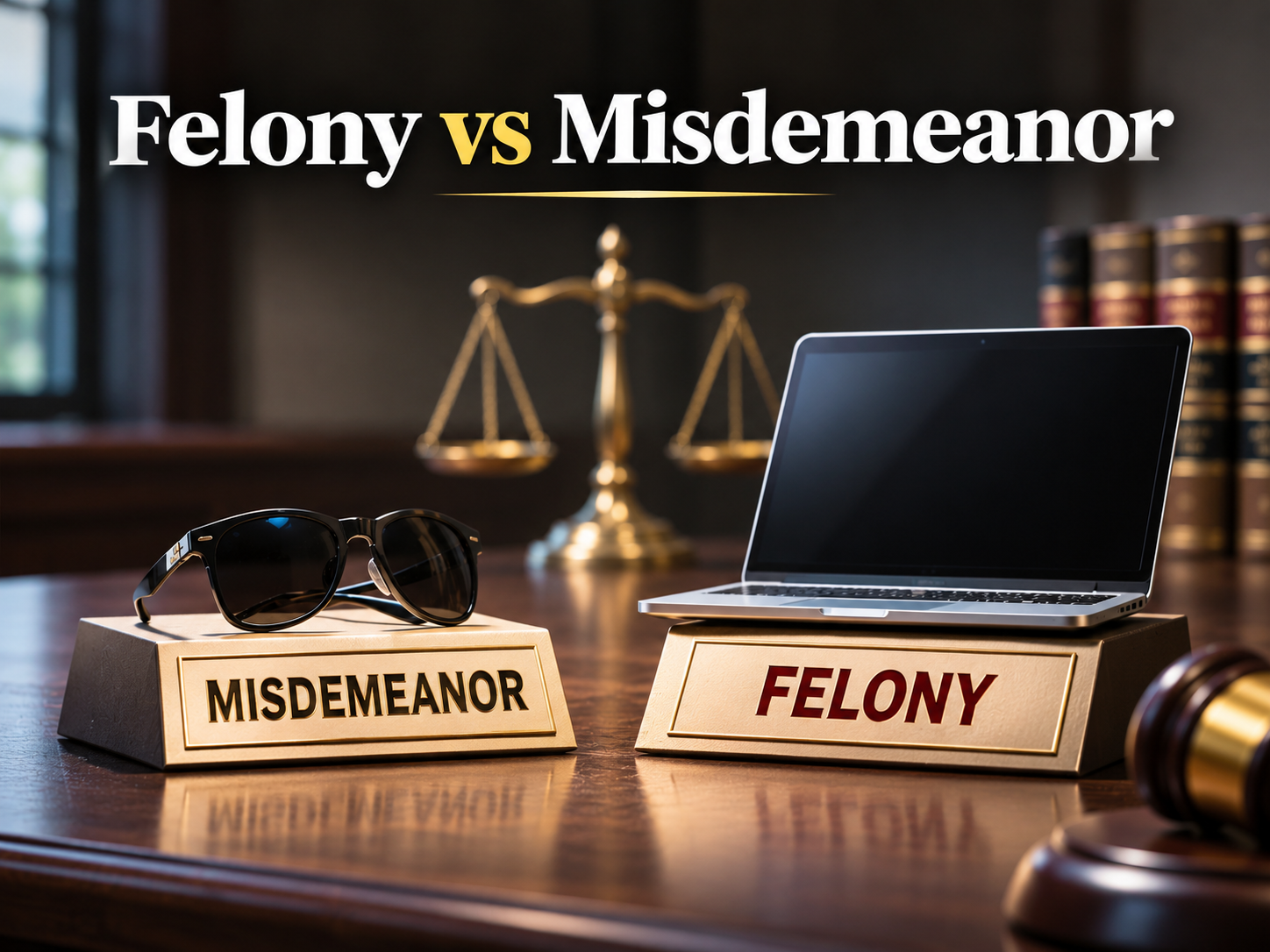
Two people shoplift from the same store on the same afternoon. One walks out with a pair of sunglasses. The other walks out with a laptop. Both did essentially the same thing, but one may face a misdemeanor while the other could be charged with a felony.
That difference can feel arbitrary. In everyday conversation, both people stole something. But criminal law draws sharp lines based on details like value, harm, and history, and those lines can lead to dramatically different consequences. The legal system sees it very differently.
Those labels matter far more than most people realize. They can affect how long someone might spend behind bars, what shows up on a background check, and which rights or opportunities may be limited for years afterward. The label often sticks.
Why the Law Divides Crimes Into Categories
Criminal laws sort offenses into different classes based on seriousness. Generally, felonies are the more serious crimes, while misdemeanors are less serious. The category helps determine the range of possible penalties a court can impose. That classification shapes nearly everything that follows in a case.
A common way to describe felony vs misdemeanor differences is by potential punishment. Federal law and many states treat crimes punishable by more than a year in prison as felonies, while misdemeanors carry shorter potential jail terms. It’s a useful general rule of thumb.
Ohio uses its own structure. Felonies are divided into five degrees, with first-degree being the most serious. Misdemeanors range from first-degree down to minor misdemeanors, which typically carry only a fine. Each level carries its own penalty range and possible consequences.
The Small Details That Can Change a Criminal Charge
Property value is one of the clearest examples. In Ohio, theft is generally a misdemeanor when the value is under $1,000. Once the value reaches $1,000 or more, it can become a felony, with higher values bringing more serious charges. The dollar amount really matters.
Physical injury matters too. A simple assault that causes minor harm may be a misdemeanor, while an assault causing serious physical harm or involving a weapon can quickly become a felony. The degree of harm is often the dividing line between categories.
Prior convictions can also change the picture. Some offenses become more serious when someone has previous convictions for similar crimes. Other details, like the victim’s age or the location of the offense, can also affect classification. Small facts can carry big legal weight.
Why Two States Can Classify Similar Conduct Differently
Each state legislature writes its own criminal laws. That means the same conduct can be a misdemeanor in one state and a felony in another, depending on how each defines the offense and sets its thresholds. Geography can really matter in criminal cases.
Theft thresholds are a classic example. States set very different dollar amounts for when theft becomes a felony, ranging from a few hundred dollars in some places to much higher amounts in others. A shoplifting case in one state may look very different next door.
Sentencing structures differ too. Some states use letter classes, others use numbered degrees, and penalty ranges for similar classes can vary. Comparing charges across state lines requires looking closely at each state’s statutes. Assumptions based on another state’s rules can be costly.
Why the Label Can Matter Long After the Sentence Ends
A felony conviction can follow someone for years. It may show up on background checks, making it harder to find employment or housing. Some employers and landlords treat felonies very differently from misdemeanors. For many people, that’s truly the hardest part of all.
Professional licensing can be affected too. Certain careers may restrict or review applicants with felony convictions, particularly in fields like health care, education, and finance. Licensing boards often ask about criminal history, and a felony can raise serious questions about eligibility.
Civil rights can also be impacted. Federal law generally prohibits people convicted of crimes punishable by more than a year in prison from possessing firearms. Other effects vary by state, and some convictions may later be eligible for sealing. The stakes extend well beyond the courtroom.
Conclusion
Two crimes that sound similar in everyday language can carry very different legal labels. Value, injury, prior convictions, and other statutory elements can turn a misdemeanor into a felony. Those details can transform a minor case into a serious one almost overnight.
State laws differ, too. The same conduct can be classified differently depending on where it happens, and each state has its own penalty structure and thresholds. A charge that’s minor in one state may be a felony in another, and vice versa.
Making sense of a criminal charge means looking past its common name to the specific statute and classification. Those details shape not only the potential sentence but also consequences that may last long after the case is over. The label matters more than many people expect.