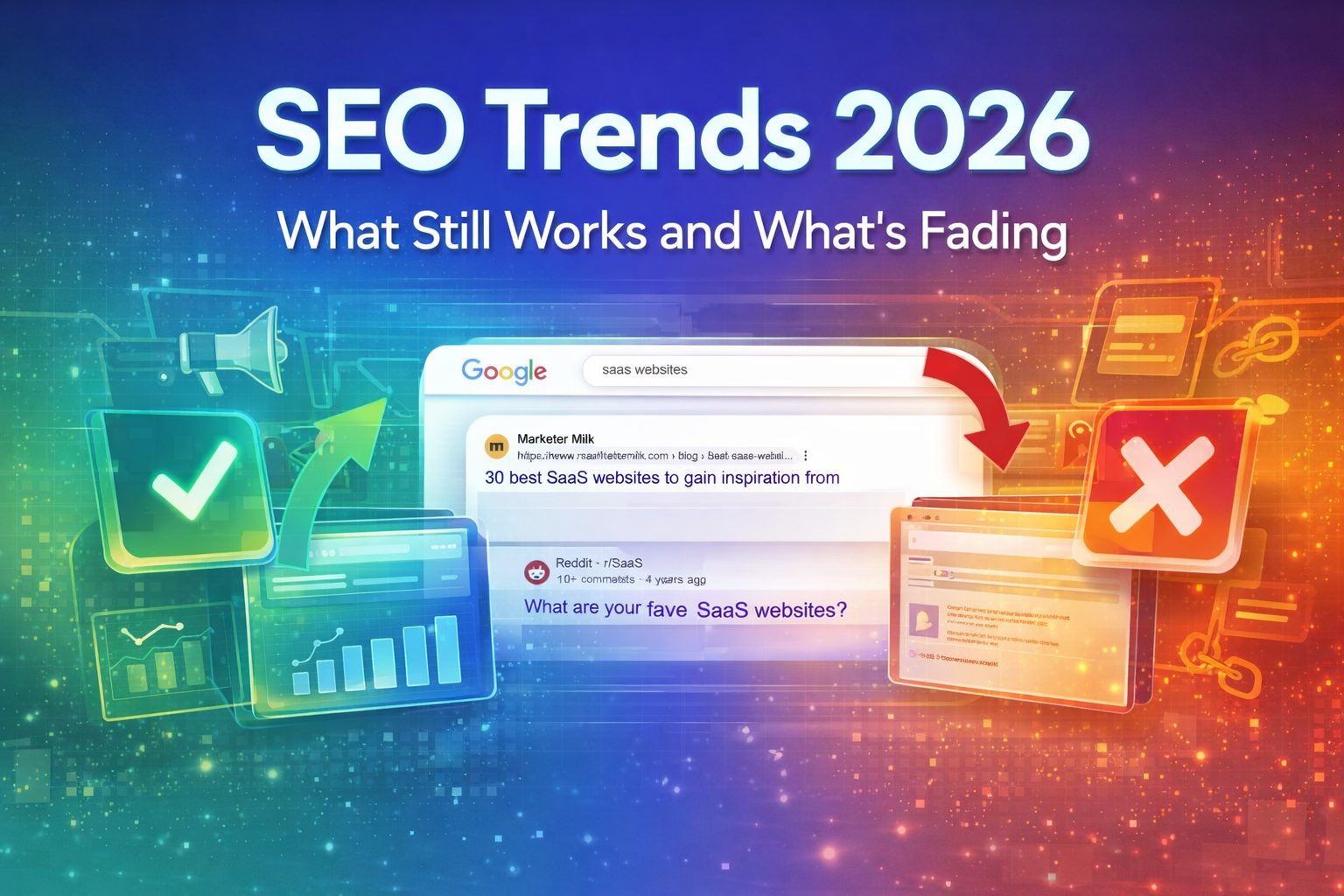
8 Key SEO Trends in 2026
Search engine optimization continues to evolve, but not in the way many predicted. While AI search tools and Large Language Models (LLMs) are gaining visibility, the fundamentals of SEO remain surprisingly resilient.
In 2026, success in search is not about abandoning traditional practices. It’s about integrating AI intelligently while doubling down on authenticity, credibility, and human-first content.
This article explores the most important SEO trends 2026 that marketers, founders, and content creators must understand to stay competitive.
1. Human Content Outperforms Pure AI Content
AI-generated articles are everywhere. Yet search engines increasingly reward content built on real-world experience.
Search algorithms, especially those from Google, prioritize content that demonstrates actual expertise and firsthand insight.
Why human content wins:
- Personal case studies build trust
- Unique opinions differentiate content
- Real experiences increase engagement
- Authenticity strengthens brand credibility
Niche blogging is making a comeback. Smaller sites with strong personal voice often outrank large AI-driven content farms.
AI can assist with research and structure, but content rooted in lived experience performs better over time.
2. EEAT Becomes the Dominant Ranking Factor
Experience, Expertise, Authoritativeness, and Trustworthiness, commonly referred to as EEAT, now sit at the center of SEO strategy.
Search engines assess:
- Author credibility
- Brand reputation
- Mentions across trusted platforms
- Reviews and testimonials
- External citations
Brands that appear on podcasts, receive media mentions, and maintain consistent social proof see faster ranking growth.
SEO is no longer just technical. It is reputational.
To support EEAT, companies must invest in branding, visibility, and long-term authority building.
3. Branded Search Tactics Gain Power
One of the most strategic shifts in SEO trends 2026 is the rise of branded search optimization.
When users search for:
“YourBrand + keyword”
Search engines begin associating your brand with that topic.
For example:
- Brand + SEO tools
- Brand + marketing strategy
- Brand + design inspiration
This signals topical authority directly to search algorithms.
Strategies to increase branded search:
- Publish unique research
- Create memorable content series
- Appear in interviews and podcasts
- Encourage community discussions
Strong branding accelerates SEO growth.
For brands investing in visual identity, distinctive typography from Putracetol, such as Neuratic Sans, Space Rodeo Display, or Future Millenial, can enhance recognition across blogs, YouTube thumbnails, and social posts.
Brand recall drives branded search.
4. Clickbait Title Tags with Pronouns Boost CTR
Click-through rate remains a ranking signal.
In 2026, more publishers experiment with personal-style title tags:
- “I Tried 10 SEO Tools and Here’s What Happened”
- “My Honest Review of This AI SEO Strategy”
- “We Tested 5 Backlink Methods”
These titles create curiosity and emotional connection.
Personal pronouns increase perceived authenticity. Users are more likely to click on content that feels experiential rather than generic.
However, balance is critical. Misleading clickbait damages trust and increases bounce rate.
Strong titles should:
- Match search intent
- Deliver clear value
- Avoid exaggerated promises
CTR optimization must align with content quality.
5. YouTube Becomes a Core Part of Traditional SEO
Embedding videos from YouTube into blog articles is no longer optional. It’s strategic.
Benefits include:
- Increased dwell time
- Improved user engagement
- Stronger topical signals
- Additional traffic source
Video reinforces written content. It appeals to users who prefer visual learning.
Many high-ranking pages now combine:
- Detailed written guides
- Embedded YouTube explainers
- FAQ sections
- Internal links
This multimedia approach strengthens SEO performance and conversions.
6. AI SEO Companies Face Renewal Challenges
In recent years, many agencies marketed “AI-powered SEO” as a guaranteed solution.
However, businesses are beginning to question ROI.
Common issues include:
- Over-reliance on automated content
- Generic articles lacking differentiation
- Minimal improvement in branded authority
- High tool subscription costs
While AI tools remain valuable, companies increasingly realize that automation alone cannot replace strategic thinking.
Contracts focused solely on AI content production are harder to renew.
The shift is toward human-first SEO strategies supported by AI, not driven entirely by it.
7. Black Hat LLM SEO Tactics Appear, But Carry Risk
Some companies experiment with manipulative tactics targeting LLM-based search systems.
Examples include:
- Generating massive AI content networks
- Prompt engineering to manipulate AI citations
- Mass-produced topical clusters without depth
These tactics may produce short-term gains. However, they carry significant long-term risk.
Search engines continue refining detection systems.
History shows that black hat SEO rarely survives algorithm updates.
Sustainable SEO remains rooted in quality, credibility, and user value.
8. Audience Fatigue with AI Search
Platforms like OpenAI’s ChatGPT and Perplexity have changed how users explore information.
Yet traditional search still dominates.
Google maintains roughly 90 percent market share globally. Users continue to rely on it for comprehensive, up-to-date results.
Why AI search fatigue is emerging:
- AI summaries sometimes lack source transparency
- Limited depth for complex research
- Reduced discovery of diverse viewpoints
AI tools are increasingly viewed as complements, not replacements.
SEO strategies in 2026 should prioritize Google visibility while adapting content structures to perform well in AI summaries.
Quick Summary Table
| SEO Trend (2026) | Main Impact |
|---|---|
| Human Content | Outranks AI-generated articles |
| Clickbait Titles | Higher CTR |
| Black Hat LLM SEO | Short-term, high risk |
| YouTube SEO | Builds trust & boosts rankings |
| AI SEO Tools Struggle | ROI drops, contracts harder to renew |
| Branded Search | Stronger brand-topic association |
| EEAT | Brand credibility becomes key |
| AI Search Fatigue | Google remains dominant |
What’s Fading in SEO
While new trends rise, certain tactics are losing effectiveness:
- Pure keyword stuffing
- Thin AI-generated articles
- Mass backlink spam
- Anonymous, authority-free publishing
- Over-optimized anchor text schemes
Search engines reward depth, authenticity, and brand trust.
Surface-level tactics fade faster than ever.
Strategic Takeaways for 2026
To succeed in SEO trends 2026, marketers should:
- Invest in real experience-driven content
- Strengthen brand visibility beyond search
- Integrate YouTube into blog strategy
- Encourage branded search queries
- Use AI responsibly as a support tool
- Focus heavily on EEAT signals
SEO today is more holistic. It blends content, reputation, video, branding, and community building.
For brands seeking stronger identity alignment, typography and visual consistency also matter. Fonts such as Glamour Absolute Modern Serif, Monokill Display, and Neuratic Sans from Putracetol can elevate blog headers, featured images, and YouTube thumbnails. Strong visual branding enhances memorability, which supports branded search growth.
Conclusion
SEO in 2026 is not dying. It is evolving.
While AI search and LLMs influence user behavior, the fundamentals remain powerful:
- Quality content
- Strong backlinks
- Strategic keywords
- Credible branding
- Authentic experience
Human-first content consistently outperforms generic automation. EEAT has become central. Branded search strengthens topic association. Multimedia integration increases engagement.
AI supports execution. It does not replace human authority.
Marketers who combine authenticity, strategic branding, and intelligent AI usage will dominate search visibility in 2026.
For more insights into branding, typography, and digital strategy, visit Putracetol.com and explore creative resources that can elevate your next web project.
Thank you for taking the time to read this article. If you are looking for more great articles, feel free to visit Putracetol Blog
Additionally, if you want to explore some free typography options, you can check out Putracetol Studio on Dafont. Happy reading and designing!
SEO is alive. It simply demands more depth, more credibility, and more humanity.