
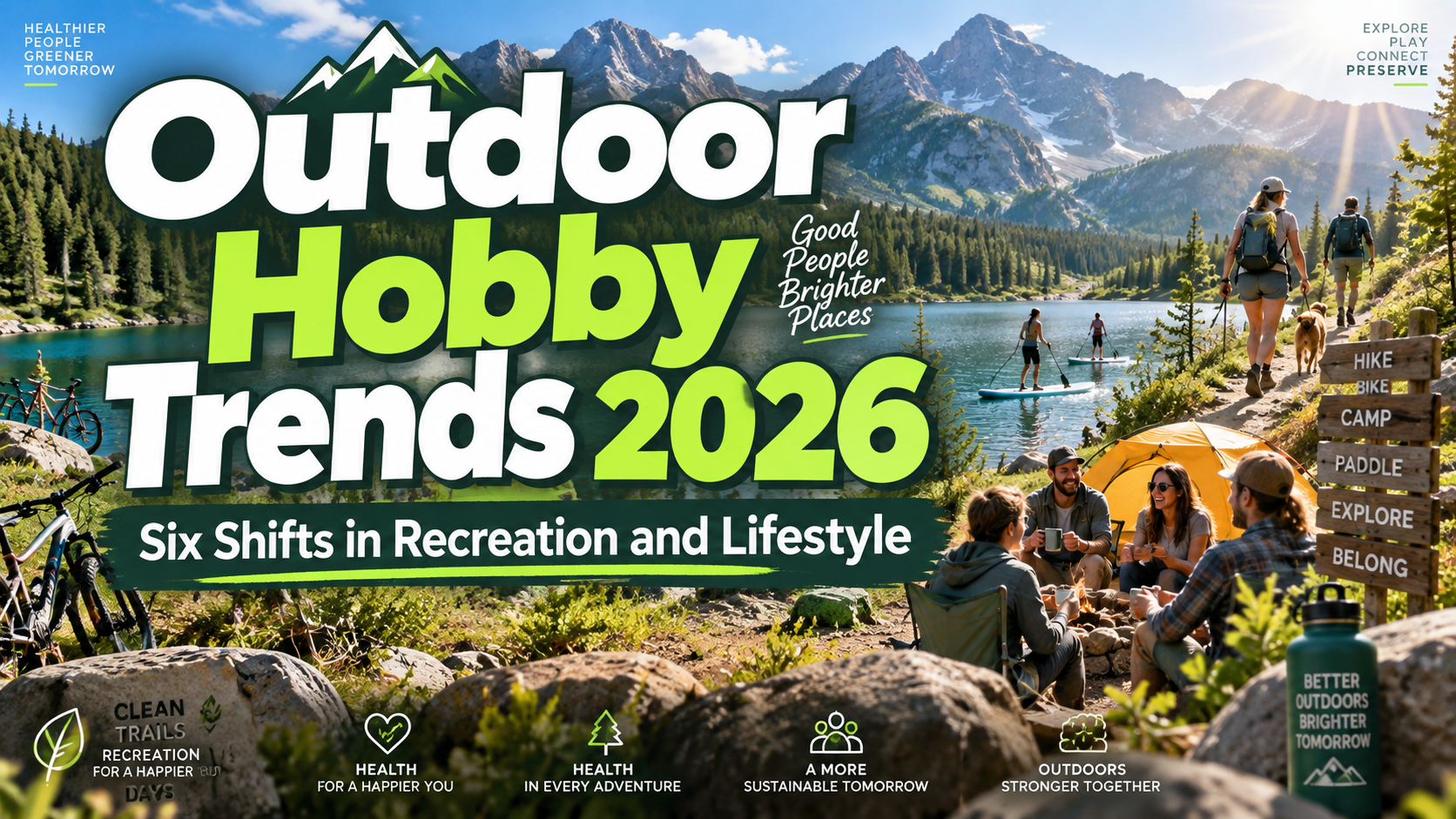
Outdoor Hobby Trends 2026: Adventure, Community, and Everyday Wellbeing
Read Global Trends Through Local Context
Start with the people and places behind the numbers. Outdoor hobbies do not develop identically across countries, climates, incomes, or age groups.
The Outdoor Industry Association’s 2026 report recorded 183.2 million American outdoor participants in 2025, but also found declining participation frequency compared with before the pandemic. More participants does not necessarily mean more frequent outings.
For communities and brands, the opportunity is to make returning easier. Offer welcoming activities, practical information, and realistic commitments rather than promoting only demanding expeditions. The following trends combine 2026 findings with clearly dated 2025 evidence.
Six Outdoor Trends Worth Understanding
Social Running and Hiking Clubs
Strava’s 2025 report recorded hiking-club growth of 5.8 times and running-club growth of 3.5 times on its platform. These are platform findings, not population-wide participation rates, but they show substantial interest in organized communities.
Build around connection: offer beginner groups, clearly advertised paces, and optional social time. Let belonging matter alongside performance.
Everyday Movement and Smaller Adventures
Walking became Strava’s second-most-recorded activity type in its 2025 report, while 54% of users tracked multiple activities. This suggests an active lifestyle need not revolve around one demanding sport.
For a practical interpretation, organize neighborhood walks, short hikes, or outdoor photography sessions. Make distance, terrain, and access information explicit so newcomers can decide whether an outing suits them.
Camping With Different Comfort Levels
Eurostat reported 413 million nights at EU campsites, recreational-vehicle parks, and trailer parks in 2025, up 28.5% from 2015. This is European accommodation data, not a worldwide camping growth rate.
Consider several entry points, from simple campsites to more equipped stays. For first-time campers, explain facilities, equipment needs, and accessibility rather than presenting discomfort as a requirement.
Recreational Cycling With Regional Differences
Cycling remains important without growing everywhere. Germany’s ADFC survey, published in March 2026, found that 39.3 million adults cycled during holidays or leisure in 2025, although cycling trips and day excursions declined.
For clubs and businesses, investigate local barriers before expanding. Test interest in shorter routes, equipment support, and clearly described difficulty rather than assuming every rider wants an endurance challenge.
Nature Observation and Citizen Science
The 2026 City Nature Challenge brought together more than 106,000 observers across 61 countries and six continents. Participants recorded wildlife observations, connecting outdoor exploration with biodiversity documentation. Its report highlighted contributions from Ecuador, Namibia, Taiwan, and New Zealand.
Try guided birdwatching, neighborhood nature walks, or photography-based identification activities. For educators and creators, build stories around careful observation rather than reaching the most remote destination.
Renting, Repairing, and Reusing Equipment
Decathlon reported rental revenue growth of 43% in 2025 and a worldwide network of 1,746 repair workshops. One retailer cannot represent the entire market, but its figures provide evidence of expanding equipment-access services.
Explore rental, repair, or secondhand options before buying unfamiliar equipment. Businesses should explain inspection, maintenance, and return arrangements clearly rather than relying on vague sustainability language.
Make Wellbeing and Inclusion Practical
WHO recognizes that regular physical activity can support mental health, sleep, and wellbeing. That does not make an outdoor hobby a guaranteed treatment or mean everyone should pursue the same intensity.
Offer manageable choices, rest opportunities, transparent costs, and accessible alternatives. Ask participants what would help them return.
Translate Outdoor Culture Into Brand Storytelling
For an illustrative hiking-club campaign, feature real participants, practical route details, and a welcoming invitation rather than only heroic summit photography.
Explore PutraCetol Studio’s bold display, retro, and handwritten font directions for event titles, packaging, and club identities. Keep route instructions, times, and safety information in a readable companion typeface.
Comparison
Use these ideas as planning options, not a universal popularity ranking.
| Direction | Suggested Experience | Priority |
|---|---|---|
| Social activity | Group run or hike | Welcoming pace options |
| Everyday exploration | Neighborhood walk | Convenient access |
| Camping | First overnight stay | Clear facilities information |
| Recreational cycling | Local leisure ride | Suitable route difficulty |
| Nature observation | Community wildlife walk | Responsible observation |
Common Mistakes
The first mistake is treating regional reports, app activity, or social-media attention as proof of worldwide demand. Research your actual audience before launching a product, event, or campaign. Check budgets, transport, accessibility, seasonality, and experience levels instead of assuming one outdoor identity fits everyone.
Another mistake is selling an idealized lifestyle while ignoring practical responsibilities. Publish accurate route information, respect local rules and wildlife, and avoid encouraging risky behavior for photographs. When making environmental claims, explain the specific benefit and its evidence. Looking outdoorsy is not the same as acting responsibly.
Conclusion
Outdoor hobby trends 2026 offer a useful starting point for building communities, content, and products around participation rather than spectacle.
Choose a realistic activity, understand local needs, and make repeat involvement welcoming. For brands, combine useful experiences with distinctive PutraCetol Studio typography so the visual identity supports the community rather than overshadowing it.
Explore these fonts and many more at PutraCetol.com to build a business identity that looks professional, trustworthy, and memorable.
Additionally, if you want to explore some free typography options, you can check out Putracetol Studio on Dafont. Happy reading and designing!