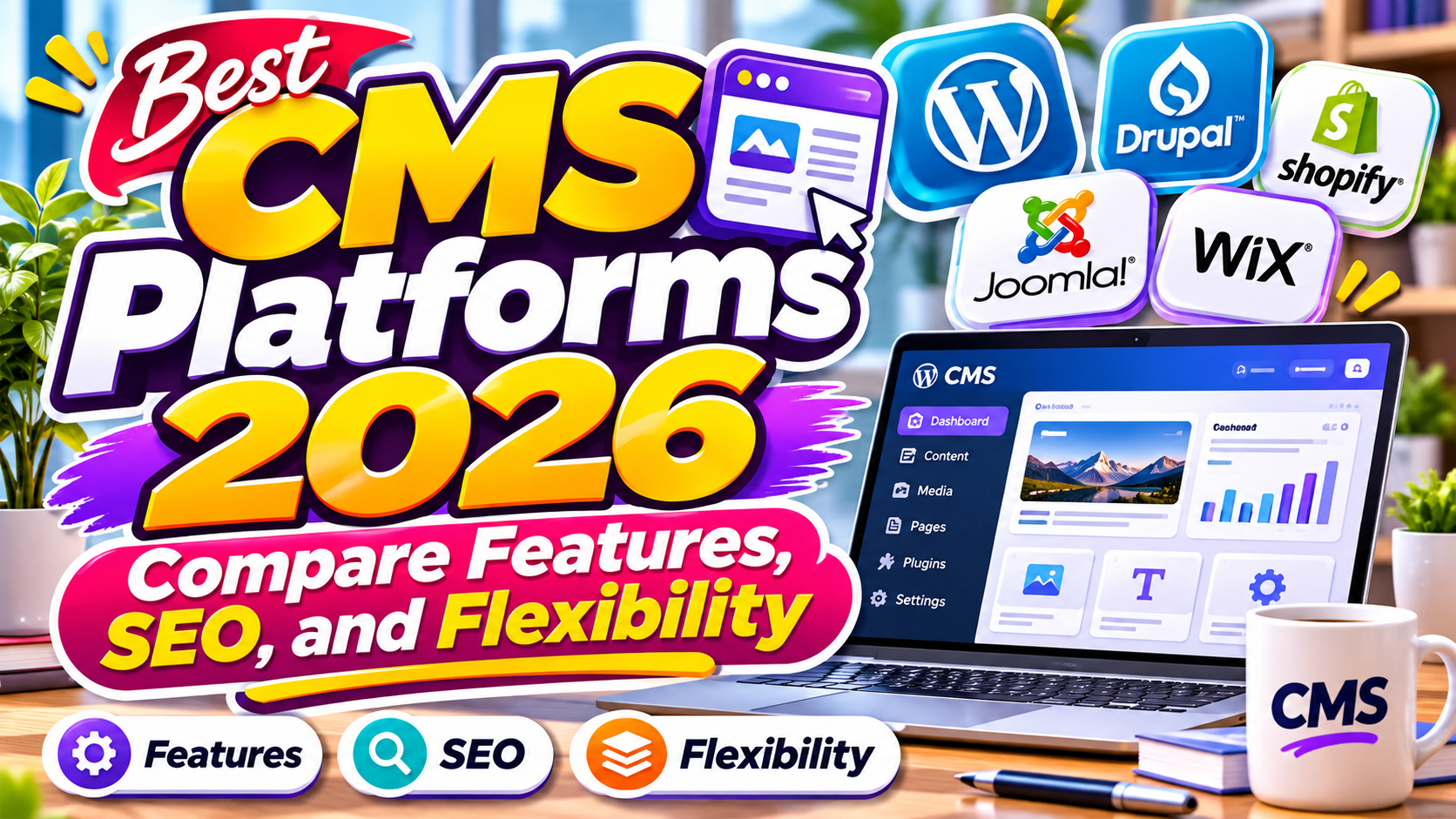
CMS untuk Website 2026: 7 Best Platforms for Building and Managing Websites
Choosing the right content management system can make website development easier, improve daily operations, and support long-term business growth. From publishing articles to managing online stores, a reliable CMS helps businesses organize content without constantly modifying website code.
Finding the best CMS untuk website 2026 requires understanding each platform’s usability, customization options, SEO capabilities, security, and scalability.
Whether you’re launching a personal blog, creating a corporate website, or developing an e-commerce business, the right CMS should match your current needs while supporting future expansion.
Choose a CMS Based on Your Website Goals
Before comparing content management systems, identify what your website needs to accomplish.
A blogger may prioritize publishing tools and search visibility, while an online retailer needs product management, payment integration, and inventory control.
Consider your technical experience, hosting budget, content volume, and expected business growth.
A good CMS should make everyday content management easier without introducing unnecessary complexity or expensive maintenance requirements.
7 Best CMS Platforms for Websites in 2026
1. WordPress – Best for Flexibility and Content Management
WordPress is an open-source content management system known for its extensive customization possibilities. Its ecosystem of themes and plugins supports blogs, corporate websites, portfolios, and online stores. Businesses can extend functionality with tools such as WooCommerce, SEO plugins, and custom integrations. Self-hosted WordPress provides considerable control over website design, content, and hosting infrastructure.
PROS: Extensive plugin ecosystem, flexible customization, strong publishing tools, broad community support.
BEST FOR: Blogs, business websites, content marketing, online stores, and growing digital brands.
2. Shopify – Best for E-commerce Businesses
Shopify is a hosted commerce platform designed to simplify online selling. It combines product management, checkout functionality, inventory tools, website themes, and marketing integrations within one environment. Built-in hosting reduces infrastructure management, allowing retailers to focus on products and customers. Shopify also supports blogging and essential SEO settings for businesses developing content marketing strategies.
PROS: Integrated e-commerce features, managed hosting, payment integrations, convenient store management.
BEST FOR: Online retailers, product brands, direct-to-consumer businesses, and growing e-commerce stores.
3. Wix – Best for Beginners and Small Businesses
Wix offers an accessible website-building experience with visual editing, templates, hosting, and integrated content management features. Its CMS supports dynamic pages and structured content collections, making it useful for directories, portfolios, and service listings. Businesses can also manage SEO settings and customize their website appearance without advanced programming knowledge.
PROS: Beginner-friendly editor, integrated hosting, dynamic content, accessible design tools.
BEST FOR: Small businesses, freelancers, personal websites, portfolios, and local service providers.
4. Webflow – Best for Design-Focused Websites
Webflow combines visual website development with structured content management. Designers can create customized layouts while using CMS Collections to manage articles, projects, team profiles, and other reusable content. Its visual approach provides substantial design control without requiring every interface element to be coded manually.
PROS: Advanced visual customization, reusable content collections, responsive design controls, integrated publishing.
BEST FOR: Creative agencies, designers, startup websites, corporate portfolios, and marketing websites.
5. Drupal – Best for Complex Websites
Drupal is an open-source CMS developed for projects requiring extensive content organization and customization. Its architecture supports structured content, user permissions, and multilingual website management. Although implementation often requires greater technical expertise, Drupal provides valuable flexibility for organizations with complex publishing requirements.
PROS: Flexible content architecture, multilingual capabilities, detailed permissions, extensive customization.
BEST FOR: Enterprise websites, universities, government portals, and large organizational platforms.
6. Ghost – Best for Publishing and Newsletters
Ghost focuses on professional publishing, making it particularly attractive for writers, independent publications, and content businesses. Its built-in tools support blog articles, email newsletters, memberships, and paid subscriptions. The writing-focused interface reduces distractions while providing useful options for building an audience around original content.
PROS: Clean publishing interface, integrated newsletters, membership tools, subscription functionality.
BEST FOR: Bloggers, online magazines, independent writers, newsletters, and content creators.
7. Strapi – Best for Headless CMS Development
Strapi is an open-source headless CMS that separates content management from frontend presentation. Developers can create structured content and distribute it through APIs to websites, mobile applications, and other digital platforms. Its customizable architecture makes it attractive for projects requiring specialized integrations and greater development flexibility.
PROS: API-based content delivery, customizable architecture, structured content, developer-focused functionality.
BEST FOR: SaaS applications, custom web platforms, development teams, and multi-channel publishing.
Comparison: Which CMS Platform Should You Choose?
Each content management system offers different advantages depending on technical requirements and business objectives.
| CMS | Ease of Use | Best Application |
|---|---|---|
| WordPress | Moderate | Blogs and versatile websites |
| Shopify | Easy | E-commerce |
| Wix | Easy | Small business websites |
| Webflow | Moderate | Design-focused websites |
| Drupal | Advanced | Enterprise platforms |
| Ghost | Easy to moderate | Publishing and newsletters |
| Strapi | Advanced | Headless applications |
Essential Factors When Selecting a CMS
Beyond usability, evaluate hosting expenses, maintenance requirements, SEO controls, security updates, and integration capabilities.
Consider whether the CMS supports responsive layouts, accessible navigation, and consistent branding. Professional typography also contributes to the overall website experience.
Explore the creative font collections at PutraCetol Studio to develop distinctive website headlines, logos, and visual identities that complement your chosen CMS.
Common Mistakes When Choosing a CMS
One common mistake is selecting a platform based entirely on popularity without considering actual business requirements. A sophisticated CMS may offer extensive features, but unnecessary complexity can increase development costs and complicate daily content management. Similarly, choosing a basic website builder for a highly customized application may introduce limitations as the business grows. Evaluate your content structure, technical resources, expected traffic, and future requirements before committing to a platform.
Another mistake is overlooking long-term maintenance, security, and ownership considerations. Businesses sometimes focus on initial subscription prices while ignoring hosting fees, premium extensions, developer support, migration challenges, and ongoing updates. An appropriate CMS should support reliable backups, secure user access, regular maintenance, and practical content export options. Testing the platform before launching a large website can help identify potential problems early.
Conclusion
Choosing the right CMS untuk website 2026 is an important decision that affects website management, branding, functionality, and long-term business development.
WordPress offers flexibility, Shopify focuses on e-commerce, and Wix simplifies website creation. Webflow provides creative design control, Drupal supports complex organizations, Ghost emphasizes publishing, and Strapi enables headless development.
The best CMS is the one that supports your goals, budget, technical capabilities, and future plans.
For a professional visual identity, combine your chosen CMS with distinctive typography from PutraCetol Studio to create a memorable and recognizable website.
Explore these fonts and many more at PutraCetol.com to build a business identity that looks professional, trustworthy, and memorable.
Additionally, if you want to explore some free typography options, you can check out Putracetol Studio on Dafont. Happy reading and designing!