

The most productive way to hire a branding agency is to define the commercial problem before discussing colors, typography, or logo concepts. A business may need to enter a new market, attract a different customer segment, justify premium pricing, improve recognition, support a product launch, or correct an inconsistent identity.
A clear brief might say, “We need to reposition our local skincare company for premium ecommerce growth,” rather than, “We need a more elegant logo.” The first statement gives the agency a strategic objective. The second describes only one possible deliverable.
Before the project begins, document the target audience, current reputation, competitors, business model, sales channels, growth priorities, and measurable outcomes. Market research helps a company understand potential customers, while competitive analysis helps identify opportunities for meaningful differentiation.
What Does a Branding Agency Do?
A branding agency helps define how a company should be understood, remembered, and distinguished in the market. Its work may include research, positioning, naming, messaging, visual identity, customer-experience principles, brand guidelines, launch planning, and ongoing brand governance.
A graphic design studio may focus mainly on producing visual materials. A marketing agency may concentrate on campaigns, traffic, leads, or advertising performance. A branding agency connects the underlying business strategy with the verbal and visual systems that guide those activities.
These disciplines often overlap, but their primary questions differ:
- Branding asks: What should the company mean to customers?
- Marketing asks: How will the company attract and convert attention?
- Sales asks: How will the company turn interest into revenue?
- Business development asks: Where can the company create new relationships, markets, channels, and growth opportunities?
A capable branding agency helps these functions communicate one consistent promise.
The Main Branding Agency Roles in Business Development
1. Conducting Market and Brand Research
An agency begins by investigating how the business currently appears to customers, employees, partners, and competitors. This process may include stakeholder interviews, customer research, competitor reviews, touchpoint audits, sales-material analysis, and category research.
The goal is not to collect data for a large presentation. It is to identify the gap between the company’s intended image and the way people actually experience it.
For example, a software company may describe itself as innovative, while customers perceive its website and sales materials as complicated. A family-owned food producer may have strong product quality but appear interchangeable with cheaper competitors. These gaps become starting points for the branding strategy.
The U.S. Small Business Administration recommends combining customer research with competitive analysis to understand demand, market saturation, pricing, and opportunities for competitive advantage.
2. Clarifying Brand Positioning
Brand positioning defines the place a company wants to occupy in the customer’s mind. It explains who the brand serves, what problem it solves, how it is different, and why the difference matters.
A branding agency may develop a positioning statement supported by several practical elements:
- Target customer
- Customer problem or desire
- Category or competitive context
- Primary value proposition
- Reasons to believe
- Brand personality
- Points of differentiation
Strong positioning helps a company make clearer decisions. It can guide product development, pricing, sales language, partnerships, packaging, content, and customer service.
A business should not attempt to be the cheapest, most luxurious, most accessible, most innovative, and most traditional option simultaneously. The agency helps prioritize the position that is credible, valuable, and defensible.
3. Defining the Brand Architecture
As a business grows, it may introduce new services, product lines, sub-brands, locations, or audience segments. Without a clear structure, customers may struggle to understand how these offers relate to one another.
A branding agency can develop a brand architecture that answers questions such as:
- Should every product use the main company name?
- Does a new service need an independent identity?
- How should different product tiers be organized?
- Which elements should remain consistent across locations?
- How should acquired brands fit into the portfolio?
For example, a food company might keep one master brand while using color-coded product families. A technology business may create a parent company with individually named software products. A hospitality group could give each property a distinct personality while retaining one endorsement system.
Good brand architecture allows a business to expand without rebuilding its identity every time it introduces something new.
4. Developing Naming and Messaging
A company may offer an excellent product but describe it in language that is generic, technical, or difficult to remember. A branding agency helps convert business knowledge into a clearer verbal identity.
This may include:
- Company and product naming
- Taglines
- Value propositions
- Brand story
- Elevator pitch
- Website messaging
- Product descriptions
- Campaign themes
- Tone-of-voice guidelines
- Sales presentation language
Messaging should explain the value of an offer without relying on vague claims such as “world-class,” “revolutionary,” or “the best solution.” Customers need to understand what the company does, who it serves, and why the offer is relevant.
Agencies must also ensure that creative language does not become misleading. In the United States, the FTC states that advertising claims must be truthful, non-deceptive, and supported by appropriate evidence.
5. Building the Visual Identity
Visual identity translates brand strategy into recognizable design. It may include the logo, wordmark, typography, colors, graphic elements, icons, illustration style, photography direction, layouts, packaging principles, and motion behavior.
A good identity is not simply attractive. It should help the business become easier to recognize and support the intended position.
A premium consulting firm may need controlled typography, restrained colors, and spacious layouts. A youth entertainment company could require brighter colors, dynamic compositions, and expressive display type. A rustic food producer might benefit from warm materials, traditional serif lettering, and documentary-style photography.
The agency should also test the identity across real applications. A logo that looks polished in a brand presentation may fail on packaging, uniforms, signage, mobile screens, social avatars, or monochrome documents.
6. Connecting Branding With Marketing
A brand strategy becomes commercially useful when it shapes marketing activity. The agency can translate the identity into campaign templates, content themes, landing pages, social graphics, email systems, advertisements, event materials, and product launches.
This connection keeps the company from presenting a different personality in every channel. The website, sales deck, packaging, social media, and advertising should feel like expressions of the same business.
A marketing plan turns strategy into specific action through defined audiences, sales methods, marketing goals, and budgets. Branding gives those actions a consistent message and recognizable identity.
7. Supporting Sales and Business Development Teams
Sales enablement is an important part of the branding agency roles in business development. A professional identity can help sales teams present the company with greater clarity and consistency.
Useful deliverables may include:
- Company profile
- Sales presentation
- Proposal template
- Service brochure
- Product catalog
- Case-study format
- Trade-show graphics
- Partner presentation
- Investor deck
- Branded data sheets
- Email and document templates
The agency should not decorate weak sales materials without improving their structure. A proposal should communicate the customer problem, recommended solution, expected value, process, evidence, and next step.
For a B2B company, stronger sales tools can make the business appear more organized and reduce the amount of explanation required in every meeting. For a retailer, consistent product pages and packaging can help customers compare options more confidently.
8. Improving the Customer Experience
A brand exists through repeated interactions, not only through its logo. A branding agency may therefore audit the complete customer journey, from initial discovery to purchase, delivery, support, and repeat business.
It may identify problems such as:
- Advertising that promises a premium experience but leads to a weak website
- Friendly social media followed by impersonal customer support
- Elegant packaging with confusing instructions
- Different pricing language across sales channels
- Inconsistent names for the same service
- A complicated onboarding process that contradicts a “simple” brand promise
The agency can create principles for how the brand should behave at each touchpoint. This helps the company turn its positioning into an experience customers can actually recognize.
9. Preparing the Business for Launches and Expansion
Branding agencies often support new product launches, market entry, franchising, international expansion, mergers, and rebranding initiatives.
For a launch, the agency may develop the product position, name, packaging, campaign concept, sales narrative, landing page, promotional system, and launch toolkit.
For expansion, it may review whether the existing identity works in another category, region, or language. A name that succeeds locally may be confusing elsewhere. Colors, images, messaging, and cultural references may also require adaptation.
The objective is to preserve recognition while making the brand appropriate for its new environment.
10. Creating Brand Guidelines and Governance
Without practical guidelines, a new identity can become inconsistent within weeks. Teams may use incorrect logo versions, introduce random colors, change the tone of voice, or create new templates that do not match the system.
A branding agency can develop guidelines covering:
- Logo versions and spacing
- Color specifications
- Typography hierarchy
- Photography and illustration
- Layout principles
- Tone of voice
- Naming conventions
- Social media usage
- Packaging consistency
- Examples of incorrect use
Governance also defines who can approve new brand materials and how the identity should evolve. This is especially important for businesses with multiple departments, franchisees, external vendors, or regional teams.
11. Helping Protect Distinctive Brand Assets
A branding agency can help create a distinctive name, symbol, and wordmark, but legal clearance should involve a qualified trademark professional where appropriate.
The USPTO explains that a trademark identifies the source of goods or services and distinguishes one business from competitors. It also notes that more distinctive marks are generally stronger than terms that merely describe the product or service.
This means naming and logo development should not happen in isolation. Before a business invests heavily in packaging, signage, advertising, and domain infrastructure, it should investigate potential conflicts and secure the appropriate rights.
12. Measuring Brand and Commercial Progress
Branding should eventually influence observable business outcomes, even though not every effect appears immediately.
A branding agency may help define measurements such as:
- Branded search growth
- Direct website traffic
- Message recall
- Sales conversion
- Proposal acceptance
- Customer acquisition cost
- Repeat purchase rate
- Referral volume
- Price acceptance
- Market share
- Customer perception
- Brand consistency across channels
The agency should establish a baseline before the project and connect each metric to the original business objective. A rebrand designed to support premium pricing should not be evaluated only by social media likes. A new identity created for market expansion should be assessed through awareness, qualified leads, distribution, partnerships, and sales in the target market.
Examples of Branding Supporting Business Development
A Professional Service Firm
A consulting firm may have strong expertise but inconsistent presentations and unclear service descriptions. A branding agency can clarify the offer, organize the service architecture, develop a more credible identity, and create proposals that focus on client outcomes.
The result is not merely a better-looking company. The sales team has a clearer story, prospects understand the value more quickly, and the firm is better prepared to approach larger clients.
An Ecommerce Product Brand
An ecommerce company may depend on generic supplier photography and marketplace traffic. The agency can define a differentiated position, redesign the packaging, establish a recognizable visual system, and create content guidelines for the company’s own website and social channels.
This helps the business move from selling an interchangeable product to building a brand customers can search for, recommend, and purchase again.
A Growing Multi-Location Business
A restaurant, salon, clinic, or fitness company may develop inconsistent local materials as it expands. A branding agency can create a scalable identity, naming structure, signage system, interior applications, promotional templates, and local marketing rules.
The business can then grow while preserving a recognizable customer experience across locations.
When Should a Business Hire a Branding Agency?
A professional agency may be useful when:
- The company has no clear positioning
- The identity looks inconsistent across channels
- Customers misunderstand the offer
- The company is launching or entering a new market
- Growth has outpaced the original visual identity
- The business wants to increase perceived value
- Several products need a clearer architecture
- Sales and marketing teams communicate different messages
- Internal teams lack branding expertise
- A merger, acquisition, or major repositioning is planned
The right time is not necessarily when the logo looks old. It is when the current brand begins limiting understanding, credibility, differentiation, or growth.
Jump to Recommended Fonts
Veloria Palace Classic Serif Font | Spikera Black Letter Font | Elmonta Rustic Classic Serif Font | Vexorium Modern Experimental Font | Liquid Mirage Psychedelic Style Font | Quervia Elegant Serif Font
Typography helps a branding agency turn strategic positioning into a recognizable visual voice. The best font depends on the audience, competitive category, personality, and applications the identity must support.
1. Veloria Palace Classic Serif Font
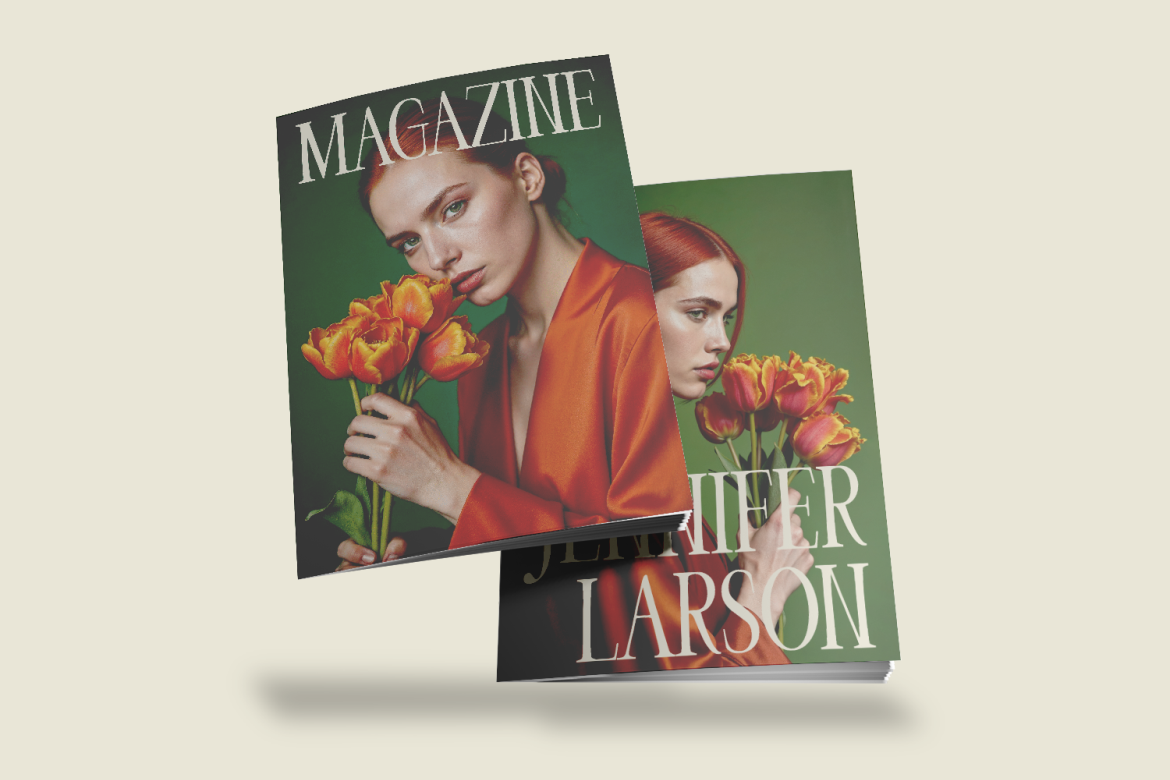
Veloria Palace uses tall, condensed serif forms, refined stroke contrast, and soft curves to create an elegant editorial presence. Its narrow but expressive proportions can give longer business names visual authority without making a layout feel crowded. This combination works particularly well for brands that need heritage, luxury, and calm sophistication across logos, packaging, website headers, and campaign materials.
PROS: Elegant condensed structure, polished contrast, strong logo potential, and refined editorial character.
BEST FOR: Beauty brands, skincare, boutique hospitality, premium services, floral businesses, magazines, salons, and luxury product identities.
2. Spikera Black Letter Font
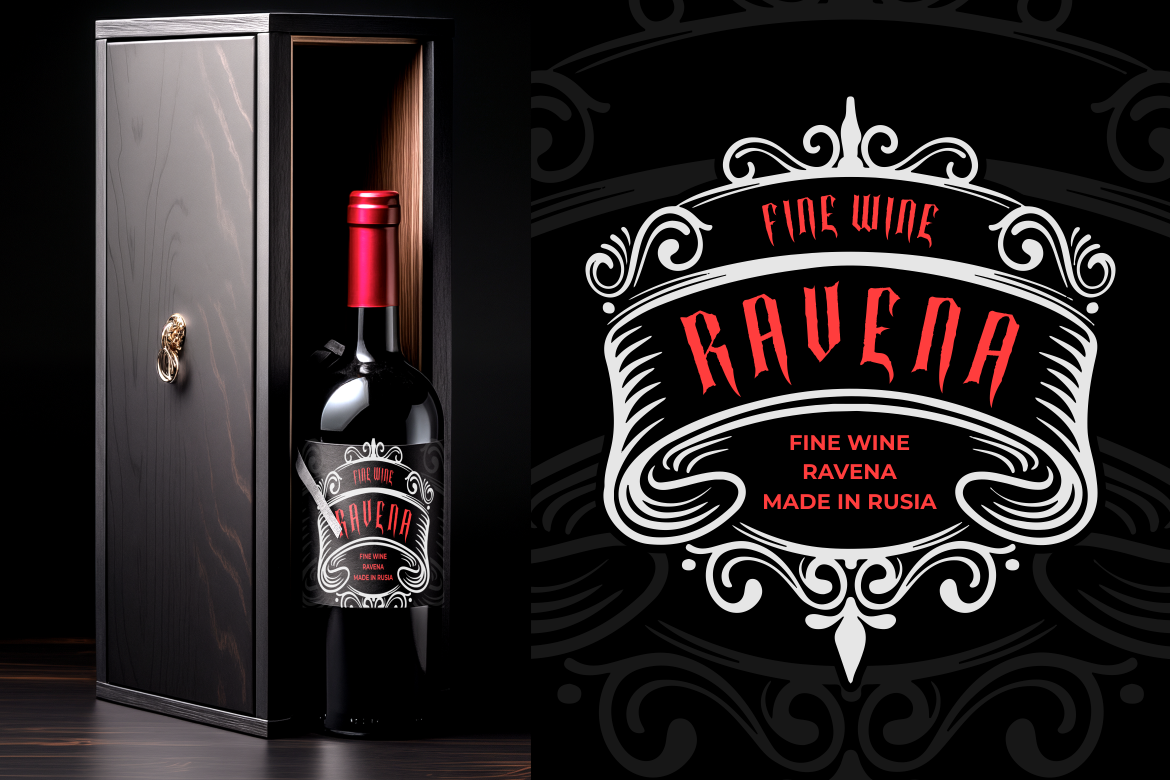
Spikera brings the historic strength of blackletter typography into a more dramatic contemporary display style. Its tall proportions, sharp construction, pointed details, and dark personality can make a short brand name feel established, rebellious, and highly distinctive. It is best used as a focused wordmark or headline typeface rather than for long supporting copy.
PROS: Strong heritage character, distinctive silhouette, dramatic authority, and immediate visual recognition.
BEST FOR: Barbershops, tattoo studios, streetwear, music brands, craft beverages, motorcycle businesses, Gothic fashion, and heritage-inspired identities.
3. Elmonta Rustic Classic Serif Font

Elmonta combines tall condensed proportions, narrow spacing, soft vintage serifs, and slightly irregular curves. Its firm vertical stems preserve readability, while the handcrafted details create a grounded and authentic personality. The font is particularly effective for brands that want to communicate local production, tradition, natural materials, or old-world craftsmanship without looking visually outdated.
PROS: Rustic warmth, memorable condensed silhouette, readable vintage details, and strong storytelling value.
BEST FOR: Artisan food, coffee, agriculture, rural tourism, restaurants, bakeries, handmade goods, organic products, and heritage retail.
4. Vexorium Modern Experimental Font
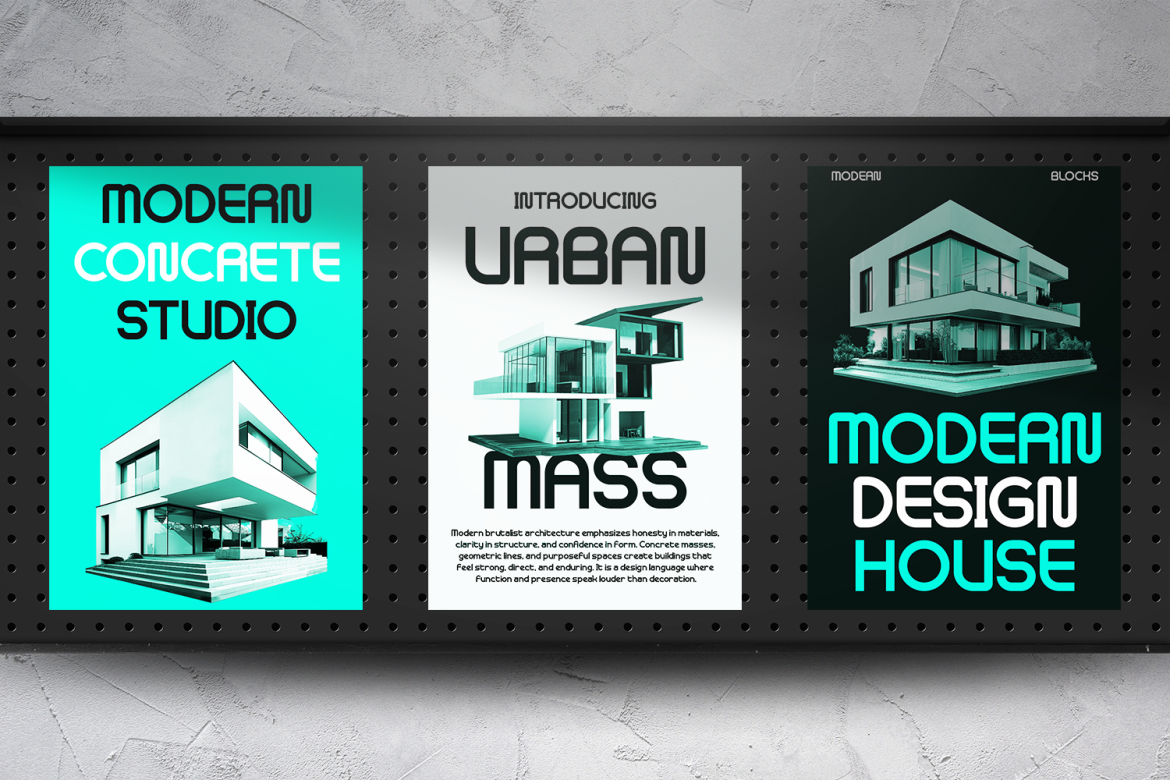
Vexorium combines architectural precision with unconventional contemporary character construction. Its tall proportions, consistent strokes, rounded corners, geometric curves, and balanced spacing give the font a calculated, progressive personality while retaining useful readability. It can help an innovation-focused brand look distinctive without relying on predictable technology typography.
PROS: Clean geometry, futuristic character, controlled experimentation, and professional visual distinction.
BEST FOR: Technology startups, architecture, digital products, creative agencies, innovation consultancies, modern property brands, and forward-looking corporate identities.
5. Liquid Mirage Psychedelic Style Font
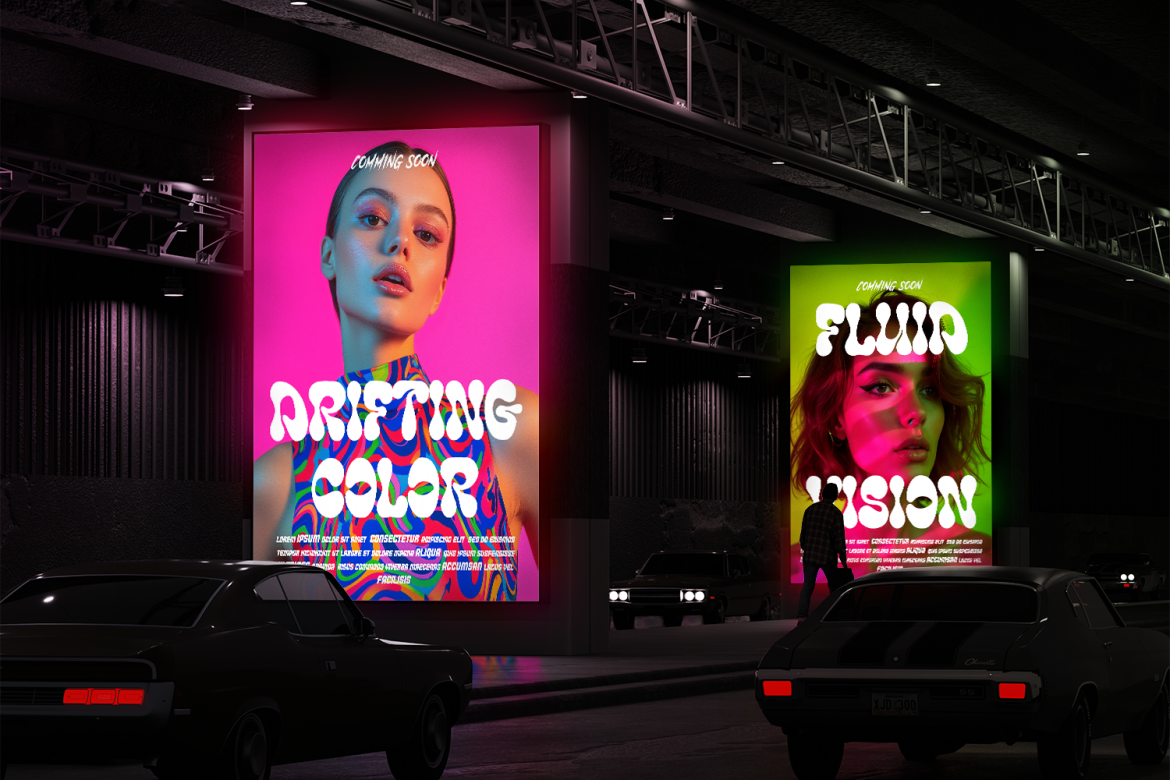
Liquid Mirage uses thick rounded strokes, melting curves, soft edges, and bulb-like terminals to create a fluid psychedelic rhythm. Its blend of retro influence and futuristic expression can turn a logo or campaign headline into the main visual attraction. The font is especially effective for businesses that need creativity, movement, and cultural energy rather than conventional corporate restraint.
PROS: Highly expressive forms, fluid movement, memorable visual rhythm, and strong campaign impact.
BEST FOR: Music, festivals, beverages, entertainment, nightlife, fashion campaigns, art communities, and experimental creative brands.
6. Quervia Elegant Serif Font
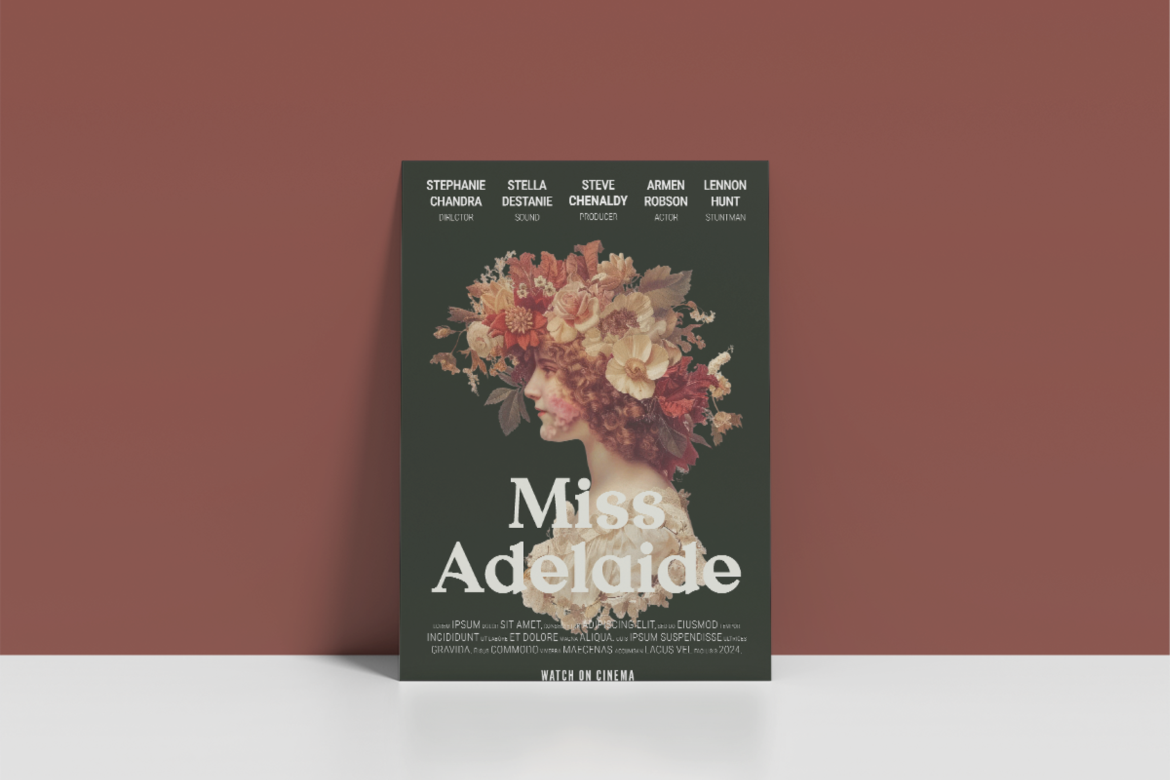
Quervia blends a refined classical structure with subtle vintage character and modern clarity. Balanced proportions, medium stroke contrast, sharp serif terminals, smooth curves, and distinctive inner cuts create a premium but controlled personality. It is a strong option for agencies building identities that need trust, elegance, and editorial sophistication without becoming excessively formal.
PROS: Timeless elegance, polished readability, distinctive details, and versatile premium positioning.
BEST FOR: Consulting, luxury retail, fragrance, jewelry, hotels, beauty, weddings, premium food, editorial branding, and professional services.
Comparison
| Font | Visual Personality | Strongest Branding Agency Use | Ideal Business Direction |
|---|---|---|---|
| Veloria Palace | Refined, condensed, and luxurious | Premium wordmarks and editorial identity systems | Beauty, hospitality, and boutique services |
| Spikera | Gothic, authoritative, and rebellious | Distinctive subculture and heritage branding | Barber, tattoo, music, and streetwear |
| Elmonta | Rustic, warm, and traditional | Origin stories and handcrafted product identities | Food, agriculture, coffee, and local retail |
| Vexorium | Geometric, progressive, and experimental | Innovation-led corporate and digital identities | Technology, architecture, and creative services |
| Liquid Mirage | Fluid, psychedelic, and energetic | Campaign identities and culture-driven branding | Music, entertainment, fashion, and beverages |
| Quervia | Elegant, trustworthy, and editorial | Premium corporate and product branding | Consulting, luxury retail, and hospitality |
Common Mistakes When Working With a Branding Agency
The first mistake is treating the agency as a production service rather than a strategic partner. A business may request a logo, website, packaging, and social templates without explaining the growth objective behind them. The resulting materials may look professional but fail to solve the actual problem. Leadership should share commercial priorities, customer research, sales feedback, operational limitations, and future plans. The agency should then connect each design decision to a clear audience, position, and business outcome.
Another mistake is excluding sales, product, operations, and customer-service teams from the process. Senior leadership may approve an ambitious promise that employees cannot consistently deliver. Marketing may use language that does not match the sales conversation, while the customer experience contradicts the premium positioning. A brand strategy should be credible throughout the organization. Objective advertising claims must also be accurate and supported, not introduced merely because they sound persuasive.
The final mistake is launching the identity without governance, legal review, or a practical implementation plan. Teams may begin using different logo files, fonts, colors, names, and messages immediately after launch. A distinctive wordmark also requires the correct font licensing and, where relevant, trademark review before wide commercial deployment. A trademark serves as an identifier of source and helps distinguish a company’s goods or services in the marketplace, so brand assets should be selected with both creative distinction and long-term protection in mind.
Conclusion
The most valuable branding agency roles in business development extend far beyond logo creation. A professional agency helps a company understand its market, clarify its position, organize its offers, communicate its value, and create a visual identity that supports recognition and growth.
It can also connect branding with marketing, sales enablement, customer experience, market expansion, product launches, and internal governance. The result should be more than a collection of attractive assets. It should be a usable business system that helps customers understand the company and helps employees represent it consistently.
Typography is an important part of that system. Veloria Palace can establish refined luxury, Spikera can build a bold heritage identity, Elmonta supports authentic craftsmanship, Vexorium communicates modern innovation, Liquid Mirage creates cultural energy, and Quervia provides timeless premium authority.
Fonts from PutraCetol Studio give designers and branding agencies distinct creative directions for translating strategy into memorable visual identity. When the typography is aligned with the market position, audience, and business objective, it becomes more than decoration. It becomes a recognizable asset that supports long-term brand development.
Explore these fonts and many more at PutraCetol.com to build a business identity that looks professional, trustworthy, and memorable.
Additionally, if you want to explore some free typography options, you can check out Putracetol Studio on Dafont. Happy reading and designing!