
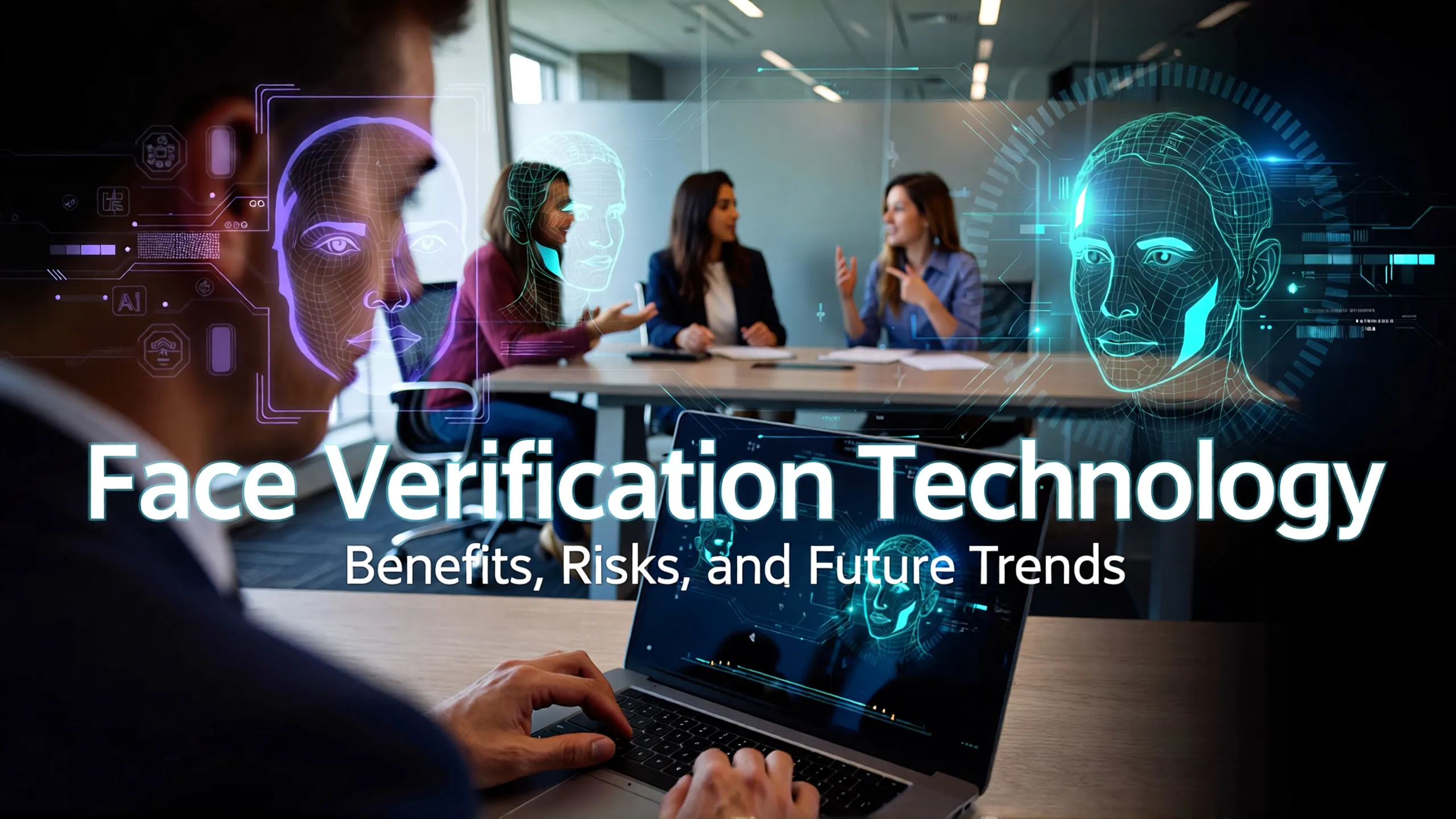
A Complete Guide to Face Verification
Introduction: The Evolution of Digital Identity Authentication
Digital identity has become one of the most important aspects of modern technology. As more services, from banking to healthcare to e-commerce, move online, secure and efficient user identity verification becomes increasingly important. Face recognition is crucial for simplifying and maintaining security..
Traditional authentication methods such as passwords, PINs, or security questions are gradually becoming outdated. They can be forgotten, stolen, or hacked. As cyber threats evolve, businesses and users require solutions that provide stronger protection without sacrificing convenience.
Face verification technology has emerged as a powerful solution that balances security and usability. By leveraging artificial intelligence and biometric recognition, it offers a seamless way to authenticate users based on unique physical characteristics.
This comprehensive guide explores how face verification works, its advantages, potential risks, and why it is rapidly becoming the new standard for digital security.
What Is Face Verification?
Face verification is a biometric authentication method that uses facial features to confirm an individual’s identity. Unlike passwords or PIN codes, which rely on information users must remember, biometric systems use physical characteristics that are unique to each person.
The technology analyzes facial landmarks such as:
- eye distance
- facial contours
- nose shape
- jawline structure
These characteristics create a biometric template that acts as a digital signature.
Face verification is often confused with facial recognition, but they are not identical. Facial recognition identifies a person from a large database, while face verification confirms whether a person matches a specific stored identity.
Because biometric data is inherently unique and difficult to replicate, face verification provides a higher level of security compared to traditional login methods.
How Face Verification Works
Understanding the process behind face verification helps clarify why it is both secure and efficient.
1. Face Capture
The process begins when a camera captures the user’s face. This can occur through a smartphone camera, laptop webcam, or dedicated biometric scanner.
Modern systems often include liveness detection to ensure that the subject is a real person rather than a static image or recorded video.
2. Feature Extraction
Artificial intelligence analyzes facial landmarks and converts them into mathematical data points. This step transforms visual information into structured biometric data.
3. Matching Process
The captured data is compared against previously stored biometric templates. Advanced algorithms measure similarity scores between the two datasets.
4. Authentication Decision
If the system determines that the similarity level exceeds a predefined threshold, authentication is approved. Otherwise, access is denied.
This entire process typically occurs within seconds, making it faster than most traditional authentication methods.
Advantages of Face Verification
High-Level Security
One of the biggest advantages of face verification is its strong security profile. Unlike passwords that can be guessed or stolen, biometric traits are difficult to replicate.
AI-powered detection systems can identify subtle facial characteristics that are nearly impossible to forge accurately.
Convenience and User Experience
Users no longer need to remember complex passwords or carry additional authentication devices. A simple glance at a camera enables quick access.
This convenience improves customer satisfaction and reduces login friction, especially in mobile environments.
Increased Efficiency
Organizations benefit from faster verification processes that reduce administrative workload. Automated authentication eliminates manual identity checks, allowing teams to focus on strategic tasks.
Scalability Across Industries
Face verification is widely applicable across sectors, including:
- financial services for secure transactions
- e-commerce platforms for fraud prevention
- healthcare systems for patient identity verification
- workplace access control
Its versatility makes it a valuable tool for both large enterprises and smaller organizations.
Challenges and Risks
While face verification offers significant benefits, it also presents challenges that businesses must address.
Privacy and Data Protection
Biometric data is highly sensitive. If compromised, it cannot be changed like a password.
Organizations must implement strict data protection measures, including encryption, secure storage, and compliance with privacy regulations.
Spoofing Risks
Although modern systems include anti-spoofing technologies, attackers may attempt to bypass authentication using:
- photos
- videos
- 3D masks
Advanced liveness detection techniques help mitigate these risks, but continuous improvement is necessary.
Technical Integration Complexity
Integrating face verification into existing systems may require infrastructure upgrades and technical expertise. Businesses must ensure compatibility with current authentication frameworks.
The Future of Face Verification
Face verification technology continues to evolve as artificial intelligence advances.
Integration with AI and IoT
Smart devices and IoT systems increasingly incorporate biometric authentication. From smart homes to connected vehicles, face verification may become a standard access method.
Financial and Public Service Applications
Governments and financial institutions are exploring biometric authentication for secure digital identities, voting systems, and public services.
Multi-Factor Authentication
The future of cybersecurity will likely combine face verification with additional authentication methods such as device recognition or behavioral analysis. This layered approach enhances security while maintaining convenience.
The Role of Design and Interface Clarity in Face Verification Systems
While technology drives security, design plays an important supporting role.
Clear interface design ensures users understand when and how authentication occurs. Typography and visual hierarchy influence usability and trust.
For example:
- Serif display fonts like Gilded Winter Serif Display can reinforce professionalism in secure interfaces.
- Bold headline styles such as Mogzilla Bold help highlight verification status messages.
- Clean modern typography like Antiquera enhances clarity in onboarding instructions.
- Or if you need a free font for personal use, you can click on the image below.

Thoughtful design reduces user confusion and improves overall adoption of biometric systems.
Quick Summary Table
| Aspect | Advantages | Challenges |
|---|---|---|
| Security | Difficult to forge | Risk of spoofing |
| Convenience | Fast login | Requires camera hardware |
| Efficiency | Reduces admin workload | Integration complexity |
| Privacy | Unique biometric identity | Requires strict regulation |
Why Face Verification Is Becoming the New Standard
As digital ecosystems expand, authentication methods must evolve. Password-based systems struggle to meet modern security demands, while biometric solutions provide stronger identity assurance.
Face verification combines speed, accuracy, and usability, making it attractive for both users and organizations. Its ability to integrate seamlessly into everyday devices ensures continued adoption across industries.
Conclusion
Face verification represents a significant shift in digital identity authentication. By combining biometric data with AI-driven analysis, it offers enhanced security while delivering a smooth and convenient user experience.
Although challenges related to privacy, spoofing risks, and system integration remain, ongoing technological advancements continue to strengthen its reliability.
As organizations prioritize secure yet frictionless digital interactions, face verification is poised to become a foundational component of future authentication systems.
For more insights into branding, design inspiration, and digital strategy, visit Putracetol.com and explore creative resources that support modern digital experiences.
Thank you for taking the time to read this article. If you are looking for more great articles, feel free to visit Putracetol Blog
Additionally, if you want to explore some free typography options, you can check out Putracetol Studio on Dafont. Happy reading and designing!