
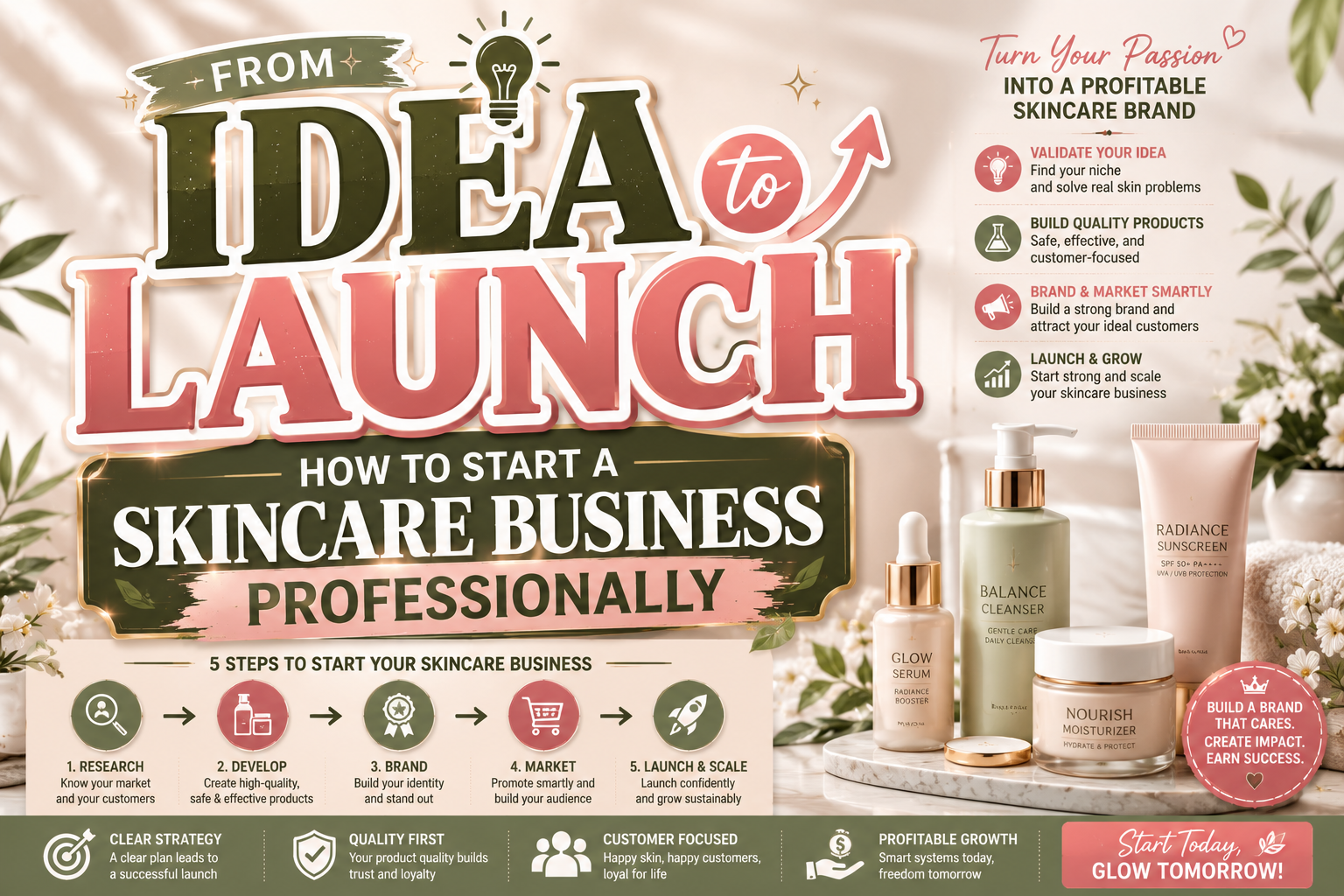
The skincare industry continues to be one of the fastest-growing sectors in the beauty market. Consumers are actively searching for products that address specific concerns, from acne and hydration to anti-aging and sensitive skin. This growing demand has created significant opportunities for entrepreneurs who want to build their own skincare brands. Industry forecasts suggest continued growth in the global skincare market throughout the next decade, driven by online sales, independent brands, and changing consumer preferences.
However, learning how to start a skincare business involves much more than creating a product. Successful skincare brands combine market research, product development, regulatory compliance, branding, packaging, and digital marketing into a complete business strategy. Whether you want to create handmade skincare products, launch a private-label brand, or develop custom formulations, understanding the process can help reduce costly mistakes and improve your chances of long-term success.
Today, entrepreneurs have more options than ever before. Some brands develop unique formulations from scratch, while others use private-label manufacturers or dropshipping models to enter the market with lower upfront investment. The key is finding a business model that aligns with your goals, budget, and expertise.
Initial Suggestion
Before investing money in formulations, packaging, or marketing, focus on building a solid foundation.
Start With Market Research
Ask yourself:
- Who is your target customer?
- What skincare problems are you solving?
- Who are your competitors?
- What gaps exist in the market?
The strongest skincare brands often solve a specific problem rather than trying to appeal to everyone.
Choose a Clear Niche
Popular skincare niches include:
- Natural skincare
- Organic skincare
- Anti-aging products
- Acne solutions
- Men’s skincare
- Sensitive skin products
- Vegan beauty
- Luxury skincare
Niche positioning helps your brand stand out in a crowded market. Entrepreneurs and startup communities frequently recommend identifying a clear niche before investing heavily in product development.
Focus on Branding Early
Customers often judge skincare products based on:
- Brand identity
- Packaging design
- Product presentation
- Website quality
- Brand story
Strong branding builds trust and increases perceived value.
Think Long-Term
A skincare business should be built as a brand, not just a product. Your goal should be creating customer loyalty and repeat purchases rather than relying solely on one-time sales.
Comparison
Common Skincare Business Models
| Business Model | Startup Cost | Product Control | Scalability | Best For |
|---|---|---|---|---|
| Handmade Products | Low | High | Medium | Small Startups |
| Private Label | Medium | Medium | High | Growing Brands |
| Custom Formulation | High | Very High | Very High | Premium Brands |
| Dropshipping | Low | Low | Medium | Beginners |
| Curated Beauty Store | Low-Medium | Low | High | Online Retailers |
Step 1: Research the Market
Market research helps validate your business idea before you invest significant resources.
Research:
- Competitor products
- Pricing strategies
- Consumer trends
- Customer reviews
- Market demand
This process helps identify opportunities and avoid oversaturated segments.
Step 2: Define Your Brand Identity
Your skincare brand should have:
- A memorable business name
- Clear brand values
- Consistent visual identity
- Target customer profile
- Brand mission
Consumers increasingly buy skincare products from brands they trust rather than products alone.
Step 3: Develop Your Product Line
Decide whether you will:
- Create products yourself
- Work with a cosmetic chemist
- Use a private-label manufacturer
- Curate existing products
Many successful brands start with a small hero product before expanding into a complete skincare range.
Step 4: Test Formulations Thoroughly
Product safety should always be a priority.
Testing should evaluate:
- Product stability
- Shelf life
- Performance
- Customer feedback
- Ingredient compatibility
Safety testing and ingredient review processes play an important role in ensuring consumer trust.
Step 5: Understand Regulations and Labeling
Skincare products are subject to various regulations depending on your market.
Important areas include:
- Ingredient labeling
- Product claims
- Packaging requirements
- Safety compliance
Product labels must be accurate and not misleading, especially regarding health-related claims.
Step 6: Create Professional Packaging
Packaging influences:
- Brand perception
- Customer trust
- Product visibility
- Purchase decisions
Professional packaging often helps smaller brands compete with established companies.
Step 7: Build an Online Presence
Your online presence should include:
- Website
- Social media profiles
- Product photography
- Educational content
- Customer testimonials
Online sales continue to play an increasingly important role in skincare business growth.
Step 8: Launch a Marketing Strategy
Popular skincare marketing channels include:
- TikTok
- Influencer partnerships
- Email marketing
- SEO content marketing
- Paid advertising
Many business owners report that consistent content creation and educational marketing outperform purely promotional campaigns.
Common Mistake
One of the most common mistakes skincare entrepreneurs make is focusing entirely on the product while ignoring branding. Many founders spend months perfecting formulations but invest very little effort into packaging, visual identity, website design, and storytelling. In reality, consumers often evaluate a skincare product based on trust, presentation, and brand perception before they ever test the formula itself. Even excellent products can struggle to gain traction if branding appears inconsistent or unprofessional.
Another major mistake is making product claims that cannot be legally supported. New business owners sometimes exaggerate the benefits of their products in an attempt to increase sales. Regulatory agencies require cosmetic labeling and marketing claims to be truthful and not misleading. Businesses that fail to comply with labeling requirements may face legal complications and damage customer trust. Understanding regulations early can prevent significant problems later.
Many entrepreneurs also attempt to launch too many products at once. A focused launch built around one or two exceptional products often performs better than a large collection with unclear positioning. Startup communities frequently recommend validating demand with a smaller product line before expanding into additional categories. This approach reduces risk while allowing founders to gather customer feedback and improve future offerings.
Conclusion
Learning how to start a skincare business requires balancing creativity, product development, compliance, branding, and marketing. While creating an effective skincare product is important, successful brands are built on much more than formulations alone.
The strongest skincare businesses begin with thorough market research, clear niche positioning, professional branding, careful product testing, and a strong online presence. Whether you choose handmade products, private-label manufacturing, or custom formulations, success ultimately depends on your ability to build trust and deliver value to customers.
As the skincare industry continues to grow, entrepreneurs who combine quality products with strategic branding and customer-focused marketing will be best positioned to build sustainable and profitable skincare brands.
Explore these fonts and more at PutraCetol.com to build a logo that strengthens your brand and supports long-term business growth. Additionally, if you want to explore some free typography options, you can check out Putracetol Studio on Dafont. Happy reading and designing!